
The Nest Wales scheme is the Welsh Government's Warm Homes programme, and in its first year under the new contract it installed energy efficiency measures in 348 homes between October 2024 and March 2025 while offering free advice to every household in Wales (GOV.WALES, 2026). For installers, it is a fully funded, government-backed route to work that sits outside the supplier-led ECO4 model.
This guide explains who qualifies for Nest in 2026, what it funds, how it differs from ECO4 and the Warm Homes Local Grant, and how a Wales-based installer joins the supply chain that delivers it. The eligibility rules matter to both sides: they decide which of your customers you can refer and which jobs the scheme will pay for.
Key takeaways
- Nest is funded directly by the Welsh Government, not by energy suppliers, so it has no announced end date unlike ECO4.
- Eligible households get fully funded measures worth several thousand pounds, paying nothing towards insulation, heat pumps or solar.
- British Gas holds the delivery contract from 1 April 2024 for up to seven years and works through a Wales-based supply chain.
- Retrofit upgrades under Nest cut household energy bills by about £570 a year on average in 2024 to 2025.
- Every household in Wales can get free impartial energy advice, even those who do not qualify for funded measures.
What is the Nest Wales scheme?
Nest is the Welsh Government Warm Homes scheme that gives free, impartial energy advice to any household in Wales and a package of fully funded home energy improvements to those who qualify (Energy Saving Trust, 2026). It targets fuel poverty by upgrading the least efficient homes occupied by lower-income and vulnerable households.
The current scheme launched after the 2023 Warm Homes Policy Statement and covers all of Wales. Because it is paid for from the Welsh Government budget rather than a levy on energy bills, it runs continuously rather than in the fixed obligation periods that shape supplier schemes. For a Welsh household, the first step is a free eligibility check by phone.
That distinction matters for anyone planning a pipeline of work. Supplier-funded schemes stop and start with each obligation period, which makes demand lumpy, whereas a directly funded government scheme gives a steadier baseline of referrals across the year. For a Welsh installer, Nest is therefore less about a single funding window and more about a standing route to fabric and low-carbon heating work in fuel-poor homes.
Who is eligible for Nest Wales in 2026?
Eligibility rests on the property and the people living in it. The home must be owned or privately rented and be expensive to heat, usually meaning an EPC rating of D or below, and the household must either receive a means-tested benefit, have a low income, or include someone with a chronic respiratory, circulatory or mental health condition on a lower income (GOV.WALES, 2026). Social housing tenants are not covered, as their landlords have separate obligations.
The means-tested benefits route covers Universal Credit, Pension Credit, Housing Benefit and similar. The health-condition route is what widens Nest beyond pure benefit checks, so a customer who narrowly misses on income may still qualify. That route is worth remembering on site, because a household with a resident who has a serious respiratory or circulatory condition can be eligible even when the benefit box is not ticked. The table below sets out the three main routes to a funded package.
Route / Main requirement / Property test
- Means-tested benefit: Receiving a qualifying benefit; home expensive to heat, EPC D or below
- Low income: Household income below the set threshold; home expensive to heat, EPC D or below
- Health condition: Respiratory, circulatory or mental health condition on lower income; home expensive to heat, EPC D or below
The measures Nest funds
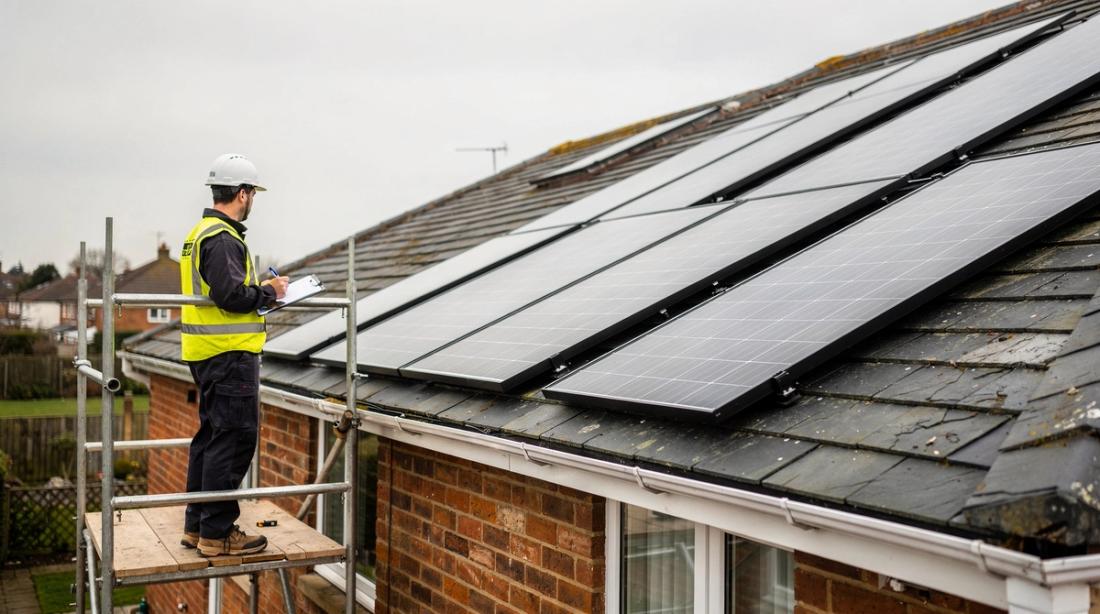
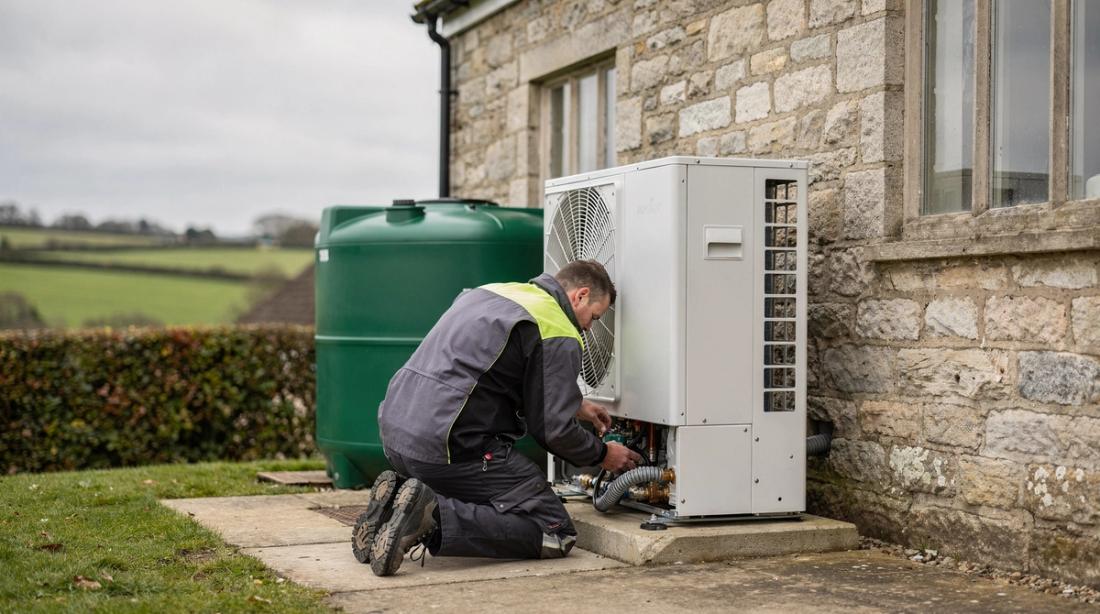
Nest pays for a package tailored to each home rather than a single product. Funded measures include loft, wall and floor insulation, air source heat pumps, solar panels, domestic battery storage and, in some cases, boiler replacement (Centrica, 2024). A survey decides the right combination for the property.
For eligible households the installation is fully funded, so the customer pays nothing towards the work. That removes the deposit and finance conversations that slow down private jobs, and it means the specification is driven by the survey and the scheme rules rather than by what the customer can afford. Worcester Bosch has been named as the heat pump partner for the scheme, supplying air source units for eligible homes (Worcester Bosch, 2026).
A fabric-first approach shapes the package, so insulation and airtightness are usually addressed before a heat pump goes in, which protects the running-cost savings the household is promised. For a customer moving off an old gas or oil boiler, that sequencing is the difference between a heat pump that performs and one that disappoints, and it is why the survey stage carries so much weight in what Nest will fund.
How does Nest differ from ECO4 and the Warm Homes Local Grant?
The core difference is who pays. Nest is funded by the Welsh Government, while ECO4 is funded by a levy on energy suppliers and is due to end in December 2026 (Energy Saving Trust, 2026). That funding source is why Nest has no announced closing date and ECO4 does. For a Welsh household, the two can complement each other rather than compete.
The Warm Homes Local Grant and the wider Warm Homes Plan are the equivalent policy strands in England, while Home Energy Scotland grants and loans play the same role north of the border. Knowing which scheme applies where stops you referring a Welsh customer to an English grant, or overlooking ECO4 funding a Nest package cannot reach.
Applying for Nest Wales
Households apply directly, not through an installer. The route starts with a free call to the Nest team on freephone 0808 808 2244, or an online enquiry, followed by an eligibility check against the benefit, income and health-condition rules (GOV.WALES, 2026). If the household qualifies, a home survey follows to design the measures package.
For installers, the practical point is that you cannot enrol a customer yourself, but you can prepare them. Checking a customer against the eligibility routes before you mention Nest saves everyone a wasted survey, and pointing a near-miss customer towards the free advice line still adds value even when the funded package is out of reach.
How installers join the Nest supply chain
Delivery runs through British Gas, which won the roughly £200 million contract starting 1 April 2024 for up to seven years and delivers the scheme using a Wales-based supply chain of contractors alongside its own staff (Insider Media, 2024). During 2023 to 2024, all installations were completed by Wales-based installers, so the work stays local (Solar Power Portal, 2024).
British Gas has sought contractor partners experienced in home insulation, air source heat pumps, solar and domestic battery storage, and gas boiler installations (Centrica, 2024). In practice, that means a Welsh installer with the right accreditations and a track record in these measures is the profile the scheme's delivery partner looks for. Approaching the delivery partner directly is the way in, rather than an open public register.
What the 2024 to 2025 results show for installers
The first annual report for the new scheme is a useful read before you commit. Between October 2024 and March 2025, Nest installed measures in 348 homes and ran a crisis route that reached 222 vulnerable households left without heating or hot water (GOV.WALES, 2026). Complaints ran at just 1.4% of customers who received an upgrade.
Retrofit upgrades cut bills by about £570 a year and crisis referrals by about £578, with lifetime carbon savings measured in tens of thousands of tonnes (GOV.WALES, 2026). For an installer, the low complaint rate and the crisis workload both point to steady, quality-controlled demand rather than one-off volume. Field teams tell us the fabric-first surveys on these homes are thorough, so the specification is rarely a surprise on site.
Does Nest fund solar panels and batteries?
Yes. Solar panels and domestic battery storage are among the measures Nest funds, and British Gas specifically sought contractors experienced in solar and battery installations to deliver them (Centrica, 2024). Whether a given home gets solar depends on the survey, the roof and the rest of the measures package.
For solar specialists in Wales, that makes Nest a genuine route to funded PV work, sitting alongside private jobs and other solar panel grants. Pairing panels with the domestic battery storage the scheme also funds lets a fuel-poor household shift more of its own generation into the evening, when it needs the heating most. A well-designed system on such a home carries the monitoring and handover standards any funded scheme expects, which is where tools like Reonic help keep the paperwork and generation data in one place.
Frequently asked questions
Is the Nest Wales scheme still running in 2026?
Yes. Nest is funded directly by the Welsh Government rather than by energy suppliers, so unlike ECO4, which ends in December 2026, it has no announced closing date. It continues to fund free measures for eligible households and free energy advice for every household in Wales throughout 2026.
How much does Nest Wales cost the household?
Nothing, for eligible households. The scheme fully funds the measures package identified by the survey, so there is no deposit, contribution or repayment. Households who do not qualify for funded measures can still use the free, impartial energy advice line at no cost.
What EPC rating do I need to qualify for Nest?
The home usually needs to be expensive to heat, which in practice means an EPC rating of D or below alongside meeting one of the household routes. The property is assessed during the application, so the exact outcome depends on the survey rather than the EPC certificate alone.
Who delivers Nest installations?
British Gas holds the delivery contract from 1 April 2024 for up to seven years and works through a Wales-based supply chain of contractors plus its own staff. During 2023 to 2024, all installations were completed by Wales-based installers, so the work is delivered locally rather than by teams brought in from outside Wales.
Can Nest and ECO4 be used together?
They are separate schemes with separate funding, and a household is assessed against each on its own rules. In practice an installer working in Wales may see customers who qualify for one and not the other, so checking both, rather than assuming, is the way to make sure a fuel-poor home gets every measure it is entitled to.