Heat-load calculation in minutes, not spreadsheets
Capture a building, run a room-by-room calculation to DIN EN 12831, and export the documentation you need to size the heat pump, balance the system, and apply for funding.
From the first room to the signed funding report
Reonic takes you from capturing a building to a norm-compliant heat-load calculation and the hydraulic-balancing report, in one workflow. No exporting to Excel, no re-keying numbers.
Room-by-room to DIN EN 12831
A full per-room and whole-building calculation to DIN EN 12831, the basis for sizing radiators, the heat pump, and the hydraulic balance.
Capture a building three ways
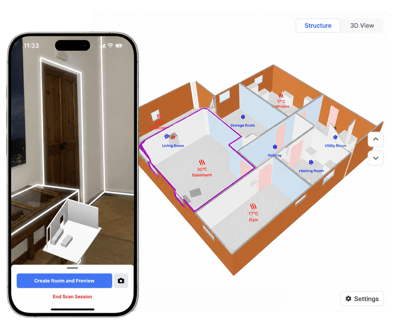
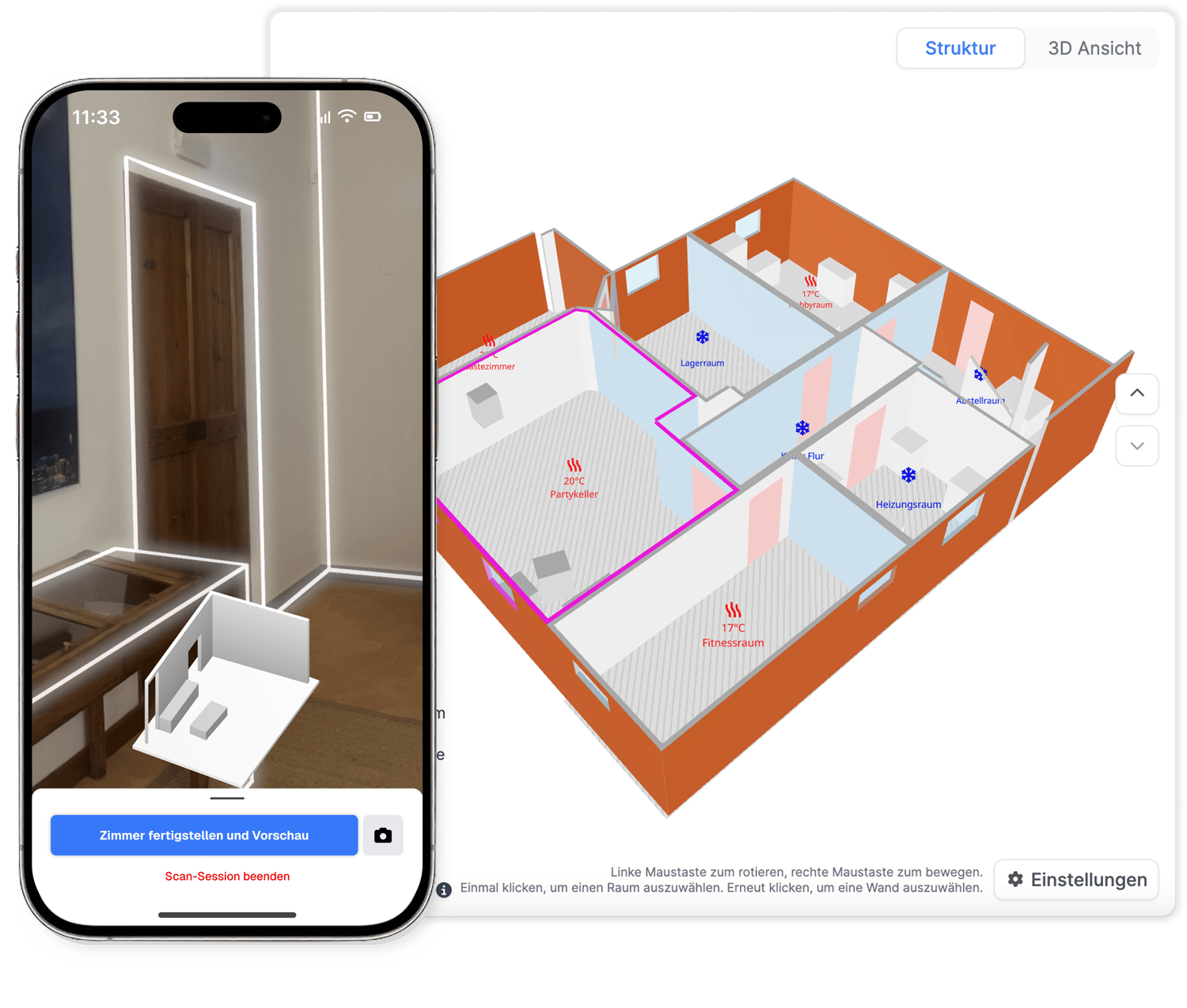
Scan rooms with a LiDAR iPhone or iPad, trace an imported floor plan, or enter rooms by hand. Every method produces the same room model.
A fast indication first
Need a quick number? Derive the heat load from the building envelope in minutes, then go room-by-room when you need the certified result.
Size the heat pump
Dimension the heat pump against the calculated load and set the bivalence point, the outside temperature at which the backup heater takes over.
Hydraulic balancing on tap
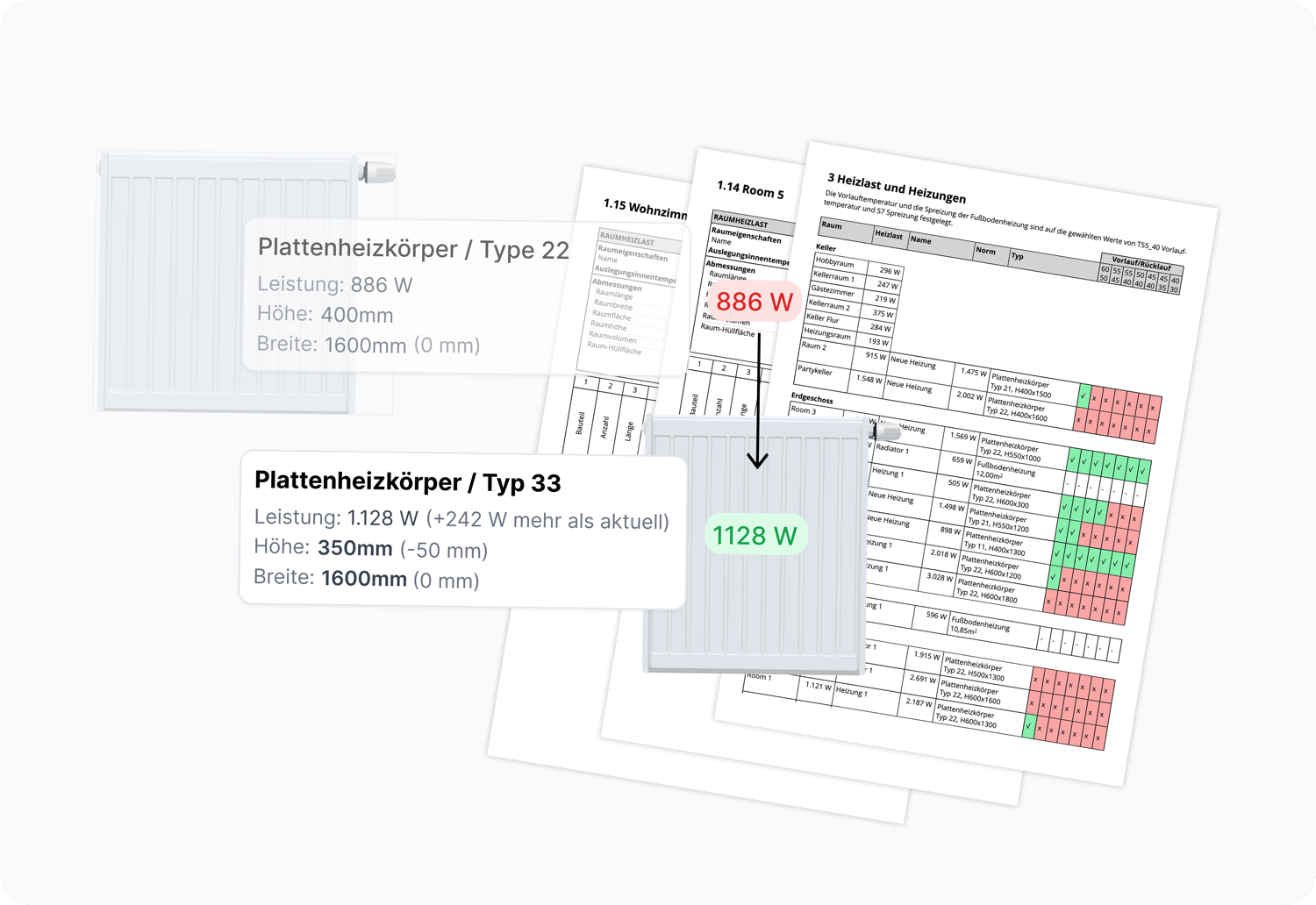
Reonic derives the valve settings and flow rates for every radiator, and flags the ones that are undersized for a swap.
Funding-ready documentation
Export a DIN-compliant report for KfW and BAFA applications, and show the expected subsidy as a line on the offer.
Capture a building however you work
Geometry is the slow part of any heat-load calculation. Reonic gives you three ways to get it in, so the method fits the site instead of the other way round.
From a floor plan – import the customer's plan or an architect's drawing, scale it to a known dimension, and trace the rooms over it at true scale
Manual entry – works on any device, including Android, and feeds the same calculation
Automatic floor-plan recognition is coming – read rooms straight off a plan, without tracing
A calculation you can stand behind
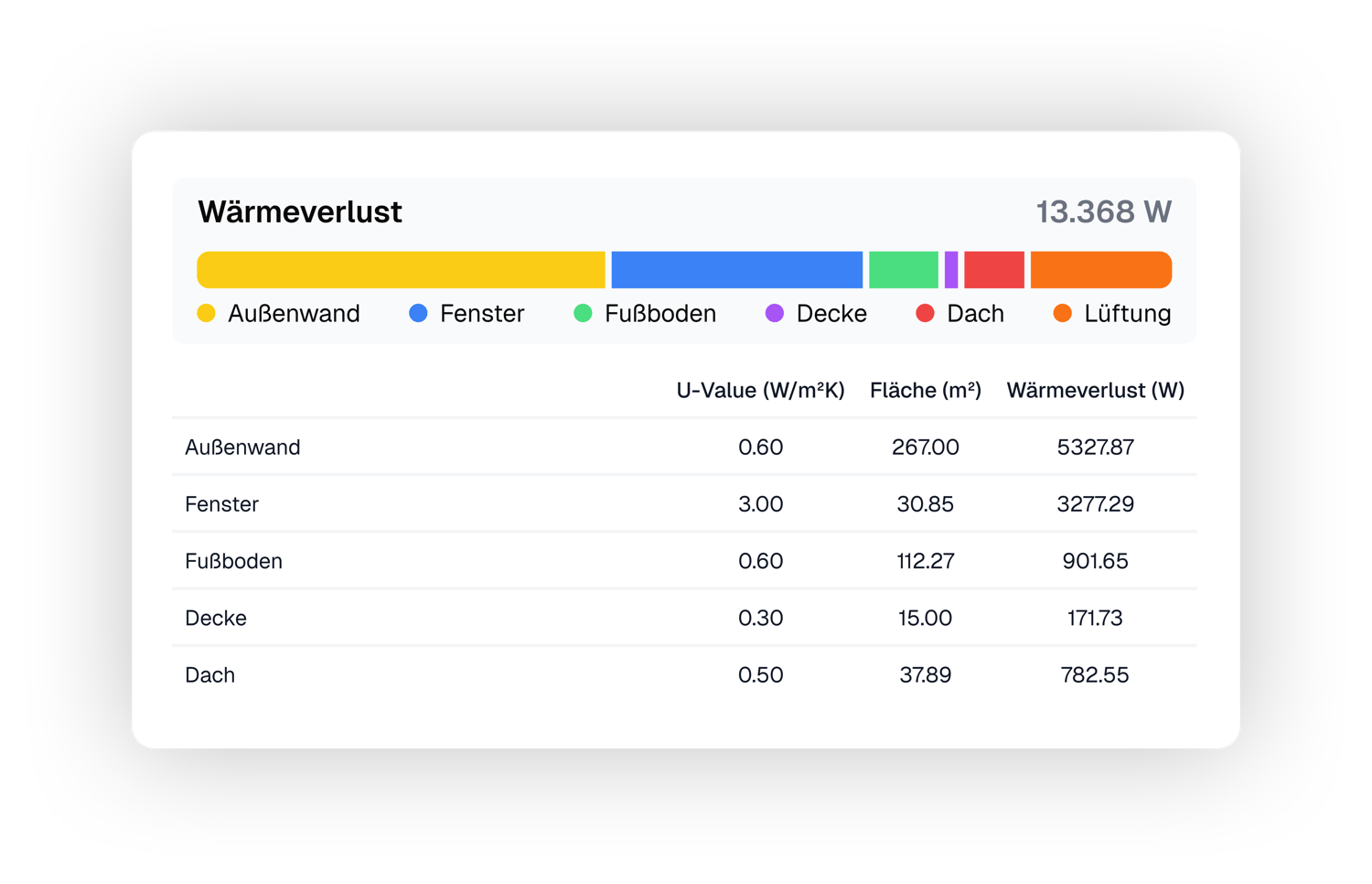
Reonic runs the full DIN EN 12831 calculation per room and for the whole building. U-values are proposed automatically from the build year and building type, and you can adjust any of them. Envelope inputs like airtightness, the heat-bridge factor and target temperatures are all editable.
U-values pre-filled from build year and building type, fully editable
Envelope inputs: airtightness, soil depth, heat-bridge factor, target temperature
Results in seconds, ready for sizing and funding
Hydraulic balancing and the funding report
From the calculated loads, Reonic works out the valve settings and flow rates for every radiator, marks the ones that can't deliver enough heat, and turns the lot into a report. Confirmed radiator swaps flow straight onto the offer as line items.
Undersized radiators flagged for a swap, with replacements added to the offer
DIN-compliant report for BEG, KfW and BAFA, and for customer handover
Expected subsidy shown as a line on the offer
Book a demo. Get to know all products and features.
In a personal product presentation, we'll show you all products and features. Free of charge, no obligation and tailored to your business and needs.

A heat-load calculation works out how much heating power a building needs on the coldest design day, room by room. It's the basis for sizing radiators, underfloor heating and the heat pump, and for the hydraulic balance. Reonic calculates it to DIN EN 12831.
Reonic calculates the heat load to DIN EN 12831, the European standard for heating system design. German and Austrian projects use DIN EN 12831 by default; UK projects use a UK calculator.
Yes. Import the customer's floor plan or an architect's drawing as a background, scale it to a known dimension such as a door width, and trace the rooms over it. The traced rooms come out at real scale and feed straight into the DIN EN 12831 calculation. Automatic recognition that reads rooms off a plan without tracing is on the way.
An iPhone or iPad Pro with a LiDAR sensor (iPhone 12 Pro or newer Pro models, iPad Pro from 2020). No extra hardware. On devices without LiDAR you enter rooms manually or trace a floor plan, and the calculation runs the same way.
A full calculation, from capturing the rooms to the finished report, takes under 15 minutes for a typical single-family home. A quick envelope-based indication takes a couple of minutes.
Once the heat load is known, Reonic's dimensioning table sizes the heat pump against it and sets the bivalence point, the outside temperature below which the backup heater steps in. You pick the pump that covers the load at your design temperature without being oversized.
Yes. From the calculated loads, Reonic derives the valve settings and flow rates for every radiator and exports a DIN-compliant report. It also flags radiators that are undersized and adds confirmed swaps to the offer.
The report is DIN-compliant and built for BEG, KfW and BAFA applications. Reonic also shows the expected subsidy as a line on the offer so the customer sees the net price. Filing the application itself is a separate step.