
Installing power optimisers means fitting one small DC-to-DC converter behind every solar panel, then wiring those units in series into a compatible string inverter. Getting it right is now routine work: MCS certified 267,032 rooftop solar PV systems across the UK during 2025, a record that beat the previous 2011 peak by 31 percent (MCS Certified, 2025). Module level power electronics feature on a growing share of those jobs.
Installs are not slowing. 2025 was the fifth consecutive year of annual growth, and cumulative certified solar in the UK reached 1.85 million systems (Solar Power Portal, 2025). This guide walks through the full process from the installer's bench: planning string lengths, mounting and wiring each optimiser, meeting your duties under BS 7671, and commissioning the array so every unit reports home. The focus is practical field work, not a product pitch.
Key Takeaways
- One unit per module. Each optimiser pairs with a single panel, tracks that panel's maximum power point, and cuts losses from shade and mismatch across the string.
- BS 7671 duty stays with you. Optimisers are not recognised as a DC protective measure, so the design must still provide double or reinforced insulation or SELV/PELV (IET, 2025).
- SafeDC drops each optimiser to about 1 V in standby once AC is removed, which makes panel-level work safer than a conventional string (SolarEdge datasheet, 2023).
- String rules are strict. Match module STC power to the optimiser rating, never mix SolarEdge S and P series, and respect the maximum units per string.
- Retrofit is viable. Add-on optimisers such as the Tigo TS4 mount to the module frame and work with inverters from more than 50 makers (pv magazine, 2026).
What are power optimisers and when should you fit them?
A power optimiser is a module level DC-to-DC converter that tracks each panel's maximum power point, so one shaded or soiled panel no longer drags down a whole string. Fit them where roofs face different orientations, carry partial shade, or where panel-level monitoring and faster isolation justify the extra hardware cost.
Optimisers sit between the per-panel approach of microinverters and the simplicity of a plain string. They keep a single central inverter while adding tracking and monitoring at each module. For a deeper split of the two options, see our solar optimisers vs microinverters guide. On a clean single-pitch roof with no shade, a plain string can still be better value, so the survey decides.
On a typical semi-detached retrofit with a chimney, optimisers on the lower modules recover the morning shade loss that a plain string would carry all day. That recovered yield is the number worth modelling before you quote the extra parts.
Planning the array: string sizing with optimisers
String design changes once optimisers are in the circuit. Each SolarEdge optimiser accepts up to 60 V DC input, and the module's rated STC power must not exceed the optimiser rating (SolarEdge datasheet, 2023). The inverter then sets the minimum and maximum optimisers per string, so you size to unit count, not open-circuit voltage.
Because the optimisers fix the string voltage window, you gain freedom a plain string never offers: parallel strings of different lengths and orientations can share one inverter input. That helps on broken roofs. Our solar PV string design guide covers the voltage maths for conventional strings, which still applies to non-optimised arrays.
String design limits
- Maximum input voltage. 60 V DC per SolarEdge optimiser, with an MPPT window of 8 to 60 V.
- Module power match. Panel STC rating must sit at or below the optimiser's rated input, with up to 5 percent tolerance allowed.
- Units per string. Set by the inverter model; residential single-phase strings cap nominal power near 5,700 W.
- Mixed layouts. Parallel strings of different lengths and orientations are supported on one inverter input.
How do you physically mount and wire a power optimiser?
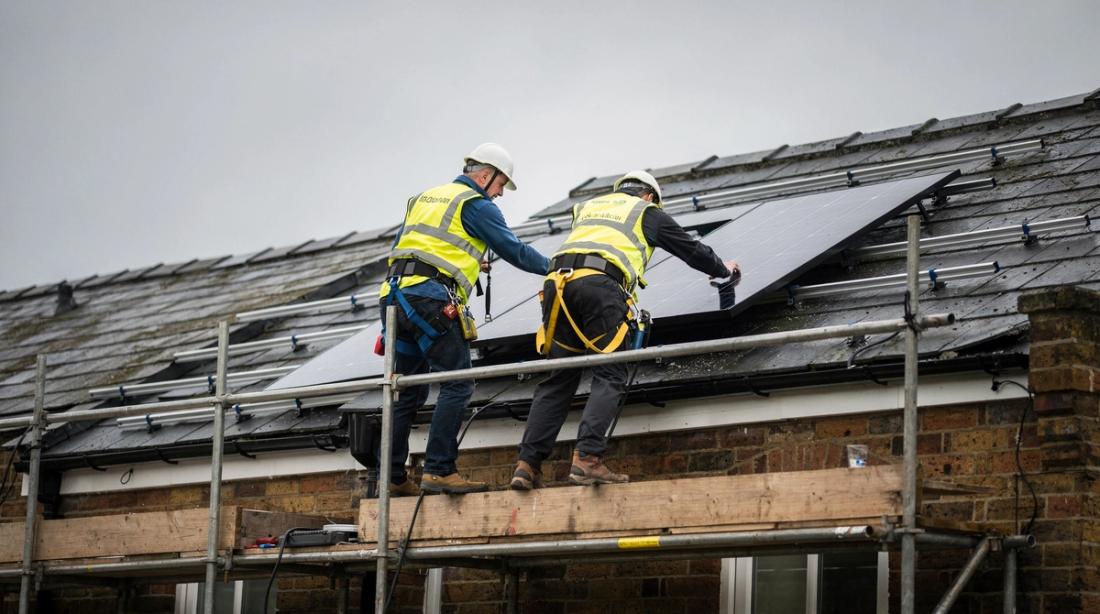
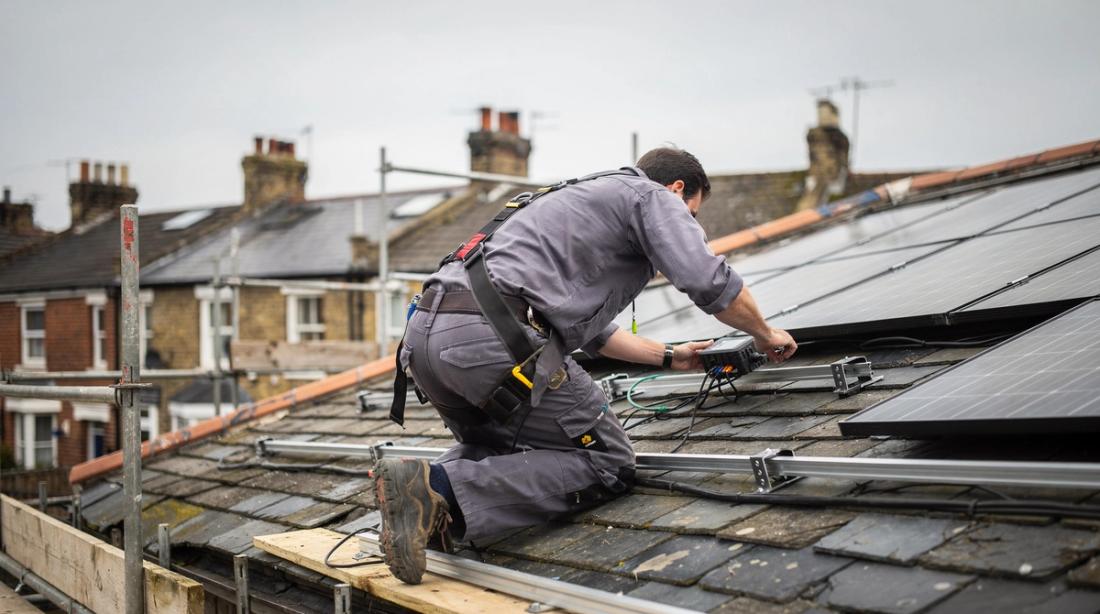
Mount each optimiser to the module frame or the mounting rail before you lay the panel, connect the short input leads to that panel's MC4 connectors, then daisy-chain the output leads optimiser to optimiser down the string. The final output run returns to the inverter or a string cable.
Order of work saves time. Fix the optimiser, plug the module into its input, then join the output to the next unit so the string grows as you lay panels. SolarEdge output leads are deliberately uneven, around 2.3 m on the positive and 0.10 m on the negative, which forces you to plan positions in advance. Use correctly rated DC cable for any extensions, and our 4mm or 6mm solar cable guide explains the sizing.
Label each optimiser's roof position as you fit it. The inverter's pairing step later maps every serial number to a location, and a pre-made layout sheet turns that job from an afternoon into twenty minutes.
Keep DC cables off the roof covering. Regulation 712.521.101 states that cables shall not be placed directly on the surface of the roof, so clip them to rails or run them in suitable containment (IET, 2025).
Does BS 7671 require optimisers for DC safety?
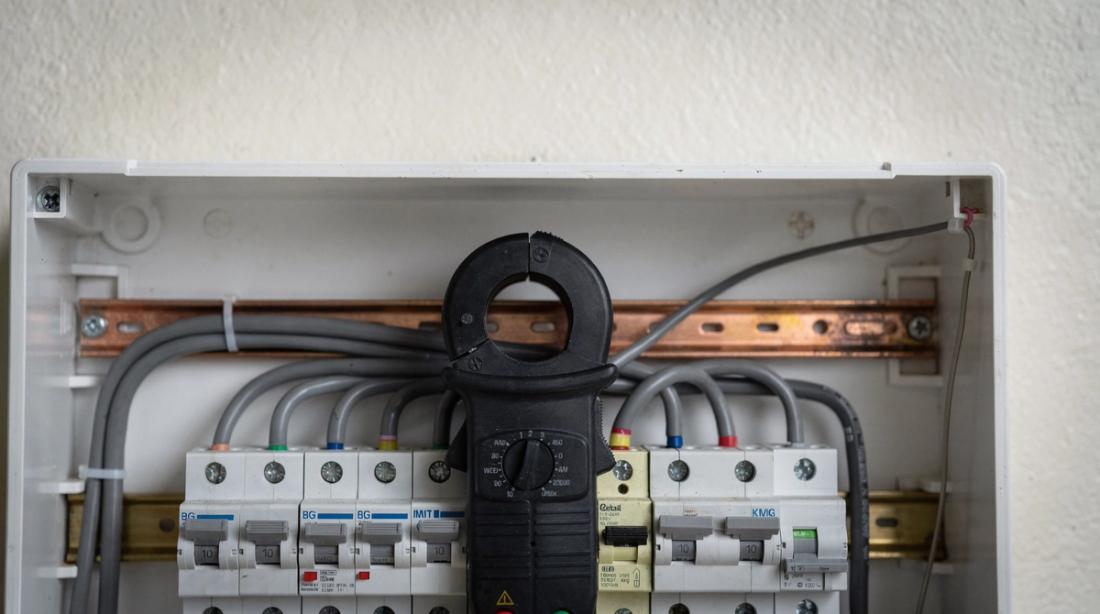
No. BS 7671 Regulation 712.410.102 requires either double or reinforced insulation or SELV/PELV on the DC side, and optimisers are not recognised as a protective measure (IET, 2025). They add a useful safety feature, but they do not discharge your design duty to provide one of the permitted measures.
This matters because an optimiser's shutdown can take up to 30 seconds and depends on the inverter shutting down first. Inverter protection stops current but does not remove potential, and string voltage can sit as high as 1,500 V DC until the array is isolated (IET, 2025). Treat SafeDC as a bonus for maintenance work, not as the measure that keeps the installation compliant.
Your DC isolation and insulation design still carries the safety case. Fit the correct isolators and insulation class, confirm the inverter's own protection features, and record the measures on the certificate. The hybrid inverter you pair with the optimisers also shapes the AC side, covered in our hybrid inverter guide.
Commissioning and SafeDC: checking the install
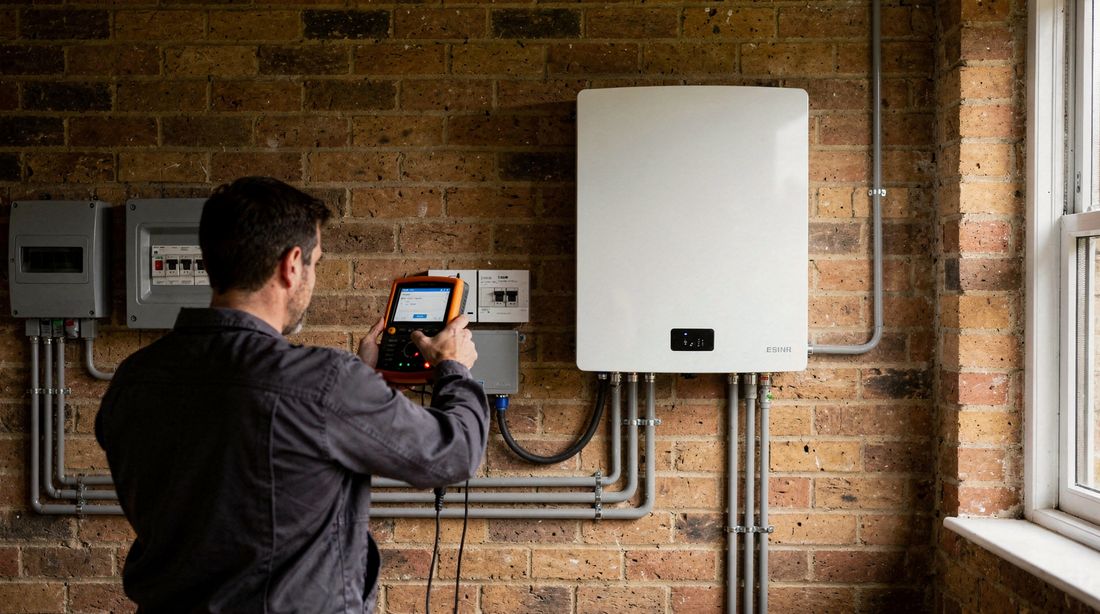
Commissioning pairs every optimiser to the inverter and confirms each one is alive. With AC removed, a healthy string reads roughly 1 V per optimiser rather than full array voltage, which is the SafeDC signature (SolarEdge datasheet, 2023). A string far from that figure points to a missing or faulted unit.
Run the inverter's pairing routine so the monitoring platform maps each serial number. Check firmware, confirm every module reports, and compare the measured string voltage against the expected one-volt-per-unit total. A reading near full open-circuit voltage usually means an optimiser was skipped or wired past.
Record panel-level readings at handover. They become the baseline for every future fault call, and the monitoring platform will flag the single underperforming module rather than sending you to test a whole string by hand.
Can you retrofit optimisers to an existing array?
Yes. Add-on optimisers mount to the frame of panels already on the roof and bring rapid shutdown and panel monitoring to a plain string. The Tigo TS4-A-O supports modules up to 725 W with 22 A short-circuit current and works with inverters from more than 50 makers (pv magazine, 2026).
Retrofit units suit a system that needs shutdown or monitoring without a full inverter swap. They carry a 25-year warranty, accept 12 to 80 V input, and clip to the module frame or rail. Plan the same layout discipline as a new build, because each unit still needs its position logged for commissioning.
Before you retrofit, check each module's short-circuit current against the optimiser rating, because an older panel still has to sit inside the unit's input window. On a mixed roof, confirm the existing inverter appears on the add-on's compatibility list, then stage the shutdown test as part of handover rather than an afterthought.
Optimiser options at a glance
The two common routes are an integrated system and a vendor-agnostic add-on. The comparison below sets the SolarEdge S-series against the Tigo TS4-A-O so you can match the hardware to the job.
Optimiser comparison
- Type. SolarEdge S-series is integrated DC optimisation for SolarEdge inverters; Tigo TS4-A-O is a vendor-agnostic add-on.
- Maximum module power. SolarEdge S500 handles 500 W rated input; Tigo TS4-A-O supports up to 725 W.
- Peak efficiency. SolarEdge S-series 99.5 percent; Tigo TS4-A-O 99.6 percent.
- Standby behaviour. SolarEdge SafeDC holds about 1 V per unit; Tigo triggers rapid shutdown in under 30 seconds.
- Best use. SolarEdge for a full new SolarEdge system; Tigo for retrofit or mixed-inverter fleets.
Fitting optimisers into your install workflow
Optimisers reward teams that treat layout, labelling and commissioning as one connected task rather than three separate ones. A clean survey decides whether the parts earn their cost, and a logged layout makes the inverter pairing quick.
Start every optimiser job at the survey, because the shade and orientation picture is what justifies the hardware. Our solar PV site survey guide covers the roof assessment that feeds the design.
Treat the first optimiser job on a new product line as a learning run. Fit a short string on the bench, pair it, and read the one-volt-per-unit total before the roof work starts, so the field crew already knows the signature of a healthy install and can spot a missed unit on sight.
Keeping the serial-number layout, string design and commissioning records in one place is where installer software such as Reonic helps, so the panel-level data from day one stays with the job rather than on a loose sheet.
Frequently asked questions
Do power optimisers need a special inverter?
SolarEdge optimisers only work with SolarEdge inverters, because the pair communicate over the DC string. Add-on optimisers such as Tigo are inverter-agnostic and work with models from more than 50 makers, which is why they suit retrofit and mixed fleets (pv magazine, 2026).
How many optimisers can go on one string?
The inverter model sets the count, not the panel voltage. SolarEdge caps nominal string power near 5,700 W on residential single-phase units, and residential strings run to a published minimum and maximum unit count. Size to the inverter's optimiser-per-string table rather than to open-circuit voltage.
Does an optimiser replace a DC isolator?
No. Optimisers are not a recognised DC protective measure under BS 7671, so the design still needs the correct isolation and insulation class (IET, 2025). SafeDC lowers the string to about one volt per unit for maintenance, but it does not remove the duty to fit compliant isolation.
Can you add optimisers to panels already installed?
Yes. Retrofit optimisers clip to the frame of existing modules and add rapid shutdown and panel monitoring without replacing the inverter. The Tigo TS4-A-O handles modules up to 725 W and carries a 25-year warranty, so it matches the remaining life of most arrays (pv magazine, 2026).
What does SafeDC mean when I measure a string?
With AC removed, each SolarEdge optimiser drops its output to roughly one volt, so a ten-unit string reads near ten volts rather than full array voltage (SolarEdge datasheet, 2023). A reading close to open-circuit voltage usually means an unpaired or faulted optimiser you need to find before handover.