
Solar panel recycling is a legal duty in the UK, not a green nicety: photovoltaic panels are classed as Category 14 Waste Electrical and Electronic Equipment (WEEE) and cannot be sent to landfill or a general skip (MG Waste, 2026). For installers, that turns every decommissioning, repower and warranty swap into a controlled-waste job with paperwork attached.
The volumes are about to matter. The UK is forecast to generate roughly 30,000 tonnes of solar panel waste over the next decade, rising sharply through the 2030s as the first big deployment wave retires (Synergy PV, 2026). Handling that stream properly protects your customers, your accreditation and the recoverable value locked inside each module.
Key Takeaways
- Landfill is illegal: panels are Category 14 WEEE and must go to a licensed carrier and an approved treatment facility, never a skip.
- Producers fund it: whoever places panels on the UK market must join a compliance scheme that finances collection and recycling.
- Recovery is high: modern plants recover up to 95% of glass, aluminium and copper, and 80 to 96% of silicon and silver.
- Homeowner take-back is usually free: the cost sits with producer schemes, though roof removal is a separate labour charge.
- Volumes are climbing fast: Category 14 collections jumped 393% year on year in Q3 2025 as early systems retire.
The UK rules: panels are Category 14 WEEE
Photovoltaic panels sit in Category 14 of the WEEE Regulations, the framework the UK retained after leaving the EU (ERP, 2026). That single classification decides everything downstream. A panel at end of life is controlled waste, so it cannot go in a general skip, a scrap run or a household bin. It must be collected by a licensed waste carrier and processed at a permitted treatment facility.
The duty to pay is built on producer responsibility. Any business that manufactures, imports or sells panels into the UK market must register with the Environment Agency, join an approved compliance scheme, and fund the collection and treatment of equivalent tonnage when it retires (ERP, 2026). For an installer, the practical read is simple: the brand you buy from should already sit inside a scheme that takes its panels back.
Enforcement is real and the paperwork is the proof. Businesses handling panel waste need a waste transfer note for every movement, and the treatment site must be able to issue evidence of proper processing (EvoEnergy, 2026). Keep that trail with the job file alongside your MCS records, because it is the document a customer, auditor or insurer will ask for.
How much solar panel waste will the UK produce?
The UK is on track for about 30,000 tonnes of end-of-life panel waste across the next decade, a figure set to accelerate as systems installed in the 2010s reach 25 to 30 years old (Synergy PV, 2026). The near-term signal is already visible: Category 14 collections rose 393% year on year in Q3 2025, an increase of 374 tonnes in a single quarter (ERP, 2025).
Globally the curve is steeper. IRENA projects cumulative end-of-life PV could exceed 200 million tonnes by 2050, with annual waste crossing one million tonnes in the early 2040s (IndexBox on IRENA, 2026). The original IRENA and IEA-PVPS work framed this as a resource opportunity rather than a disposal problem (IRENA, 2016).
There is a catch on today's performance. Researchers estimate only around 10% of retired panels are currently recycled worldwide, with the rest stockpiled, landfilled or exported (PNAS, 2025). The gap between what plants can recover and what actually reaches them is the real problem, and installer handling is where most of that leakage starts.
What is inside a panel, and what can be recovered?
A crystalline silicon panel is mostly commodity material with a few high-value metals threaded through it. By weight it is roughly 76% glass, 10% polymer, 8% aluminium, 5% silicon, 1% copper and under 0.1% silver (EcoExperts, 2025). The economics hide in that last fraction: a single panel holds around 20 grams of silver, a tiny share of the mass but a large share of the recoverable value.
Here is what a typical module yields and how much of each material modern recycling recovers:
- Glass (about 76% by weight): up to 95% recovered, used in new glass or insulation feedstock.
- Aluminium frame (about 8%): up to 95% recovered, a clean high-value scrap stream.
- Silicon cells (about 5%): 80 to 96% recovered; advanced plants reclaim high-purity silicon for new wafers.
- Copper (about 1%): up to 95% recovered from wiring and busbars.
- Silver and trace metals (under 0.1%): 80 to 96% recovered, and disproportionately valuable per gram.
That recovery profile is why panels are better treated as feedstock than rubbish. Send the whole module to a proper facility and most of it re-enters supply chains; break it or bin it and the silver and silicon are the first things lost (Solar Love, 2026).
How are end-of-life panels actually recycled?
Most panels today go through mechanical recycling. The aluminium frame and junction box come off, then the laminate is shredded and separated into glass, metals and a silicon-rich fraction (IEA-PVPS, 2026). It is robust and cheap, but the shredding step mixes materials and caps how much high-purity silicon and silver you can pull back out.
Advanced routes go further. Thermal and chemical delamination separate the layers intact, and the best 2026 plants report recovering over 95% high-purity silicon that can go straight back to wafer manufacturers (Synergy PV, 2026). These processes cost more per panel, so they scale with volume and with the value of the metals being chased.
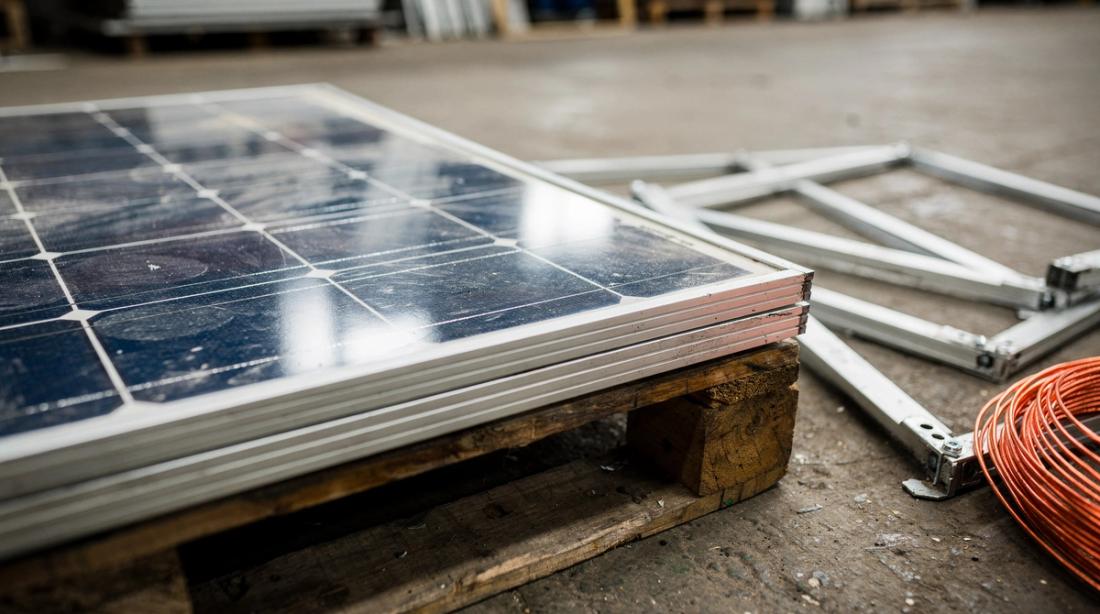
On site I have watched crews stack panels flat and unbroken on a pallet, then wonder why the recycler charges less than expected. Intact glass is the reason. A cracked, delaminated module is worth far less at the gate, so careful removal is not fussiness, it is protecting the recovery value the whole chain depends on.
What does solar panel recycling cost, and who pays?
For a homeowner, take-back is usually free because producer schemes carry the recycling cost; the charge they see is the labour to get panels off the roof (MG Waste, 2026). For loose or commercial volumes the recycling itself runs about £5 to £25 per panel, or roughly £750 plus VAT to collect and process a 16-panel domestic array (EcoExperts, 2025).
The cost picture, by route:
- Homeowner take-back: typically £0 for recycling via the producer scheme; roof removal labour is separate.
- Per-panel gate fee: about £5 to £25 per module for loose panels dropped at a facility.
- Small commercial array (16 panels): around £750 plus VAT collected and recycled.
- Producer scheme membership: funded by the manufacturer or importer, not the installer or end user.
For installers the takeaway is commercial, not just ethical. If you buy from brands inside a credible take-back scheme, you can offer free or low-cost end-of-life handling as part of a repower or warranty job, and price the removal labour transparently (Repurpose Solar, 2026). That is a cleaner customer conversation than surprising them with a disposal bill.
A practical removal and documentation checklist
Treat every panel removal as a controlled-waste job from the first fixing. The recovery value and your compliance trail are both decided on the roof and in the van, long before the module reaches a recycler. A short, repeatable routine keeps both intact and keeps the job auditable months later.
- Handle for intact glass: de-frame gently, keep modules flat and unbroken, and never stack them under load that cracks the laminate.
- Use a licensed carrier: move panels only with a registered waste carrier, never a general scrap or skip run.
- Raise a waste transfer note: record every movement so the chain of custody is documented end to end.
- Confirm the destination: send panels to a permitted treatment facility and keep its evidence of processing.
- File it with the job: store the note and evidence alongside your installation and MCS paperwork.
Documentation is the part crews skip and auditors check. A retained waste transfer note plus the facility's processing evidence is what proves a panel was handled lawfully (EvoEnergy, 2026). It also protects you if a customer later asks where their old array went, which on warranty repowers they increasingly do.
How does end-of-life planning fit the panel lifecycle?
Most panels run for 25 to 30 years before output drops enough to justify replacement, so recycling is the closing chapter of a long service life, not a near-term worry for a fresh install (Solar Love, 2026). Planning for it early still pays, because the brand and warranty choices made at install decide how easy the eventual take-back will be.
End-of-life sits alongside the rest of asset care. Good solar panel maintenance and a clear read of the solar panel warranty both extend the point at which recycling arrives, while a structured photovoltaic system maintenance plan flags the modules heading for retirement first.
Repowers are where this becomes routine now. When you retrofit a solar battery or swap ageing panels, the old modules need lawful onward handling, and any battery in the system falls under separate lithium-ion storage regulations. Building recycling into your repower quote turns a compliance duty into a tidy, trustworthy customer offer.
Frequently asked questions
Can I put old solar panels in a skip or general waste?
No. Solar panels are Category 14 WEEE and cannot legally go to landfill, a skip or a scrap run (MG Waste, 2026). They must be collected by a registered waste carrier and processed at a permitted treatment facility, with a waste transfer note recording the movement. Doing otherwise risks enforcement action and loses the recoverable materials.
How much of a solar panel can actually be recycled?
Modern facilities recover up to 95% of the glass, aluminium and copper and 80 to 96% of the silicon and silver (EcoExperts, 2025). The best 2026 plants reclaim over 95% high-purity silicon for new wafers. Overall a large majority of a panel by weight and value re-enters supply chains when it reaches a proper recycler intact.
Who pays to recycle solar panels in the UK?
Producer responsibility places the recycling cost on whoever placed the panels on the UK market, funded through their compliance scheme (ERP, 2026). Homeowners usually pay nothing for the recycling itself, only the labour to remove panels from the roof. Loose or commercial volumes attract a per-panel gate fee of roughly £5 to £25.
How long do solar panels last before they need recycling?
Most crystalline silicon panels last 25 to 30 years before degradation makes replacement worthwhile (Solar Love, 2026). Panels rarely fail outright at that age; output simply falls below a useful threshold. Early UK arrays from the 2010s are only now beginning to retire, which is why national panel-waste volumes are set to climb through the 2030s.
What paperwork do installers need for panel disposal?
You need a waste transfer note for every movement of the panels and evidence of processing from the permitted treatment facility (EvoEnergy, 2026). Move panels only with a registered waste carrier. Keep both documents with the job and MCS file, because they prove lawful handling if a customer, auditor or insurer asks later.
Building recycling into how you work
Solar panel recycling is shifting from a distant question to a live part of installer operations, driven by rising retirement volumes and a legal framework that treats every panel as controlled waste (ERP, 2025). Get the handling and paperwork right and you protect both the recoverable value and your accreditation.
The practical move is to make end-of-life handling a standard line in your repower and warranty jobs: buy from brands with credible take-back, remove panels intact, document the chain, and price removal labour openly. Reonic's installer platform can hold that job documentation alongside your design and compliance records, so the waste trail lives with the rest of the project rather than in a lost email.