
Solar panel maintenance in the UK is mostly about checking, not scrubbing: panels need little hands-on work, but the inverter, cabling, fixings and monitoring data need regular attention, and the installed base is growing fast, with almost 150,000 MCS certified solar installations in the first half of 2026 alone (MCS, 2026). With the default electricity unit rate at 26.32p per kWh from October 2026 (Ofgem, 2026), every unnoticed fault now costs the customer real money.
This guide is written for UK installers who look after systems after handover, and for owners who want to know what good aftercare looks like. It covers inspection intervals, safe cleaning, working at height, electrical and battery checks, reading monitoring data and how to package maintenance as a service.
Key Takeaways
- The UK had 2,076,000 solar installations and 22.8 GW of capacity by the end of June 2026, so aftercare is now a large and recurring workload (pv magazine, citing DESNZ data, 2026).
- Most domestic arrays need a remote performance check every month, a visual inspection once a year and a full electrical inspection and test on a longer cycle.
- Rain cleans most UK roofs well enough. Cleaning is worth doing when monitoring shows a drop, not on a fixed calendar.
- Falls from height caused 31 of the 126 worker deaths in Great Britain in 2025/26, so roof access must be planned, not improvised (HSE, 2026).
- Batteries change the maintenance picture: 36,000 MCS certified batteries went in during H1 2026, and 92% were added to homes with solar (MCS, 2026).
How often do solar panels need maintenance?
Most UK domestic systems need a monthly remote check of generation data, a visual inspection each year and a fuller electrical inspection every few years. That rhythm matters more as fleets grow: MCS recorded 210,000 certified installations of all technologies between January and June 2026, one every 74 seconds (MCS, 2026).
There is no single legal interval for inspecting a domestic PV array, so the schedule should follow the manufacturer's instructions, the warranty terms and the design of the system. In practice, three layers work well for most installers:
- Remote checks (monthly, or automated alerts): compare actual generation against the expected figure for that month and look for inverter error codes or communication drop-outs.
- Visual inspection (every 12 months, or after a named storm): look at modules, fixings, cable routes, roof penetrations and the condition of the inverter and isolators.
- Electrical inspection and test (every few years, or when a fault is suspected): insulation resistance, string open-circuit voltage and current, earthing and protective devices.
Systems with a battery, an optimiser on every panel or a commercial-scale array usually need tighter intervals. If you are planning maintenance across a larger portfolio, our strategic guide to photovoltaic system maintenance covers O&M planning for fleets and commercial sites.
What does a solar panel maintenance check include?
A solar panel maintenance check covers four areas: the modules and mounting, the DC and AC wiring, the inverter and any battery, and the performance data. With 22.8 GW of UK solar capacity installed by June 2026 (pv magazine, citing DESNZ data, 2026), a consistent checklist is what keeps visits quick and comparable year on year.
The table below is a practical checklist we recommend for a typical domestic system. It is a working template, not a regulatory requirement, so adapt it to the manufacturer's instructions for the specific kit.
- Modules: Cracks, hot spots, snail trails, delamination, heavy soiling or bird fouling
- Mounting and roof: Loose clamps, corroded rails, slipped or cracked tiles, flashing around roof hooks
- DC cabling: UV damage, chafing on roof edges, unsecured cables, connector condition
- Isolators and protection: DC and AC isolators operate freely, enclosures sealed, labels present and legible
- Inverter: Error log, firmware version, ventilation clearance, fan noise, display readings
- Battery (if fitted): State of health, error history, ventilation, clearances and labelling
- Performance: Actual yield against expected yield for the period, string-by-string where possible
Photograph each area on every visit. Dated photos are the quickest way to prove that a defect appeared later, which matters when you are dealing with a solar panel warranty claim or an insurer.
How should you clean solar panels in the UK?
Clean UK solar panels only when monitoring or a visual check shows a real loss, using soft brushes and purified water from the ground or from a safe platform. Owners should not climb onto roofs to do it: falls from height remain the most common cause of fatal injury to workers in Great Britain (HSE, 2026).
Frequent rain means most pitched roofs in the UK stay reasonably clean without help. The exceptions are predictable:
- Low-tilt or flat-roof arrays, where water and dirt pool along the bottom edge of the frame.
- Sites near farms, busy roads, the coast or trees, where dust, salt, pollen or sap build up faster.
- Roofs with nesting birds, where droppings create shaded patches and nests trap debris under the array. Our guide to solar panel bird proofing covers mesh and guards in detail.
When cleaning is needed, use a water-fed pole with deionised water and a soft brush. Avoid pressure washers, abrasive pads, harsh detergents and cold water on hot glass, all of which can damage the anti-reflective coating or void the module warranty. Clean early in the morning or on an overcast day, when the glass is cool and the array is producing less.
Working at height: the safety rules that apply
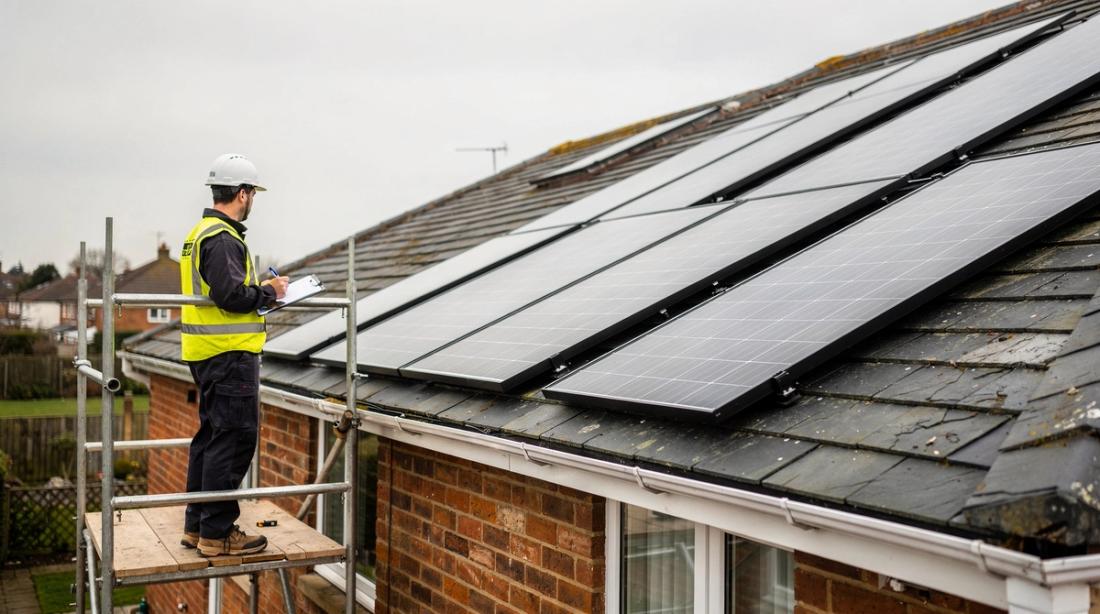
Roof access for solar maintenance falls under the Work at Height Regulations, and HSE guidance says roofs should be treated as fragile until a competent person confirms otherwise (HSE, 2026). HSE recorded 126 worker deaths in 2025/26, and falls from height were the largest single cause, at 31 (HSE, 2026).
For installers, that translates into a few non-negotiable steps for any maintenance visit that goes beyond ground level:
- Avoid the roof where you can. Drones, binocular inspections, monitoring data and water-fed poles cover most routine checks without anyone leaving the ground.
- Plan the access. HSE guidance expects scaffolding or edge protection on sloping roofs, with roof ladders and secured access ladders only for short tasks measured in minutes.
- Watch for fragile surfaces. Rooflights and ageing asbestos-cement sheets on outbuildings and commercial roofs are a known cause of fatal falls.
- Isolate before you touch. PV strings stay live in daylight even with the inverter off, so follow a written isolation procedure and treat DC connectors as live.
Keep a short risk assessment and method statement for each visit type. It protects your team and it answers the first question an insurer or the HSE will ask after an incident.
Inverter, battery and electrical checks
The inverter and electrical system are where most real faults show up, and they are the parts covered by BS 7671, now current as BS 7671:2018+A4:2026 with updated model forms for certificates and reports (IET, 2026). Record test results on the current forms so the next engineer can compare like with like.
A typical electrical maintenance visit includes:
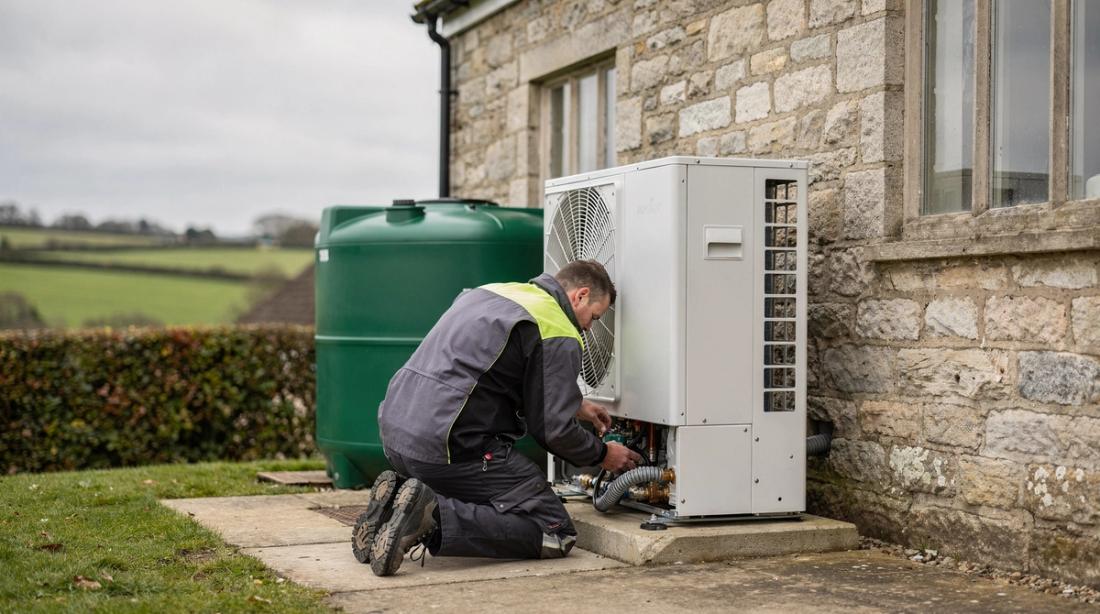
- Inverter review: read the error log, confirm the firmware is current, check that vents and heat sinks are clear and that the unit is not in direct sun or a sealed cupboard.
- String tests: measure open-circuit voltage and short-circuit or operating current on each string and compare them against the commissioning figures and the module datasheet.
- Insulation resistance: test the DC side to catch water ingress, damaged cable or failing connectors before they cause an earth fault trip.
- Protective devices and isolators: confirm operation, check labelling and look for signs of heat on terminals.
If an older string inverter keeps throwing faults or has reached the end of its warranty, it may be cheaper to replace it than to keep calling out. Our guide to solar inverter replacement explains how to size and quote a like-for-like swap or a hybrid upgrade.
Batteries add their own checks. Amendment 4 introduced a dedicated section on stationary battery systems, so check clearances, ventilation, labelling and the battery management system's error history against both the manufacturer's manual and the current regulations.
Using monitoring data to catch faults early
Monitoring data is the cheapest maintenance tool you have, because it flags most faults before anyone climbs a ladder. The value of each lost kWh has also risen: at the October 2026 price cap, every kWh a household has to import instead costs 26.32p (Ofgem, 2026), so 100 kWh of missed generation is worth about £26 on the customer's bill.
Set up a simple routine for each system you look after:
- Compare like with like. Judge each month against the expected yield for that month and against neighbouring systems in your portfolio, not against last summer's peak.
- Look for the shape of the fault. A sudden drop to zero usually means an inverter trip, a tripped breaker or lost communications. A slow decline points to soiling, shading from new growth or module degradation. One string lower than the others suggests a connector, cable or module problem on that string.
- Check exported energy too. Smart Export Guarantee payments are based on export meter readings (Ofgem, 2026), so a meter or communications fault can cost the customer income even when the panels are working.
Low winter output is normal and not a fault in itself. Our article on whether solar panels work in winter helps set expectations with customers who call in December.
Is a solar panel maintenance contract worth it?
A maintenance contract is usually worth offering when it bundles remote monitoring, an annual visit and priority fault response at a fixed price. Demand is there: one in three MCS certified installations in 2026 went into homes that already had, or were adding, more than one renewable technology (MCS, 2026), and those systems have more to go wrong.
Seasonal timing helps you spread visits across the year and keeps the conversation with customers relevant:
- Spring: Post-winter visual check, storm damage, pollen and bird activity, first full-sun performance review
- Summer: Peak output comparison string by string, inverter temperature and ventilation, bird fouling
- Autumn: Leaf build-up on low-tilt arrays, gutters and cable routes, battery settings for winter tariffs
- Winter: Remote checks only in most cases, snow left to slide off naturally, check after named storms
When you price a contract, be clear about what is included, what counts as a call-out and how quickly you respond. Keep the offer honest about what maintenance can do: it protects output and catches faults, but it will not lift a system above its design yield. For owners weighing up whether performance is on track, our guide to solar panel efficiency explains the figures behind a realistic expectation.
Building maintenance into your installer workflow
Maintenance works best when it is planned at the point of sale, not after the first fault call. The market is also widening: plug-in solar systems up to 800W became legal to sell for self-installation in Great Britain from 27 August 2026 (pv magazine, 2026), which will bring more first-time owners asking installers for advice.
A few habits make aftercare scalable:
- Capture the baseline at commissioning. String voltages, currents, insulation readings, photos and the expected monthly yield are what every later visit is judged against.
- Book the first annual check at handover. It is easier to schedule, and it turns a one-off sale into a relationship.
- Keep one record per system. Test results, photos, warranty documents and fault history should sit with the original project so anyone on your team can pick it up.
Tools such as Reonic can help keep project data, documents and customer details in one place from quote to handover, which makes that record easier to build from day one.
Frequently asked questions about solar panel maintenance
How often should solar panels be cleaned in the UK?
Most pitched UK roofs only need cleaning every few years, because rain removes light dirt. Clean when monitoring shows a sustained drop or a visual check finds heavy soiling or bird fouling. Low-tilt arrays and sites near farms, roads or the coast usually need cleaning more often.
Can I maintain my own solar panels?
Owners can check their monitoring app, keep an eye on the inverter display and look at the panels from the ground. Roof work, electrical testing and inverter faults should be left to a competent installer, because PV strings stay live in daylight and falls from height remain the biggest cause of fatal work accidents (HSE, 2026).
What are the signs that a solar system needs maintenance?
Watch for lower generation than the same month last year, an inverter error code or warning light, a system showing zero output on a sunny day, visible damage after a storm, or birds nesting under the array. Any of these is a reason to book a check.
Does solar panel maintenance affect my warranty?
It can. Many manufacturers exclude damage caused by incorrect cleaning or unapproved work, and some require the system to be installed and serviced by a competent person. Keep dated records and photos of every visit so you can show the system was looked after properly.
Do plug-in solar panels need maintenance?
Plug-in systems up to 800W, legal for self-installation in Great Britain since 27 August 2026 (pv magazine, 2026), need the same basic care: keep the panel clean, check the cable and plug for damage and make sure the mounting stays secure, especially on balconies and walls exposed to wind.