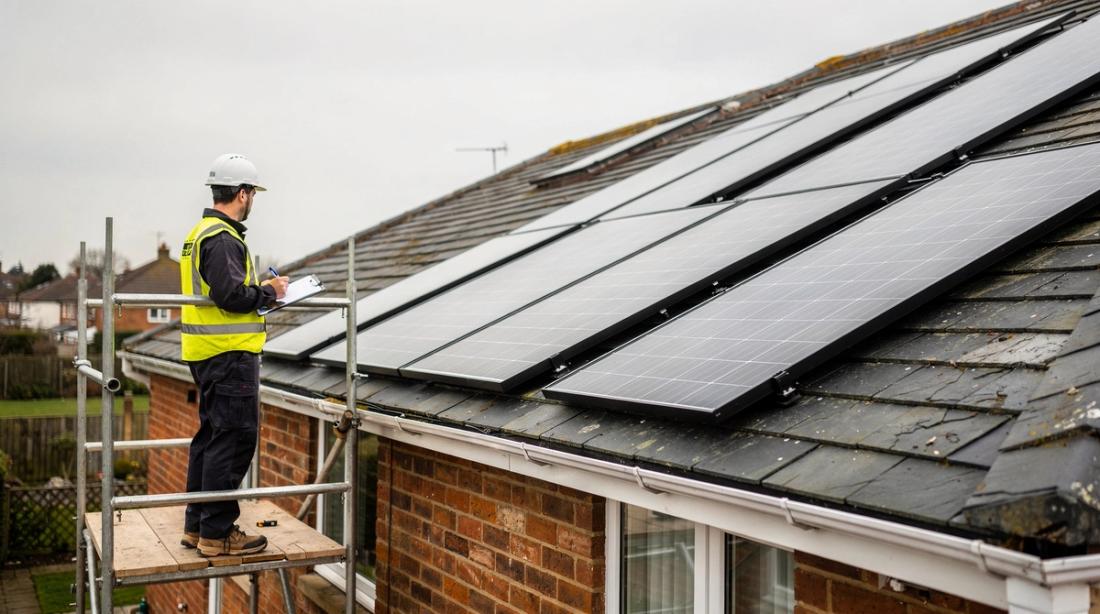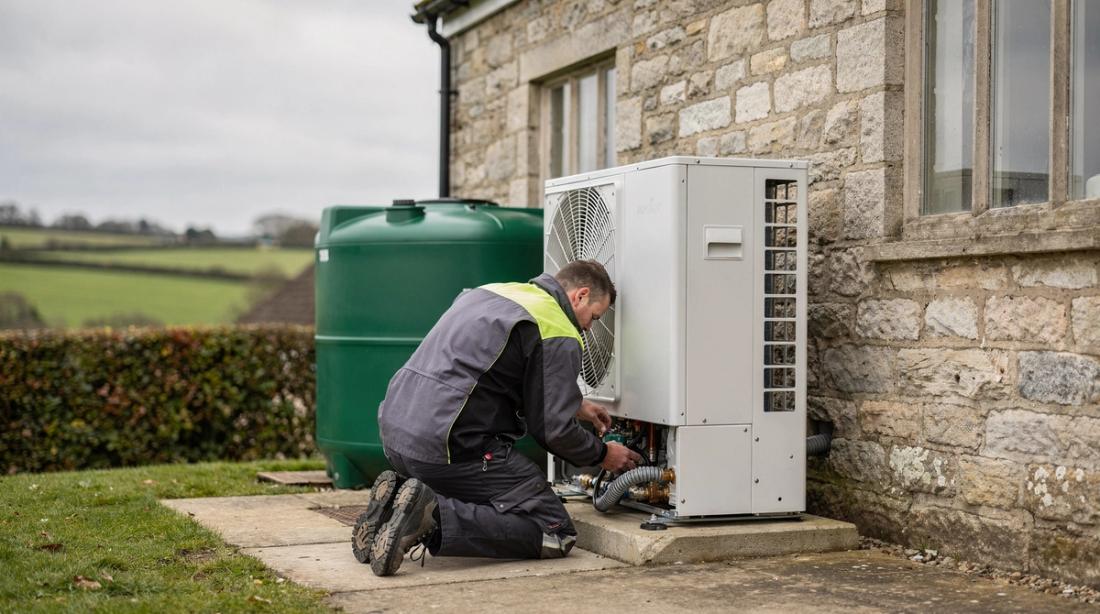

A solar and heat pump system pairs rooftop PV with an air or ground source heat pump so that home-generated electricity runs the heating, and the timing matters more than ever: one in three MCS certified installations in the first half of 2026 combined more than one renewable technology in the same home (MCS, 2026). With the default electricity unit rate at 26.32p per kWh from October 2026 (Ofgem, 2026), every solar kWh a heat pump uses directly is a kWh the household does not buy.
This guide is for UK installers who design, quote and commission combined systems. It covers how the two technologies interact across the seasons, how to size them as one system, which controls and tariffs make the pairing pay, and the grid, wiring and grant rules that apply in 2026.
Key Takeaways
- Combined installs are now mainstream: MCS recorded 210,000 certified installations in H1 2026, and one in three combined technologies in one home (MCS, 2026).
- Solar covers much of a heat pump's hot water demand in summer, but winter space heating still relies mostly on grid electricity, so tariffs and controls matter as much as panel count.
- The Boiler Upgrade Scheme pays 7,500 pounds towards an air or ground source heat pump, rising to 9,000 pounds for eligible oil and LPG homes until March 2027 (GOV.UK, 2026).
- Network rules look at the whole property: ENA's Connect and Notify route applies when maximum demand stays at or below 60A, and G98 or G99 depends on total generation per phase (ENA, 2026).
- BS 7671 Amendment 4 (2026) adds a new chapter on stationary batteries, which affects any combined system that includes storage (IET, 2026).
How does a solar and heat pump system work together?
A solar and heat pump system feeds PV generation into the installation that powers the heat pump, so the heat pump uses solar electricity first and the grid second. The Energy Minister has said a typical home could save up to 550 pounds a year by installing a heat pump, solar PV and a battery together (MCS, 2026).
No special hardware link is needed for the basic version. The inverter feeds AC into the consumer unit, and any load running at that moment, including the compressor, draws from it before the meter records an import. What separates a good combined system from two products sharing a roof is the control layer: when the heat pump runs, what it heats, and where surplus goes.
The heat pump does two jobs with very different profiles. Hot water is a storable load that can be shifted to midday. Space heating peaks on cold, dark winter evenings when PV output is near zero. Designing around that difference is the core skill, which is why we treat hot water as the primary solar load on most homes.
How much can a solar and heat pump system save in 2026?
Savings depend on how much heat pump electricity the PV array displaces from the grid at 26.32p per kWh, compared with gas at 7.97p per kWh under the October to December 2026 price cap (Ofgem, 2026). Government removed VAT from electricity bills from October 2026 to March 2027, which narrows the gap further.
The table below converts those unit rates into the cost of one kWh of delivered heat. It is our own arithmetic from Ofgem's published rates, not a measured result, and it assumes a 90% efficient gas boiler.
- Gas boiler at 90% efficiency: about 8.9p (7.97p divided by 0.9)
- Heat pump, SCOP 3.0, grid electricity: about 8.8p (26.32p divided by 3.0)
- Heat pump, SCOP 3.5, grid electricity: about 7.5p (26.32p divided by 3.5)
- Heat pump, SCOP 4.0, grid electricity: about 6.6p (26.32p divided by 4.0)
- Heat pump running on self-consumed solar: the export payment given up, divided by SCOP
Two points stand out for customer conversations. First, heat pump efficiency (SCOP) moves the running cost more than almost anything else, so emitter design and flow temperature are part of the savings case. Second, each solar kWh used on site is worth the import rate avoided, while an exported kWh earns only what the customer's Smart Export Guarantee tariff pays. SEG licensees set their own rates, which must always be above zero (Ofgem, 2026). Showing both values on a quote keeps expectations honest.
Sizing the PV array and heat pump as one system
Size the heat pump to the building's heat loss first, then size the PV array to the roof and to the household's total electrical demand including the heat pump. MCS heat pump design starts from a heat loss calculation, and MCS publishes its own Heat Load Calculator for that purpose (MCS, 2026).
The mistake to avoid is sizing the array to "cover the heat pump". Annual heat pump consumption is easy to estimate with simple arithmetic: a home needing 10,000 kWh of heat a year at a SCOP of 3.0 uses roughly 3,333 kWh of electricity. But most of that falls between November and March, when a UK array produces a small share of its annual yield. Matching annual kWh on paper does not mean the solar runs the heating.
A better approach is to model the heat pump's seasonal electricity profile, the household baseload and any EV charging, then overlay monthly PV generation. The overlap in spring, summer and early autumn is where self-consumption comes from, and where a hot water cylinder and possibly a battery earn their place.
Roof space is usually the real limit. On many surveys the roof takes fewer panels than the customer expects once shading and fixing zones are counted, so confirm the array before promising any self-consumption figure. For method notes, see our guide to heat pump sizing.
Where does the solar generation go in winter?
In winter, most solar generation goes straight into the home's baseload and the heat pump's daytime running, and very little is left to export. The heat pump's heaviest demand arrives after dark, so on cold days the system relies mainly on grid electricity, which is why the tariff choice becomes the main cost lever from November to February.
From late spring to early autumn, a PV array on a typical family home can often cover most daytime hot water reheats if the cylinder is scheduled for midday. In the heating season the goal shifts: use every available solar kWh during daylight, then run the heat pump on the cheapest grid electricity available.
Storage bridges part of the gap. MCS data shows 92% of battery installations in the first half of 2026 went onto properties with solar panels, and battery installs nearly doubled year on year to 36,000 (MCS, 2026). A battery can shift daytime surplus into the evening heating peak on shoulder-season days, and it can charge from off-peak grid electricity in deep winter. It will not turn a winter heating load into a solar-powered one, and quotes should say so plainly.
Thermal storage is the other option: a correctly sized hot water cylinder stores heat rather than electricity, usually at lower cost per kWh stored.
Controls and tariffs that maximise self-consumption
Controls decide whether a solar and heat pump system performs, because the heat pump needs to run when solar or cheap grid power is available. Ofgem notes that most households with a smart meter or other low carbon technologies can take advantage of lower cost electricity offers at certain times (Ofgem, 2026), which makes scheduling part of the design.
The simplest effective setup has three parts:
- Scheduled hot water. Set the main cylinder reheat for late morning to early afternoon, when PV output peaks, with a legionella cycle on a solar-heavy day where possible.
- Weather compensation for space heating. Keep flow temperatures low and let the heat pump run steadily. Deep night setbacks usually cost efficiency on a heat pump.
- Tariff alignment. Pair the system with a heat pump or time-of-use tariff so the grid electricity the heat pump does use is as cheap as possible. Our guide to heat pump tariffs in the UK compares the main options.
Home energy management systems or hybrid inverters with load control can raise the cylinder setpoint when there is surplus solar. Check that the heat pump manufacturer supports the control signal, and show the customer how to override it, or it tends to get switched off within a winter.
What grid and wiring rules apply to a combined system?
A combined system must satisfy both generation and demand rules at the same connection. ENA allows heat pumps to be installed under Connect and Notify, with the network operator told within 28 days, when the property's maximum demand stays at or below 60A; otherwise the installer must apply to connect first (ENA, 2026).
For generation, the G98 or G99 decision depends on total capacity at the property per phase, including any existing inverter or battery. Up to 16A per phase is normally a G98 notification after installation; above that, G99 approval is needed first. ENA publishes the current forms for both routes (ENA, 2026), and our G99 application guide walks through the process.
Wiring rules changed this year. BS 7671:2018+A4:2026 was published on 15 April 2026 and introduces a new chapter on stationary secondary batteries, including protective devices suited to two-way energy flow; the previous edition is withdrawn six months after publication (IET, 2026). Any combined system with storage should be designed to A4.
- Heat pump demand: Connect and Notify if maximum demand stays at or below 60A, otherwise apply first
- Solar and battery generation: G98 up to 16A per phase in total, G99 above that
- Battery installation: Design to BS 7671 Amendment 4 (2026) stationary battery chapter
- Certification: MCS certification for heat pump and PV to access BUS and SEG
For the certification and paperwork side of a combined job, see our dedicated guide to PV and heat pump compliance.
2026 grants and incentives for a combined install
The Boiler Upgrade Scheme is the main incentive: 7,500 pounds towards an air or ground source heat pump, 2,500 pounds for air-to-air, and 9,000 pounds for eligible oil or LPG homes without a mains gas connection until March 2027 (GOV.UK, 2026). The installer applies on the customer's behalf.
BUS matters to the combined market. MCS reports that three quarters of heat pump installations in H1 2026 were funded by government programmes such as BUS, even though heat pump installs fell 17% year on year while solar rose 14% (MCS, 2026). For many customers, the grant is what makes adding the heat pump to a solar project affordable.
The solar side does not have a capital grant for most owner-occupiers, but exported electricity earns SEG payments where the system is eligible. SEG covers solar PV up to 5MW, and tariffs are set by each licensee (Ofgem, 2026). Both BUS and SEG require MCS certified installations, so certification is the first thing to confirm when a customer asks about funding.
New build is heading the same way: the Future Homes and Buildings Standards response confirms new homes will have low carbon heating and, in most cases, solar panels (GOV.UK, 2026).
Installer checklist for a combined solar and heat pump quote
A reliable combined quote starts with one survey that captures heat loss, roof, electrics and household demand together, because the network, wiring and grant checks all depend on the whole property. Missing the main fuse rating or existing generation on the survey is a frequent reason a combined job stalls after the customer has signed.
Before issuing the quote, confirm the following:
- A room-by-room heat loss calculation and design flow temperature for the heat pump.
- The usable roof area and array size after shading and fixing constraints.
- Main fuse rating, existing maximum demand and any existing generation or battery.
- The network route: Connect and Notify or apply to connect for the heat pump, and G98 or G99 for generation.
- BUS eligibility, including whether the property qualifies for the 9,000 pound oil and LPG rate.
- The control strategy and recommended tariff, written in plain language for the customer.
Keeping all of that in one place is where installer software helps. Tools such as Reonic let teams plan PV and heat pump systems in a single project and produce one combined proposal, which keeps the survey data, design and paperwork consistent. For a wider view of the options, see our overview of digital tools for installers.
FAQ
Can solar panels power a heat pump on their own?
Not all year in the UK. Solar can cover much of a heat pump's daytime hot water demand from spring to autumn, but winter space heating peaks after dark when PV output is near zero. Most homes still import grid electricity for heating in winter, so the system should be paired with a heat pump or time-of-use tariff to keep those grid kWh as cheap as possible.
Do I need a battery with a solar and heat pump system?
A battery is optional. It helps shift daytime surplus into the evening and can charge from cheap off-peak electricity, which is why 92% of batteries installed in H1 2026 went onto homes with solar (MCS, 2026). A well-scheduled hot water cylinder often delivers similar value at lower cost, so model both.
Does a combined system need DNO approval?
It depends on the whole property. The heat pump can go in under Connect and Notify when maximum demand stays at or below 60A. The solar and any battery follow G98 up to 16A per phase in total, or G99 with prior approval above that (ENA, 2026). Existing generation always counts towards the total.
Can I get the Boiler Upgrade Scheme grant if I already have solar panels?
Yes. Existing solar does not affect BUS eligibility. The grant is 7,500 pounds for an air or ground source heat pump, or 9,000 pounds for eligible oil and LPG homes until March 2027 (GOV.UK, 2026). The heat pump must be installed by an MCS certified installer, who applies on the customer's behalf.
Is a heat pump cheaper to run than a gas boiler in 2026?
It can be. At Ofgem's October 2026 rates of 26.32p per kWh for electricity and 7.97p for gas, a heat pump with a SCOP of 3.0 costs roughly the same per kWh of heat as a 90% efficient boiler, and a higher SCOP makes it cheaper (Ofgem, 2026). Solar self-consumption and a heat pump tariff widen the gap further.