
The Part L building regulations cut permitted CO2 emissions from new dwellings by 31% under the 2021 edition compared with the 2013 standard (Approved Document L, gov.uk, 2026). For UK installers and developers, that single figure reshaped how new homes are specified. Solar PV, tighter fabric and low-carbon heating moved from optional extras to near-default choices on most sites.
Part L is the section of the Building Regulations covering conservation of fuel and power. It sits apart from Part P, which deals with electrical safety, and it is where fabric performance, heating efficiency and on-site generation are tested. With the Future Homes Standard now published and due to bite from 2028, Part L is no longer a box-ticking exercise. It is the framework that decides whether a project passes on paper and performs on site.
Key Takeaways
- Part L 2021 requires a 31% CO2 cut for new dwellings against the 2013 baseline, live since 15 June 2022 (Approved Document L, gov.uk, 2026).
- Part L covers conservation of fuel and power, while Part P covers electrical safety. They are separate regimes with separate sign-off.
- The SAP 10 notional dwelling assumes solar PV of roughly 40% of the lowest-storey floor area divided by 6.5, so PV is effectively expected on most houses (Energycount, 2026).
- The Future Homes Standard, published 24 March 2026, mandates near-universal solar and heat pumps, in force from 2028 with a 75% carbon cut versus 2013 (Solar Power Portal, 2026).
- Government estimates the added build cost at about £4,350 per dwelling (Future Homes Standard impact assessment, gov.uk, 2026).
What are the Part L building regulations?
The Part L building regulations set the energy efficiency and carbon standards for buildings in England. The 2021 edition, in force since 15 June 2022, requires new dwellings to emit 31% less CO2 than the 2013 baseline (Approved Document L, gov.uk, 2026). Compliance is proven through modelling, not guesswork on site.
Approved Document L is the practical guidance that shows how to meet Part L. It comes in two volumes, one for dwellings and one for all other buildings. Volume 1 sets the fabric limits, heating standards and renewable expectations that installers meet daily on domestic new build and extensions.
Compliance is demonstrated with a SAP calculation for new dwellings, run by an accredited assessor. The model compares the actual design against a notional dwelling of the same size and shape. If the real building emits more carbon or uses more primary energy than the notional version, it fails. That is why fabric, glazing and generation now get priced early rather than bolted on late.
Non-domestic buildings sit under Volume 2, which carries a slightly lower target. The 2021 update asked for an average 27% carbon improvement on non-domestic work against 2013 (France and Associates, 2026). For most installers, though, the domestic side drives the daily workload.
Part L versus Part P: conservation of fuel and power explained
Part L governs conservation of fuel and power, meaning energy efficiency and carbon. Part P is a different regulation entirely, covering electrical safety in dwellings. Confusing the two is common on site, but they trigger separate notifications and separate sign-off routes, so getting the distinction right protects your paperwork.
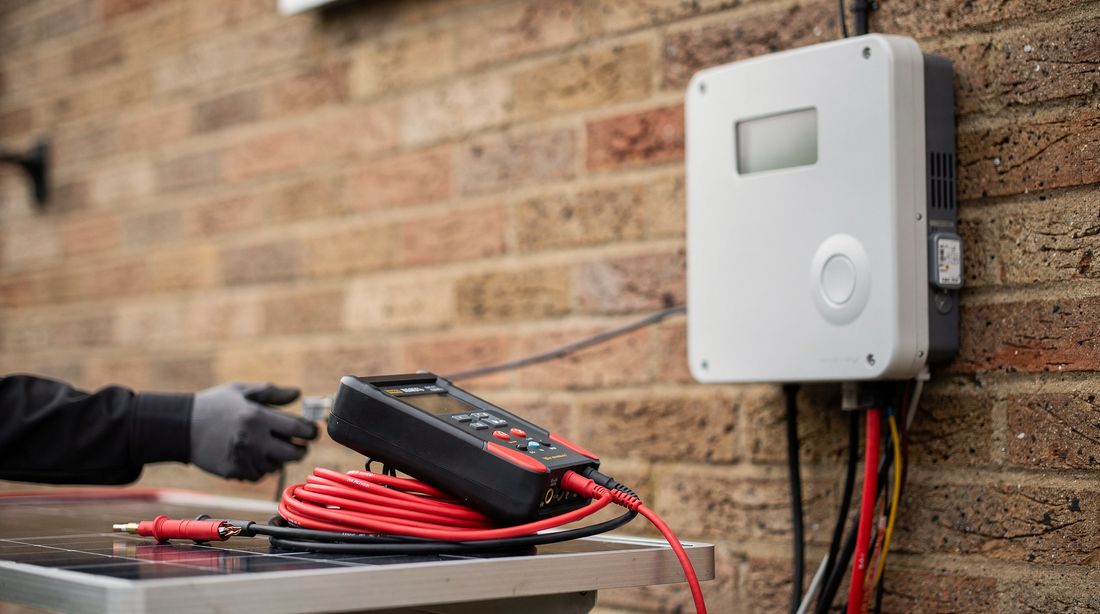
A solar PV install touches both. The generation contribution and any battery affect the Part L energy model on new build. The electrical work, the DC and AC wiring, the isolation and the consumer unit connection, falls under Part P and the wiring regulations. We often see installers assume a single certificate covers everything, then hit a delay at completion.
If you handle electrical notification, it is worth reading our guide to the Part P building regulations alongside this one, because the two regimes overlap on almost every retrofit and new-build solar job. Getting both threads scheduled from day one keeps handover clean.
Part L also links to the wider compliance picture. On existing homes, energy upgrades feed straight into the property's rating, so improving fabric and adding generation supports EPC rating improvement at the same time. The two goals rarely conflict, which makes packaged upgrades easier to sell to homeowners.
What changed under Part L 2021 and the 2023 amendments?
Part L 2021 was the biggest energy uplift in England for years. It delivered the 31% CO2 cut for dwellings by combining tighter fabric, better services and an expectation of low-carbon technology such as heat pumps or PV (Elmhurst Energy, 2026). The 2023 amendments then folded overheating and ventilation updates into the same document.
The 2021 edition took effect on 15 June 2022, with transitional arrangements for work already registered before that date (Approved Document L, gov.uk, 2026). The consolidated 2021 edition incorporating 2023 amendments is now the live reference for domestic projects. Always check you are working from the current version, not an archived PDF, before you specify anything.
The table below tracks the direction of travel across the three key standards. It shows why solar PV has become close to unavoidable on new houses.
- Part L 2013: In force: 2014; Headline CO2 target vs 2013: Baseline; Solar PV expectation: None
- Part L 2021: In force: 15 June 2022; Headline CO2 target vs 2013: 31% reduction (dwellings); Solar PV expectation: PV assumed in notional dwelling
- Future Homes Standard: In force: From 2028; Headline CO2 target vs 2013: 75% reduction; Solar PV expectation: Near-universal, approx. 40% of floor area
The pattern is clear. Each step tightens fabric and pushes more on-site generation, so specifying to the minimum today risks a redesign tomorrow. Many developers now build to something close to Future Homes levels early to avoid reworking house types twice within a few years.
How does Part L cover solar PV on new build?
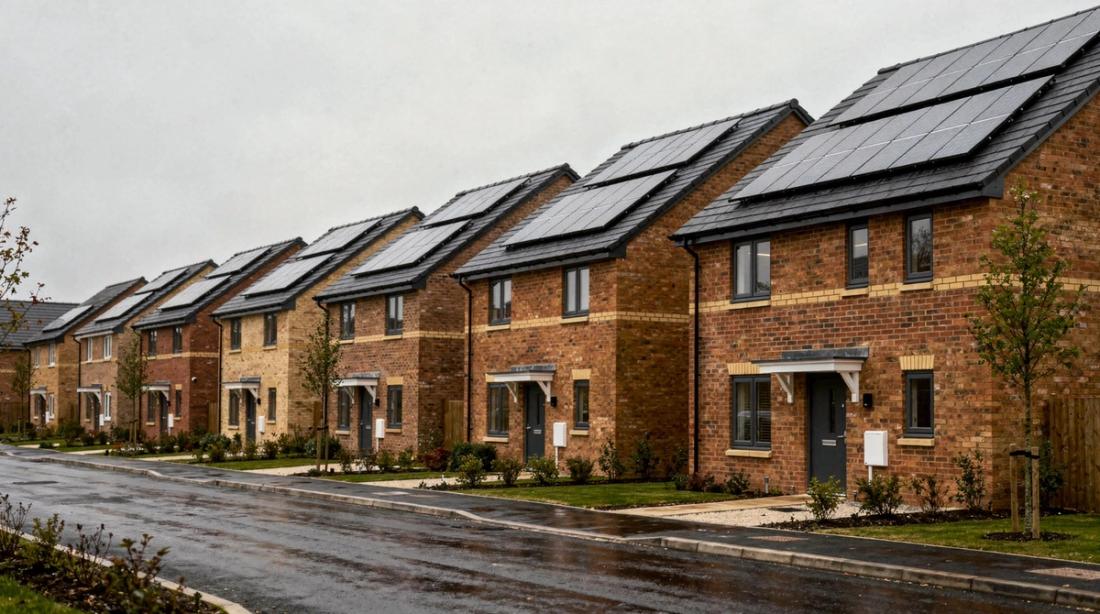
Part L does not name solar PV as a hard requirement, but the SAP model makes it very hard to avoid. The notional dwelling used for comparison assumes PV sized at 40% of the lowest-storey floor area divided by 6.5, roughly 4kW on an average house (Energycount, 2026). Beat that without PV and you need exceptional fabric.
Because the target building is judged against a notional dwelling that already includes generation, leaving PV off shifts the whole burden onto walls, roof, glazing and heating. In practice that is expensive and often impractical on smaller plots. So most designers simply include an array sized to the SAP assumption and move on.
This is where install quality matters. An undersized or badly shaded array that underperforms the modelled figure can leave a plot short at completion. From field experience, the safest approach is to size the physical array to at least the SAP figure and confirm the layout against real roof orientation before the model is signed off, not after.
Homeowners and developers sometimes ask whether panels need planning permission on new build. On most estates the PV is covered by the wider approval, but edge cases exist, and our guide to solar panel planning permission covers the exceptions. Sorting that early avoids a scramble near handover.
Part L and new-build fabric standards
Fabric comes first under Part L, because you cannot heat your way out of a leaky building. The regulations set limiting U-values, the worst-case backstops that no element may exceed. For new dwellings the wall backstop is 0.26 W/m2K and the roof backstop is 0.16 W/m2K (Approved Document L, gov.uk, 2026).
Limiting values are only the floor, not the target. To hit the 31% carbon cut, designers usually specify better than the backstops and pay close attention to airtightness and thermal bridging. The notional dwelling assumes strong performance across every element, so a single weak junction can drag the whole SAP result down.
The table shows the main limiting U-values installers meet on domestic new build.
- External wall: Part L 2021 limiting U-value (W/m2K): 0.26
- Roof: Part L 2021 limiting U-value (W/m2K): 0.16
- Floor: Part L 2021 limiting U-value (W/m2K): 0.18
- Windows and doors: Part L 2021 limiting U-value (W/m2K): 1.6
Get the fabric right and the rest of the model breathes more easily. Heat pumps run more efficiently in a well-sealed shell, and a smaller PV array can still tip the balance to a pass. This is the order of operations that keeps new-build projects compliant without gold-plating every line item.
What is the Future Homes Standard and Part L 2025?
The Future Homes Standard is the next major uplift to Part L, published by MHCLG on 24 March 2026 after years of consultation once badged as Part L 2025 (Elmhurst Energy, 2026). It requires new homes to emit at least 75% less carbon than the 2013 standard, with solar and heat pumps as the default.
The timeline matters for planning your pipeline. The new standards come into force from 24 March 2027 for most work, with a 12-month transition period, meaning full application from 2028 (Solar Power Portal, 2026). From 2028, virtually all new homes must fit on-site generation, with solar covering the equivalent of about 40% of floor area.
Gas is on the way out too. From 2028 no new home will be connected to the gas network, which pushes heat pumps to the front as the standard heat source (Solar Power Portal, 2026). For heating engineers, correct load and emitter design becomes central, and our notes on heat pump sizing walk through the method.
The cost question is real for developers. Government estimates the average added build cost at about £4,350 per dwelling, ranging from roughly £1,550 for high-rise flats to £5,690 for mid-terrace houses (Future Homes Standard impact assessment, gov.uk, 2026). Set against a claimed saving of up to £830 a year on bills, the payback case is workable (Construction Management, 2026).
How installers and developers should prepare
Preparation starts with treating Part L as a design driver, not a final hurdle. The 2021 edition already assumes PV on most houses, and the Future Homes Standard makes solar and heat pumps near-universal from 2028 (Solar Power Portal, 2026). Firms that design to that reality now will not be redrawing house types in two years.
Get your accreditation and your paperwork in order. Domestic solar and heat pump work usually needs MCS certification for grants and consumer confidence, and our guide to MCS accreditation sets out the route. Pair that with a clean split between Part L modelling and Part P electrical sign-off, and handovers stay simple.
Finally, tie the array size to the SAP figure early and confirm it against real roof geometry. On the software side, tools like Reonic help installers size systems, produce compliant designs and quote faster, which keeps the Part L numbers and the physical install aligned from survey to sign-off. The regulations reward teams that plan the model and the metalwork together.
Frequently asked questions
Is Part L the same as Part P?
No. Part L covers conservation of fuel and power, meaning energy efficiency and carbon, while Part P covers electrical safety in dwellings (Approved Document L, gov.uk, 2026). A solar install touches both, so you need Part L modelling on new build and Part P sign-off on the electrical work, through separate notification routes.
Does Part L make solar PV compulsory?
Not by name, but effectively yes on most new houses. The SAP notional dwelling assumes PV sized at 40% of the lowest-storey floor area divided by 6.5 (Energycount, 2026). Beating that target without any panels demands exceptional fabric, so designers almost always include an array to pass the calculation.
When did Part L 2021 come into force?
The 2021 edition of Approved Document L took effect on 15 June 2022 in England, with transitional arrangements for work registered before that date (Approved Document L, gov.uk, 2026). It delivered a 31% CO2 reduction for new dwellings against the 2013 baseline and is now consolidated with the 2023 amendments.
What are the Part L 2021 limiting U-values?
The limiting, or backstop, U-values for new dwellings are 0.26 W/m2K for external walls and 0.16 W/m2K for roofs (Approved Document L, gov.uk, 2026). These are worst-case maximums, not targets. To meet the carbon cut, most designs specify better fabric and tighter airtightness than the backstops allow.
How is the Future Homes Standard different from Part L 2021?
The Future Homes Standard, published on 24 March 2026, tightens Part L further, requiring a 75% carbon cut versus 2013 rather than 31% (Solar Power Portal, 2026). It makes solar and heat pumps near-universal and removes gas connections on new homes, applying in full from 2028 after a transition period.