
A DC isolator is the switch-disconnector that separates a solar PV array from its inverter, and getting its specification and siting right is one of the highest-stakes decisions on any UK install. Government-commissioned fire research found DC isolators were linked to 18 of the fire incidents in a study of more than 50 UK solar fires, more than any other single component (gov.uk / BRE, 2017). For installers, that makes the humble DC isolator a compliance and safety pinch-point worth understanding in full.
This guide covers what a rooftop DC isolator does, whether one is still required in 2026, what BS 7671 and the current codes of practice ask for, why external DC isolation carries fire risk, and how to select and site a unit that passes inspection. The aim is practical: fewer call-backs, cleaner handovers, and installs that stand up to scrutiny. Much of the confusion around DC isolators comes from conflating two separate questions, whether isolation is required at all and whether it must sit on the roof, so this guide keeps those apart throughout.
Key Takeaways
- DC isolation between array and inverter is mandatory under BS 7671 Section 712, but a separate rooftop DC isolator is not always required if the inverter has an integrated, accessible one.
- UK fire evidence points to external DC isolators and DC connectors as the largest hardware-linked fire sources, usually because of water ingress, poor crimps, or loose terminals, not the switch itself.
- Choose switch-disconnectors marked to BS EN/IEC 60947-3, rated DC-PV1 for single strings or DC-PV2 for parallel strings, with voltage and current headroom above worst-case Voc and Isc.
- Site DC isolators where water cannot track in, with bottom cable entry, IP66 or better, lockable off, and clear labelling.
- More than a third of investigated PV fires traced back to installation quality, so workmanship matters more than brand choice.
What is a DC isolator and what does it do?
A DC isolator, or switch-disconnector, opens the direct-current circuit between the PV strings and the inverter so the array can be worked on safely. It provides a visible, lockable break for maintenance, testing, and emergency shutdown. Unlike an AC circuit, DC current never crosses zero, so a quality unit uses snap-action contacts and arc chutes to break the circuit fast and extinguish the arc (Alternergy, 2025).
That physics is the whole reason DC isolation gets special attention. Opening a loaded DC circuit with an unrated switch can sustain a plasma arc that will not self-extinguish, and arcing can ignite nearby material in under a second (Solar Power Portal, 2017). A compliant DC isolator is engineered specifically to interrupt that current cleanly, which a general-purpose AC switch cannot do.
Are rooftop DC isolators still required in the UK?
DC isolation is required, but a dedicated rooftop DC isolator is not always mandatory. BS 7671 requires a means of isolating the array from the inverter, and most modern string inverters ship with an integrated, accessible DC switch that satisfies this. Where the inverter provides compliant isolation at an accessible location, adding a separate external rooftop isolator can increase risk rather than reduce it.
Guidance from the IET and NICEIC recommends an isolator close to the array where string open-circuit voltage exceeds 120V, so first responders can de-energise at array level (NICEIC, 2024). The practical rule many UK installers now follow is to isolate at the inverter and avoid extra rooftop enclosures unless the manufacturer, client specification, or a documented site risk assessment explicitly calls for one.
Regulations and codes of practice for DC isolation
BS 7671 Section 712 is the anchor requirement: every PV installation must have a means of DC isolation, and the device must be a switch-disconnector rated for DC PV duty (Alternergy, 2025). The isolator itself must comply with BS EN/IEC 60947-3, the standard for switch-disconnectors, and carry the correct PV utilisation category.
Beyond the wiring regulations, two documents shape best practice. The IET Code of Practice for Grid-Connected Solar PV Systems sets design and installation expectations, and the RC62 Joint Code of Practice from the FPA, MCS, and Solar Energy UK gives specific fire-safety recommendations for PV, including isolator siting and connector discipline (MCS / RC62, 2023). Reading these together tells you not just what to fit, but where and how, and they sit alongside the grid-side paperwork covered in our G99 application guide.
Why are DC isolators a fire risk?
The fire risk is real but usually rooted in installation, not the concept of isolation itself. The government-commissioned BRE investigation into UK solar fires found that DC-side faults dominate, and that external DC isolators were the single largest hardware-linked source. Root causes cluster around moisture ingress, incorrect crimps, cross-mated look-alike connectors, incomplete engagements, and loose switch terminals (Alternergy, 2025).
The evidence also puts workmanship front and centre. In the BRE dataset, installation problems accounted for far more fires than faulty products or system design, which means specification alone will not protect you if the enclosure lets water in or a terminal is left loose. Here is how the investigated incidents broke down (Solar Power Portal, 2017):
- DC isolators: linked to 18 fire incidents, the largest single hardware source.
- DC connectors: a further 10 incidents, mostly crimp and mating faults.
- Inverters: up to 7 incidents.
- Installation quality: 36% of fires traced to problematic installation, versus 12% to faulty products and 5% to system design.
- Industry context: the Solar Trade Association calculated roughly 99.995% of installations were operating safely across more than 800,000 accredited systems.
How do you choose a compliant DC isolator?
Sizing comes before brand. The unit must carry a voltage rating above the string Voc at the lowest expected site temperature, a figure that comes straight out of your string design, and a current rating above Isc with headroom for back-feed from parallel strings. The same worst-case values drive DC cable sizing, so specify them together. Then match the PV utilisation category to the topology: DC-PV1 for a single string, DC-PV2 for paralleled strings, and never a DC-PV0 device on-load (Alternergy, 2025).
Use this quick selection reference when specifying a unit:
- Standard mark: BS EN/IEC 60947-3, DC-PV1 or DC-PV2 as appropriate.
- Voltage rating: above worst-case string Voc at minimum site temperature.
- Current rating: above Isc, factoring parallel-string back-feed.
- Typical residential current bands: 16A single-string, 25A hybrid or off-grid inputs, 32A for combined parallel strings.
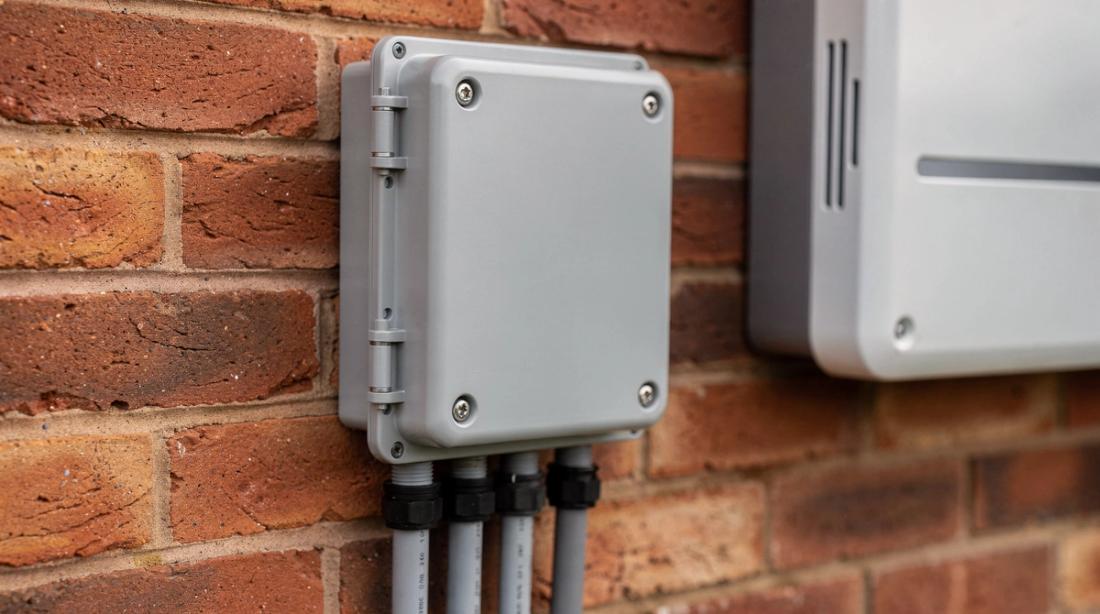
- Enclosure: IP66 or better, UV-stable, sealed glands, bottom cable entry.
- Operation: snap-action make and break, lockable off, clear on and off marking.
Siting a DC isolator safely
Placement is where good specification is won or lost. Site the isolator close to the equipment it protects, clearly labelled, and where an operator or first responder can reach it safely. Avoid any position that raises fire, water-ingress, or access risk, which in practice rules out most rooftop and under-array locations unless a site policy demands them (Alternergy, 2025).
Keep these siting rules in mind on every job:
- Do not fit an isolator beneath gutters, drip lines, or with top or side-upward cable entry where water can track in.
- Do not hide units behind modules, in loft corners, or in plant areas without clear access.
- Do not scatter multiple isolators in ways that confuse an emergency shutdown sequence.
- Do use outdoor-rated enclosures with bottom entry, and record the isolator details and photos in the handover pack.
DC isolator versus the inverter's built-in isolator
Most current string inverters include an integrated DC switch-disconnector, and where that switch is compliant and accessible it can satisfy the isolation requirement on its own. The design question is whether a separate external isolator adds genuine safety or simply adds another enclosure, another set of terminals, and another potential water path onto the array circuit.
For a straightforward pitched-roof domestic system with an accessible inverter, isolating at the inverter is often the cleaner, lower-risk choice. For larger or commercial arrays, multiple MPPT inputs, or long DC runs, a dedicated string-box isolator can improve maintainability. Either way, the decision should be documented against BS 7671 and the RC62 guidance rather than made by habit, much as battery DC isolation is documented under the IET Code of Practice for electrical energy storage.
Field notes: siting, commissioning and documentation
Two observations come up repeatedly on site. First, water ingress is nearly always an orientation problem: units mounted with top cable entry or under a drip line fail within a couple of winters, while the same product with bottom entry and a proper gland stays dry for years. Second, torque discipline on terminals matters more than any datasheet, because a loose DC terminal is exactly the loose, arcing joint the fire evidence keeps pointing to.
The takeaway for quoting and commissioning is to treat the isolator as part of the system design, not an afterthought bolted on at the end. Specify it against the string electrical values, choose the siting deliberately, torque and photograph every connection, and the single most fire-linked component on the roof becomes a non-issue at the next inspection.
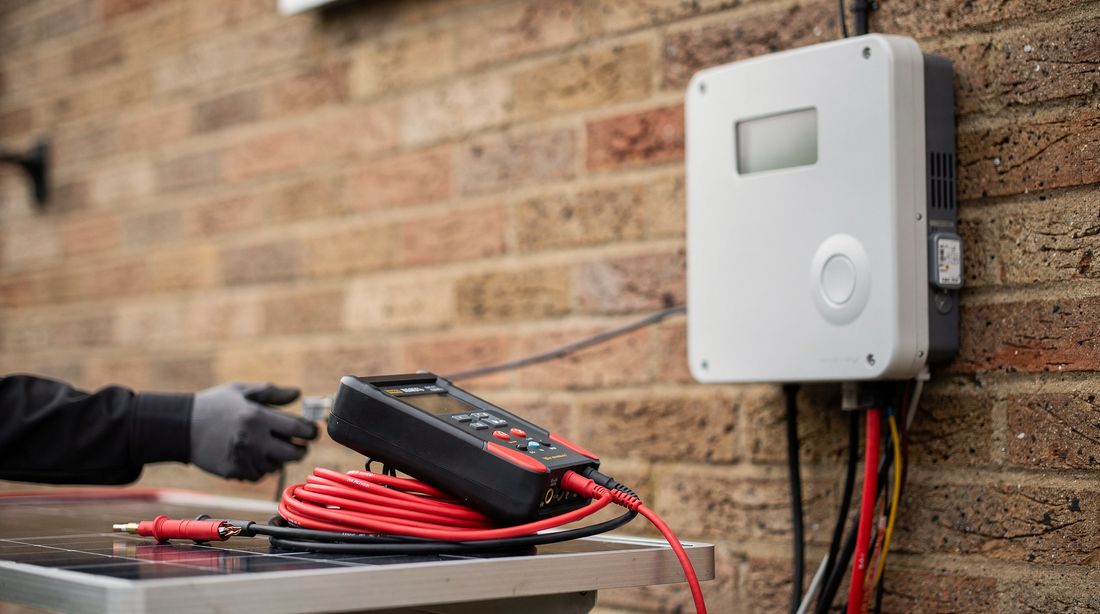
Commissioning proves the isolation you specified actually works on the day. Insulation resistance testing of DC cables uses a minimum test voltage of 500V, with 1000V preferred for higher-voltage strings, and the readings belong in the handover pack next to the string test data (SurgePV, 2026). Operate the isolator off-load first, then confirm it breaks cleanly and locks in the off position.
Labelling and records close the loop. BS 7671 Section 712 expects clear identification of every DC isolator and the array it serves, so an operator or first responder can find and use it under pressure. Photograph each connection, note the torque settings, and record the isolator make, model, and PV utilisation category. A verifiable commissioning record is what turns a compliant specification into an install that survives both inspection and any future insurance query.
Frequently asked questions
Is a rooftop DC isolator a legal requirement in the UK?
No single regulation mandates a rooftop enclosure. BS 7671 Section 712 requires a means of DC isolation between array and inverter, which a compliant integrated inverter switch can provide. IET and NICEIC guidance recommends array-level isolation where string Voc exceeds 120V, so the decision depends on the inverter, the voltage, and a documented site risk assessment.
What standard must a solar DC isolator meet?
DC isolators must be switch-disconnectors compliant with BS EN/IEC 60947-3 and marked with the correct PV utilisation category, DC-PV1 for a single string or DC-PV2 for parallel strings. The unit needs a voltage rating above worst-case string Voc at the lowest site temperature and a current rating above Isc, per BS 7671 Section 712.
Why do DC isolators cause fires?
The switch concept is not the problem; installation faults are. UK fire research linked external DC isolators to more incidents than any other component, driven by water ingress, loose terminals, and poor connectors that create arcing. Because DC current does not cross zero, any sustained arc can ignite material quickly, so enclosure rating, siting, and terminal torque are critical.
Can I use the inverter's built-in DC switch instead of a separate isolator?
Often yes. Where the inverter provides an accessible, compliant DC switch-disconnector, it can satisfy the BS 7671 isolation requirement without an additional external unit. Adding an unnecessary rooftop isolator can raise water-ingress and fire risk, so many UK installers now isolate at the inverter unless a manufacturer or site policy requires otherwise.
How should a DC isolator be mounted to avoid water ingress?
Use an IP66 or better enclosure with bottom cable entry and correctly torqued glands, mounted clear of gutters, drip lines, and pooling. Avoid top or side-upward entry, which lets water track into the enclosure. Record the isolator location, rating, and connection photos in the handover pack so the install is verifiable at inspection.