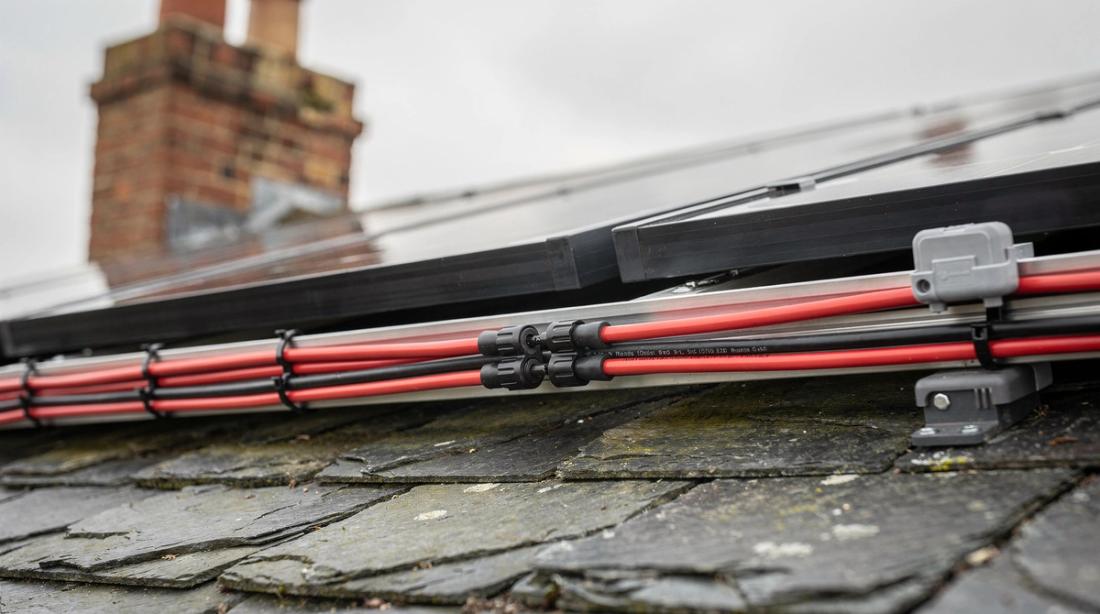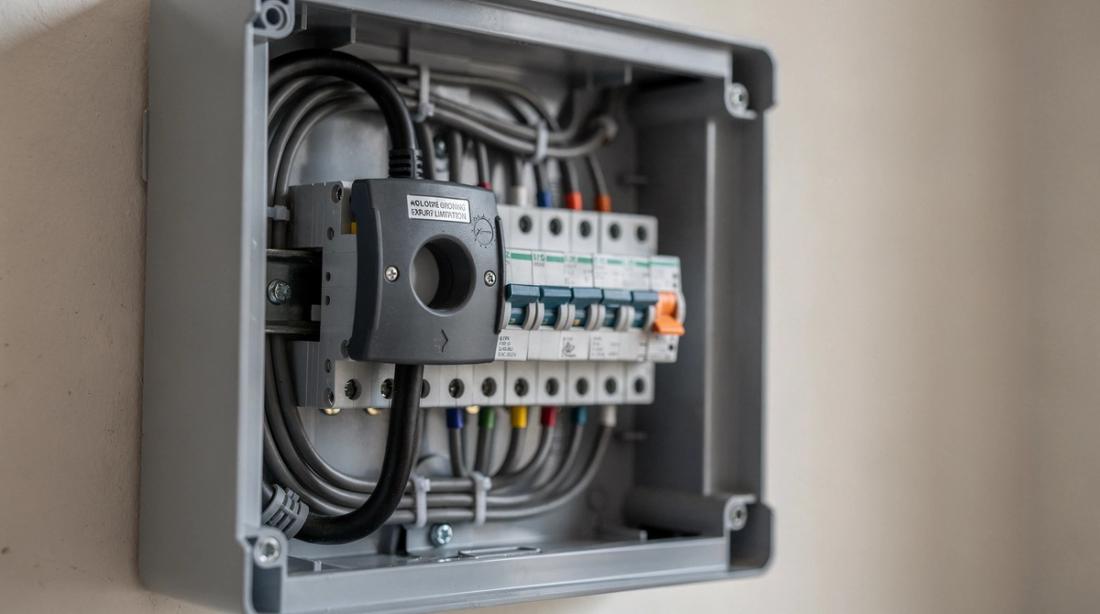

G100 export limitation is the ENA engineering recommendation that lets an installation cap how much power it pushes to, or draws from, the grid, and it is what keeps an oversized system connectable when the network cannot accept full export (ENA, 2025). For installers, it is the tool that turns a DNO refusal into an approval.
It matters because the trigger point is low. Once generation or storage exceeds 16A per phase, roughly 3.68kW, the job normally moves out of simple G98 notification and into G99 territory, where export limitation often becomes the difference between a fast connection and a long wait (1app, 2026). This guide covers what G100 is, when you need it, how an export limitation device works, and what the DNO expects on site.
Key Takeaways
- G100 is the ENA technical requirement for customer export and import limitation schemes, and hardware used must comply with it and the relevant power quality standards (National Grid, 2026).
- The 3.68kW (16A) per-phase threshold is the point where an installation typically moves from G98 into G99, and export limitation can keep it within an agreed cap (1app, 2026).
- Once commissioned, the limitation settings cannot be changed by the customer and may only be altered with the DNO's written agreement, protected by password, PIN or a physical seal (National Grid, 2026).
- G100 Issue 2 has been mandatory since May 2023 and now covers import limitation as well as export (Alternergy, 2025).
- Export limitation devices should be ENA type-tested so the DNO accepts them without bespoke assessment (SolarEdge, 2026).
What is G100 export limitation?
G100 is an Energy Networks Association engineering recommendation that sets the technical requirements for customer export and import limitation schemes (ENA, 2025). In plain terms, it defines how a system reliably holds itself below an agreed grid limit, so a DNO can allow a larger installation than the raw connection would otherwise permit.
The reason it exists is grid stability. If too many systems export at full output at once, local network voltage and capacity can be pushed past safe limits, risking outages (GivEnergy, 2026). Rather than refuse the connection, the DNO can require the installation to limit its export to a level the network can absorb.
For the installer, G100 is a design lever. A property whose DNO will only accept, say, 3.68kW of export can still host a much larger solar and battery system, provided a compliant limitation scheme guarantees the export never exceeds that figure. It converts a hard capacity constraint into a manageable design parameter, and it pairs naturally with the G99 process our G99 application guide sets out.
When do you need G100 rather than G98 or G99?
The dividing line is 16A per phase, about 3.68kW. Below that an installation can usually be notified under G98 after the fact, but above it you move into G99, which needs DNO approval before you connect (1app, 2026). G100 sits alongside G99 as the mechanism that keeps a larger system within an agreed export or import cap.
So you reach for G100 when the system's full capability exceeds what the DNO will accept, and you would rather limit it than wait for a network reinforcement. A common case is a 5kW or larger inverter on a connection the DNO will only approve at 3.68kW export; export limitation lets the system self-consume and store freely while capping what reaches the grid. The relationship to the wider notification path is covered in our G98 application guide.
The devices themselves still have to meet G98 or G99 requirements depending on their output, so G100 does not replace those standards. It layers on top of them, adding the limitation function that makes the numbers work for a constrained connection. Treating the three as a stack rather than alternatives is the clearest way to keep applications straight.
- G98: installations up to 16A per phase (about 3.68kW), notify the DNO, often after connection (1app, 2026).
- G99: installations above 16A per phase, DNO approval required before connection.
- G100: the export or import limitation scheme that lets a larger system stay within an agreed grid cap, used alongside G99.
How does an export limitation device work?
An export limitation device measures power at the grid connection point and continuously adjusts generation or storage so export never breaches the agreed limit (National Grid, 2026). It reads the apparent power flowing out of the installation and throttles the inverter or diverts to the battery the instant export approaches the cap.
Practically, the controller sits with a current transformer or meter at the incoming supply and talks to the inverter. When solar output would otherwise spill more than the limit to the grid, the device curtails the inverter or pushes the surplus into storage or on-site load instead (GivEnergy, 2026). Some inverters and batteries offer this as a software-set limit, holding output to 3.68kW regardless of demand.
Response speed and reliability are why type-testing matters. An export limitation device that is ENA type-tested has demonstrated it reacts fast enough to keep export within limits under real conditions, so DNOs accept it without a bespoke assessment (SolarEdge, 2026). Specifying a type-tested device up front avoids the delay of proving a non-listed one.
There are two broad approaches, and the choice affects reliability. A hard limitation uses a dedicated external controller and metering that acts independently of the inverter, while a soft or internal limit relies on the inverter's own firmware. DNOs tend to trust the hard approach more on larger or import-limited schemes, so match the method to what the connection actually demands rather than defaulting to whatever the inverter offers.
Export limitation for battery storage and G99 applications
Battery storage is where export limitation earns its keep, because a battery both imports and exports and can breach limits in either direction. G100 Issue 2 explicitly covers import limitation as well as export, so a scheme can cap grid draw during charging as well as spill during discharge (Alternergy, 2025). That matters for constrained connections carrying a heat pump or EV charger too.
For a G99 application involving battery storage, the limitation scheme is often what makes the approval possible. A large battery on a weak connection can be approved when the DNO sees a compliant G100 device holding both charge and discharge within agreed figures. This is also central to commercial systems, where our peak shaving guide shows how limitation and load management combine.
System architecture shapes how cleanly this works. A hybrid inverter that manages solar, battery and grid in one unit can apply the limit at a single point, which our hybrid inverter guide explains, whereas AC-coupled retrofits may need the controller to coordinate several devices. Either way, the single-line diagram must show the metering and control clearly, as our single-line diagram guide sets out.
Retrofit jobs deserve extra care, because adding a battery to an existing solar array can push a previously G98 installation over the 3.68kW threshold. At that point the whole system needs revisiting under G99 with a limitation scheme, not just the new battery. Checking the combined figure before you quote saves a customer the shock of a connection that suddenly needs DNO approval it never had.
How do you set up zero export?
A zero export setup is the strictest case of G100, where the DNO permits no export at all and the limitation device holds grid spill at zero (National Grid, 2026). The system then self-consumes and stores everything it generates, exporting nothing, which some heavily constrained urban and rural connections require.
Zero export is achieved the same way as any capped scheme, by setting the limit to zero and letting the controller curtail or divert all surplus. The practical design consequence is that battery sizing and load matching become critical, because any generation that cannot be used or stored is simply lost. On a zero export connection, an undersized battery wastes real yield.
Be clear with the customer that zero export means no Smart Export Guarantee income, since there is nothing exported to be paid for. The system still cuts import bills through self-consumption, but the economics rest entirely on avoided purchase, not export earnings. Setting that expectation before install avoids a difficult conversation later.
What the DNO requires for a compliant scheme
The DNO's core requirement is that the limitation is secure and tamper-resistant. Once commissioned, the settings cannot be altered by the customer and may only be changed with the DNO's written agreement, protected by password, PIN or a physical seal (National Grid, 2026). This is what gives the network confidence the cap will hold for the life of the system.
The hardware must comply with the relevant power quality standards and with ER G100, and using an ENA type-tested device is the cleanest way to demonstrate that (National Grid, 2026). Presenting a listed device with its test evidence in the G99 application removes a common source of back-and-forth with the DNO.
Documentation closes the loop. The application and commissioning records should show the agreed limit, the device and its settings, and the metering arrangement, so a future engineer or DNO audit can see exactly how the cap is enforced. Sloppy paperwork here is a frequent reason schemes get queried months after they are working fine.
Getting G100 sign-off right on site
On site, the job is to prove the limit works before you leave. Commission the device, force a condition where generation would exceed the cap, and confirm export stays within the agreed figure, then lock and record the settings (ENA, 2025). A scheme that only works on paper will not survive a DNO witness check.
Common failure points are a current transformer fitted the wrong way round, a controller that reacts too slowly, and settings left unsealed. Each is avoidable with a methodical commissioning check, and each is far cheaper to catch on the day than on a return visit after a DNO query. Photograph the sealed settings and the metering position for your records.
Keeping the whole grid-connection package straight, G98 or G99 notification, the G100 limitation evidence and the single-line diagram, is what makes DNO sign-off routine rather than fraught. Reonic's installer platform keeps those application documents and commissioning records together so nothing is missing when the DNO asks.
Frequently asked questions
What is the 3.68kW export limit?
It is the 16A per-phase threshold, about 3.68kW, that separates simple G98 notification from the G99 approval process (1app, 2026). Many DNOs will approve export up to this figure quickly, so limiting a larger system to 3.68kW export via G100 is a common way to secure a fast connection.
Is an export limitation device the same as G100?
Not quite. G100 is the ENA engineering recommendation that sets the rules; the export limitation device is the hardware that meets them (ENA, 2025). A device described as G100 compliant, and ideally ENA type-tested, is one built to satisfy the requirements the recommendation lays out.
Can the customer change the export limit later?
No. Once commissioned, the settings can only be changed with the DNO's written agreement and are protected by password, PIN or a physical seal (National Grid, 2026). This tamper resistance is a core part of what makes the scheme acceptable to the network operator.
Does G100 apply to battery storage as well as solar?
Yes. G100 Issue 2 covers import limitation as well as export, so it applies to batteries, which both draw from and push to the grid, as well as to solar (Alternergy, 2025). It is often what makes a large battery approvable on a constrained connection.
Do I still need a G99 application if I use export limitation?
Usually yes. Export limitation under G100 works alongside G99, not instead of it, so an installation above 3.68kW per phase still needs the DNO approval that G99 requires (1app, 2026). The limitation scheme is what lets that approval be granted on a constrained connection.