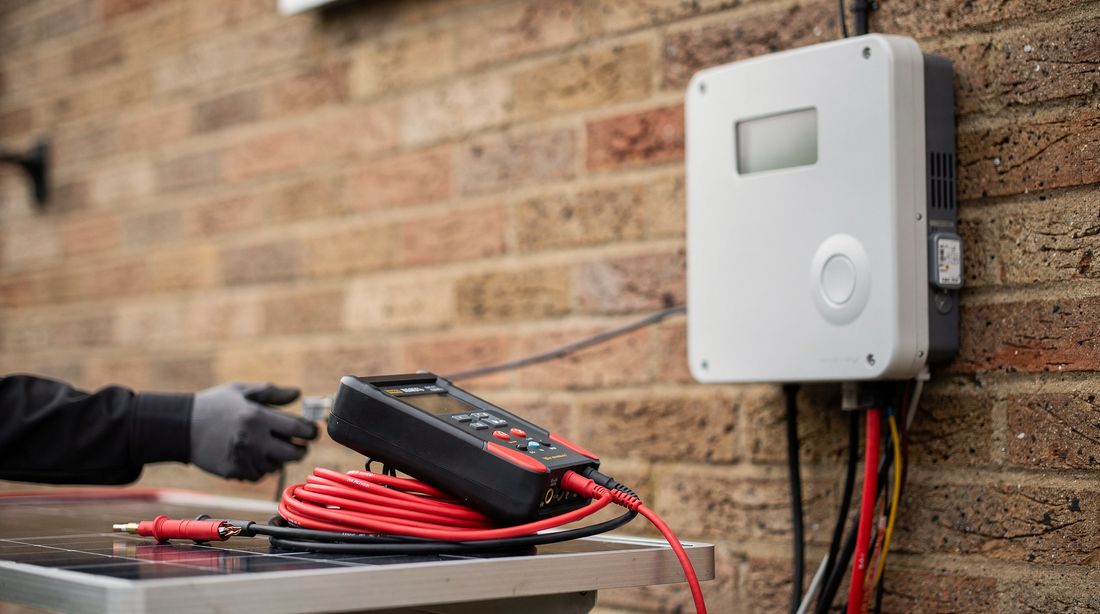

Flexi-Orb is the first UK renewables installation scheme to gain UKAS recognition to ISO/IEC 17067:2013, a standard MCS itself does not hold (Sunsave, 2026). For installers weighing up solar accreditation options, that single fact has made Flexi-Orb impossible to ignore since its 2024 launch, even though MCS remains the dominant scheme for grant-linked work.
This guide compares Flexi-Orb vs MCS on what each scheme certifies, what it costs, and which grants and export tariffs each one qualifies installers for. It is written for installers deciding whether to add Flexi-Orb alongside MCS, switch entirely, or wait and see how the market settles after MCS's own scheme overhaul finishes rolling out through 2026.
Key Takeaways
- Flexi-Orb covers Solar PV (up to 50kW), battery storage (up to 50kWh), and EV chargers (up to 22kW), with heat pumps still being added as of early 2026 (Flexi-Orb, 2026).
- Both MCS and Flexi-Orb are accepted for the Smart Export Guarantee, but only MCS currently qualifies installers for the Boiler Upgrade Scheme and ECO4 (GOV.UK, 2026; Renewable Heating Hub, 2025).
- A Flexi-Orb head office and on-site assessment for two technologies runs roughly £1,900 to £2,200, plus a low £20 annual registration fee (Flexi-Orb, 2026).
- MCS's redeveloped installer Scheme, rolling out through 2026, drops the mandatory Consumer Code requirement and moves to risk-based assessment, narrowing some of the gaps between the two schemes (MCS, 2026).
- Flexi-Orb mandates domestic installers join RECC or HIES, but RECC's own rules currently still require MCS certification too, a real bottleneck for Flexi-Orb-only installers (Flexi-Orb, 2026).
What Is Flexi-Orb?
Flexi-Orb, short for the Flexible Energy Oversight Registration Body, is a UKAS-recognised installation standards scheme covering Solar PV, battery storage, and EV charge points, built by Certi-fi Schemes Ltd as a deliberate alternative to MCS (Flexi-Orb, 2025). It ran a three-year beta before its public launch in June 2024, when UKAS appointed its first certification bodies, Simply Certification and Blue Flame Certification (Installer Online, 2024).
Flexi-Orb's stated reason for existing is simple: a single certification body creates risk for the industry, and competition tends to sharpen pricing, service, and technical standards on both sides. It sits alongside MCS rather than replacing it, and installers can hold both, or move between competent person schemes, without losing existing registrations. The Flexible Energy Register also lets manufacturers list products once rather than duplicating certification paperwork across multiple schemes.
Flexi-Orb vs MCS: The Core Differences
The two schemes differ most sharply on accreditation status and consumer protection structure. Flexi-Orb holds UKAS accreditation to ISO/IEC 17067:2013, while MCS does not carry equivalent UKAS accreditation, though it remains the scheme government funding programmes reference by name (Sunsave, 2026). Cost, scope, and renewal cadence also diverge in ways that matter for a solar or battery installer choosing between them.
- Accreditation body: Flexi-Orb: UKAS, to ISO/IEC 17067:2013; MCS (redeveloped Scheme): Not UKAS-accredited itself
- Technologies covered: Flexi-Orb: Solar PV (50kW), EESS (50kWh), EVCP (22kW); heat pumps in progress; MCS (redeveloped Scheme): Solar PV, battery storage, heat pumps, biomass, small wind, solar thermal
- SEG eligibility: Flexi-Orb: Yes, named explicitly by gov.uk; MCS (redeveloped Scheme): Yes
- BUS / ECO4 eligibility: Flexi-Orb: Not currently; MCS (redeveloped Scheme): Yes
- Consumer Code required: Flexi-Orb: Yes, RECC or HIES mandatory for domestic work; MCS (redeveloped Scheme): No longer mandatory under redeveloped Scheme
- Typical assessment cost: Flexi-Orb: Roughly £1,900 to £2,200 for two technologies; MCS (redeveloped Scheme): Varies by certification body
- Certificate creation window: Flexi-Orb: Set by certification body; MCS (redeveloped Scheme): 30 days (up from 14)
- Ongoing surveillance: Flexi-Orb: Up to five site visits a year; MCS (redeveloped Scheme): Risk-based assessment model
How Does Flexi-Orb Certification Work?
Getting certified means applying through one of Flexi-Orb's UKAS-recognised certification bodies, currently Simply Certification and Blue Flame Certification, and passing both a head office audit of the company's management system and a live on-site installation assessment (Flexi-Orb, 2026). Certification then runs on a 12-month cycle with ongoing surveillance audits required to keep it valid (NetRet Group, 2026).
Flexi-Orb is explicit that certification bodies cannot offer consultancy during the assessment itself, so installers have to prepare independently or use a third-party consultant beforehand. Once certified, an installer must register every completed job on the Flexible Energy Register, which triggers a customer satisfaction survey covering workmanship, punctuality, customer service, and the sales process. Up to five further on-site visits a year keep certified companies honest after their initial pass.
One thing worth flagging for installers weighing this up: Flexi-Orb's insistence on a full office assessment as standard is a genuine point of difference from where MCS has landed. In practice this means Flexi-Orb applicants should budget more prep time for management-system documentation than they might expect from an MCS renewal, even if the on-site technical bar looks similar. Installers who have already been through the process of becoming MCS certified will recognise the audit style, even though the paperwork sits with a different accreditation body.
Grant and SEG Eligibility: Where Flexi-Orb Stands
Flexi-Orb qualifies installers for the Smart Export Guarantee, with gov.uk's own SEG guidance naming it directly as an accepted equivalent to MCS (GOV.UK, 2026). That means a Flexi-Orb certified solar or battery install still earns the household export payments homeowners expect, and several major suppliers, including Octopus Energy, accept either certificate for their export tariffs.
The gap opens up around grant-funded work. The Boiler Upgrade Scheme and ECO4 still require MCS certification specifically. Flexi-Orb's own Heat Pump Scheme was recognised by UKAS as fit for accredited conformity assessment in August 2025, but it has not yet been added to those government funding rules (Renewable Heating Hub, 2025). For an installer whose pipeline leans heavily on ECO4 or BUS-funded heat pump work, MCS certification remains non-negotiable for now, whatever else Flexi-Orb offers.
The MCS Redeveloped Installer Scheme Changes the Comparison
MCS's redeveloped Installer Scheme, phasing in through 2026, has removed the mandatory Consumer Code membership requirement that installers previously had to carry, moving instead to a risk-based assessment model with a direct Installer Agreement held between MCS and each certified business (MCS, 2026). Certificate creation windows have also doubled, from 14 days to 30, giving installers more breathing room on paperwork.
This narrows one of Flexi-Orb's clearest selling points. Sunsave's own comparison piece notes that MCS dropping the Consumer Code requirement is a real shift, since Flexi-Orb still mandates RECC or HIES membership with an insurance-backed guarantee for every domestic job (Sunsave, 2026). Installers reading older comparison articles from 2024 or 2025 should treat the consumer protection gap between the two schemes as smaller than it used to be, not as fixed. Reonic's guide to the MCS redeveloped installer Scheme covers those mechanics in more depth for installers preparing to move over.
What Does Flexi-Orb Certification Cost?
Flexi-Orb pricing sits in a specific band. A head office assessment plus an on-site assessment covering two technologies costs roughly £1,900 to £2,200, on top of a modest £20 annual registration fee, or £2 if an installer only registers EV charge points (Flexi-Orb, 2026). Flexi-Orb itself states the higher assessment cost reflects deeper scrutiny and is intended to attract more assessors into an industry that already struggles with capacity.
Certification bodies set their own fees within that range, so quotes vary between Simply Certification, Blue Flame Certification, and newer entrants. NetRet Group is one such entrant, still working toward full UKAS accreditation for its own Flexi-Orb offering as of 2026 (NetRet Group, 2026). Installers already MCS certified and considering Flexi-Orb as an addition should treat this as a second full assessment cycle, not a discounted add-on, and budget accordingly for the extra office audit time. Reonic's own coverage of MCS certification cost gives a useful side-by-side reference point for that comparison.
Is Flexi-Orb Available Nationwide?
Flexi-Orb coverage depends on certification body capacity rather than geography, since Simply Certification, Blue Flame Certification and NetRet Group all operate UK-wide rather than by region (Flexi-Orb, 2026). Installers in Scotland, Wales and Northern Ireland can apply on the same terms as those in England, though assessor travel time can affect how quickly an on-site visit gets booked in more rural areas.
Given the scheme is still expanding its certification body panel, installers should expect some variation in response times between bodies while capacity catches up with demand. That is worth factoring into any timeline for switching or adding Flexi-Orb ahead of a busy installation season.
Which Scheme Should Installers Choose in 2026?
For installers doing mostly export-tariff-driven solar and battery work with no grant funding involved, Flexi-Orb is a genuinely viable standalone choice, backed by UKAS accreditation and explicit gov.uk recognition for SEG. For anyone whose business depends on ECO4, the Boiler Upgrade Scheme, or Warm Homes funding streams, MCS certification stays essential regardless of what else sits alongside it, since those grant rules have not shifted to accept Flexi-Orb yet.
A sensible middle path for many installers is holding MCS for grant eligibility while adding Flexi-Orb where its UKAS status and marketing edge help win private, non-grant customers who ask pointed questions about accreditation. The RECC byelaw issue is worth checking directly with RECC before committing, since Flexi-Orb-only installers may still need an MCS registration, or a TrustMark registration depending on the work type, to satisfy their chosen Consumer Code. Whichever route an installer takes, consistent quotes, certificates, and system performance estimates matter for winning trust with grant-aware homeowners. Tools like Reonic's solar and heat pump design software can help installers keep proposals accurate and compliant, regardless of which certification badge sits on the paperwork.
Frequently Asked Questions
Is Flexi-Orb the same as MCS? No. Both are UK installer certification schemes for renewable technologies, but Flexi-Orb is UKAS-accredited to ISO/IEC 17067:2013 while MCS is not directly UKAS-accredited itself (Sunsave, 2026). They cover overlapping but not identical technologies, and grant eligibility differs sharply between them, so installers should check which schemes their target funding programmes actually accept.
Does Flexi-Orb qualify installers for the Smart Export Guarantee? Yes. Gov.uk's official SEG guidance names Flexi-Orb explicitly as an accredited scheme equivalent to MCS for export tariff eligibility (GOV.UK, 2026). Homeowners using a Flexi-Orb certified installer can register for SEG payments in the same way MCS customers do, and major suppliers including Octopus Energy accept either certificate.
Can Flexi-Orb installers access ECO4 or Boiler Upgrade Scheme funding? Not currently. Both ECO4 and the Boiler Upgrade Scheme still require MCS certification specifically, even though Flexi-Orb's Heat Pump Scheme gained UKAS recognition in August 2025 (Renewable Heating Hub, 2025). Installers relying on grant-funded heat pump or insulation work should keep MCS certification regardless of any Flexi-Orb registration.
How much does Flexi-Orb certification cost compared with MCS? A Flexi-Orb head office and on-site assessment for two technologies runs roughly £1,900 to £2,200, plus a £20 annual registration fee (Flexi-Orb, 2026). MCS costs vary by certification body and technology, so a direct comparison depends on which certification body and technology scope an installer chooses on each scheme.
Do I need a Consumer Code to get Flexi-Orb certified? Yes, for domestic installations. Flexi-Orb requires membership of a CTSI-approved Consumer Code, currently RECC or HIES, alongside an insurance-backed guarantee for every job (Flexi-Orb, 2026). Installers should note RECC's own byelaws currently still require MCS certification too, which can create an unexpected dependency for Flexi-Orb-only businesses.