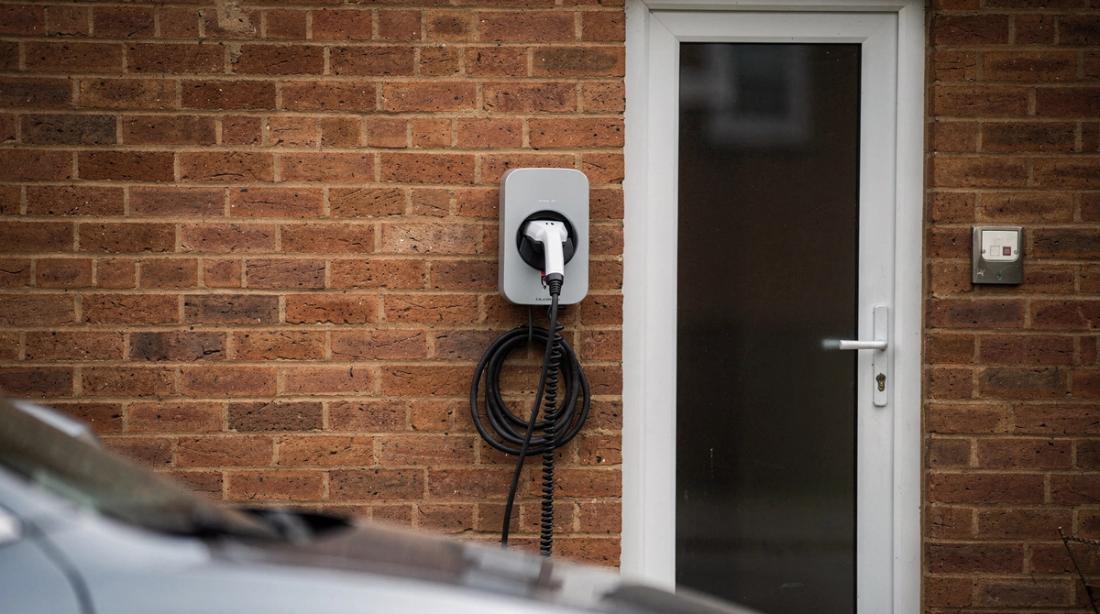

Every domestic EV charge point in the UK must be installed to BS 7671 Section 722, and from 15 October 2026 the only recognised version of that standard is BS 7671:2018+A4:2026, the "Orange Book" published on 15 April 2026 (IET, 2026). Get the earthing, the RCD and the open PEN protection wrong and the installation is not just non-compliant, it is potentially lethal for a driver standing on wet ground holding a connector.
This guide is written for installers who need the rules straight. It covers Section 722, open PEN fault protection on PME supplies, RCD selection, earthing arrangements, Part S for new homes, and the Smart Charge Points Regulations. The aim is a charge point that passes inspection first time and stays safe for its whole life.
Key Takeaways
- BS 7671:2018+A4:2026 (the Orange Book) becomes the only recognised UK wiring standard from 15 October 2026, when the previous version is withdrawn.
- On a PME (TN-C-S) supply, outdoor EV equipment needs open PEN fault protection: disconnection within 5 seconds if the earth voltage exceeds 70 V, or an equivalent method.
- Each charger needs its own 30 mA RCD that disconnects all live conductors, so single-pole RCBOs are not suitable.
- DC fault protection means a Type B RCD, or a Type A with a 6 mA RDC-DD, unless the charger provides it internally.
- Since 15 June 2022, Part S requires an EV charge point on most new homes in England, and charge points must be "smart" under the 2021 regulations.
What regulations cover EV charger installation in the UK?
Four instruments govern a UK EV charger install: BS 7671 for the electrical work, Part S of the Building Regulations for new and renovated buildings in England, the Electric Vehicles (Smart Charge Points) Regulations 2021 for the device itself, and the IET Code of Practice for EV charging equipment installation as the practical companion (IET, 2026). BS 7671 is the one an inspector tests against.
Section 722 is the part of BS 7671 dedicated to EV supply equipment. It pulls together the requirements on protection against electric shock, RCD selection, disconnection times and earthing that a general circuit design does not fully cover. Treating an EV circuit like an ordinary radial is the most common reason installs fail. The charger is a special location with its own rules.
BS 7671 Amendment 4 (2026): what changed for EV work
Amendment 4 to BS 7671:2018 was published by the IET and BSI on 15 April 2026 and can be used immediately for new work, with the previous version withdrawn on 15 October 2026 (NICEIC, 2026). It is a consolidated edition, so it folds in every earlier amendment rather than sitting alongside them. Installers certifying work after that October date must reference A4:2026 on the certificate.
The headline additions are new chapters, including Chapter 57 for battery energy storage and Chapter 81 for energy efficiency (Virtual College, 2026). For EV work, the core of Section 722 carries forward from Amendment 2: the open PEN provisions and the RCD rules that mattered in 2023 still apply. What changes is the reference on your paperwork and the wider context around storage and prosumer setups.
The move from A2:2022 to A4:2026 does not rewrite EV fundamentals, but it does reset the version you certify against. A quick note from the field: order the printed Orange Book early, because certification software and scheme templates take a few weeks to catch up after each amendment.
Do you need open PEN fault protection?
On a TN-C-S (PME) supply feeding outdoor EV equipment, you must protect against the danger of an open PEN conductor, and this is where most domestic installs live (Power & Data UK, 2026). A broken PEN on the network can raise every earthed metal part, including the car body, to a dangerous voltage. A driver on wet tarmac holding the connector completes the circuit.
Section 722 gives you a menu of compliant options rather than a single fix. The most common is a device that disconnects the vehicle from both live conductors and protective earth within 5 seconds if the earth-to-true-earth voltage rises above 70 V RMS (Professional Electrician, 2026). An alternative device trips within 5 seconds if the line-to-neutral voltage leaves the 207 to 253 V window.
The other routes are a properly designed installation earth electrode connected to the main earthing terminal, or equivalent protective functionality built into the charger. Most modern chargers include open PEN detection, which is why so many domestic units are sold as "PME-ready". If yours does not, you fit a separate PEN fault detection device or convert to a TT arrangement with its own electrode.
- TN-C-S (PME): Open PEN risk: High for outdoor EV; Typical compliant approach: Charger with built-in open PEN detection, or a dedicated PEN fault device, or TT conversion
- TN-S: Open PEN risk: Lower; Typical compliant approach: Standard earthing, no open PEN device usually needed
- TT: Open PEN risk: Managed by electrode; Typical compliant approach: Own earth electrode plus 30 mA RCD
Which RCD do you need for an EV charger?
Each EV charging point must be protected by its own RCD rated at no more than 30 mA that disconnects all live conductors including the neutral, so a single-pole RCBO does not meet the requirement (Elec-Mate, 2026). Amendment 2 introduced the rule that this RCD serves the charger alone and no other circuits, which rules out sharing a dual-RCD board.
Then there is DC fault current. Regulation 722.531.3.101 requires protection against smooth DC fault current, provided by a Type B RCD, or a Type A or Type F used together with an RDC-DD, unless the charging equipment provides it (Electrical Contracting News, 2026). An RDC-DD detects smooth DC leakage, usually at the 6 mA level to BS IEC 62955, so the upstream Type A device is not blinded.
In practice, most compliant chargers pair a Type A RCD with a built-in 6 mA DC detection stage, which is cheaper than a Type B unit. The key check is documentation: if the manufacturer states integral RDC-DD to BS IEC 62955, a Type A upstream is fine. Without that statement, you need a Type B RCD, and you must not assume.
What earthing arrangement should an EV charger use?
The earthing arrangement follows the supply and the open PEN decision. On TN-S, standard earthing is usually sufficient. On PME, you either rely on a charger with open PEN protection or you create a TT island for the EV circuit with a dedicated earth electrode and a 30 mA RCD (Kewtech, 2026). The TT route keeps the EV earth separate from the PME terminal.
A TT island needs a compliant electrode resistance and careful separation so the two earthing systems do not bridge. Getting the electrode wrong is a frequent inspection failure. Measure the electrode resistance, record it on the certificate, and confirm the RCD disconnects within the required time at the measured earth fault loop impedance. Do not eyeball it.
Part S: do new homes need an EV charge point?
Since 15 June 2022, Part S of the Building Regulations has required most new homes in England with associated parking to have an EV charge point of at least 7 kW, or cable ducting where a charge point is not immediately feasible (Elec Training, 2026). The rule extends to residential buildings undergoing major renovation and to buildings with more than ten parking spaces.
For installers, Part S mostly affects new-build and developer work, but it also sets the baseline expectation that homeowners now compare against. A 7 kW single-phase unit is the domestic default. Where the incoming supply cannot handle the load, load management or a cable route to enable future installation becomes the compliant answer, which is where good survey work earns its fee. The cost breakdown shifts once load balancing is in scope.
What do the Smart Charge Points Regulations 2021 require?
Private charge points sold or installed after 30 June 2022 must be "smart", meaning they can send and receive data, respond to demand and default to charging outside peak hours (legislation.gov.uk, 2021). The default off-peak windows exclude 8am to 11am and 4pm to 10pm on weekdays, though the user can override them.
Each device must also apply a randomised delay of up to 10 minutes at the start of a charging session, and be capable of a delay of up to 30 minutes, to stop thousands of chargers switching on together when a cheap-rate window opens (gov.uk, 2022). Compliance sits mainly with the manufacturer, but you as the installer should only fit units that carry a statement of compliance.
EV charger installation compliance checklist
Use this as the final walk-through before you sign the certificate. Every item maps to a Section 722 or building-regulation requirement covered above, and each one is a common inspection flag.
- Supply and earthing: What good looks like: PME open PEN protection confirmed, or TT electrode measured and recorded
- RCD: What good looks like: Dedicated 30 mA RCD per charger, all-pole, serving the charger only
- DC protection: What good looks like: Type B RCD, or Type A plus 6 mA RDC-DD, or integral to the charger
- Device compliance: What good looks like: Smart Charge Points statement of compliance held on file
- Building regs: What good looks like: Part S met on new build or major renovation
- Notification: What good looks like: Work notified under Part P and DNO informed where required
Frequently asked questions
Does every EV charger on a PME supply need a separate PEN fault device?
No. If the charger includes compliant open PEN detection, that satisfies the requirement without an external device. Many domestic units are sold PME-ready for exactly this reason. Where the charger lacks internal protection, you fit a dedicated PEN fault detection device or create a TT island with its own earth electrode and a 30 mA RCD.
Can I use a Type A RCD for an EV charger?
Yes, but only if the DC fault requirement is met another way. A Type A RCD is acceptable where the charger has a built-in 6 mA RDC-DD to BS IEC 62955, or where a separate RDC-DD is fitted. Without integral DC detection, Section 722 requires a Type B RCD to handle smooth DC fault current.
Do I need to tell the DNO about an EV charger?
Often yes. Standard 7 kW single-phase chargers usually fall within permitted limits, but larger or multiple installations may require notification. Where you are combining EV charging with solar or storage, the connection rules interact, so check the DNO position early. Our guide to DNO approval covers the G98 and G99 routes in detail, and battery storage regulations matter where a home battery shares the supply.
Is BS 7671 Amendment 4 mandatory for EV work now?
Amendment 4:2026 can be used for new work immediately and becomes the only recognised standard when the previous version is withdrawn on 15 October 2026. Certificates issued after that date should reference BS 7671:2018+A4:2026. The EV-specific requirements in Section 722 largely carry over from Amendment 2.
What certification does an EV charger installation need?
An EV charger installation needs an Electrical Installation Certificate under BS 7671 and notification under Part P of the Building Regulations. Most installers work under a competent person scheme to self-certify. Keep the manufacturer's smart charge point compliance statement and, where relevant, evidence of open PEN protection with the job file.
A compliant EV charger install comes down to three decisions made in the right order: read the supply, choose the open PEN strategy, then match the RCD to the DC fault requirement. Tools like Reonic help installers capture the survey detail and paperwork that these checks depend on, so nothing is missed between quote and certificate.