
EV charger installation cost in the UK typically runs 800 to 1,200 pounds for a standard 7kW home charger, with the unit and labour included, rising to 900 to 1,500 pounds in London and the South East (Pricing Penguin, 2026). For most homes the split is roughly 400 to 700 pounds for the charger and 400 to 500 pounds for the fit.
This guide is written for installers who need to quote EV charging accurately and explain the price to customers. It covers what sits inside a standard install, the site factors that push the cost up, the OZEV grant that still exists for some households in 2026, and how to build a quote that protects your margin without scaring off the job.
Key Takeaways
- A standard 7kW home charger costs 800 to 1,200 pounds fitted, or 900 to 1,500 in London and the South East (Pricing Penguin, 2026).
- The charger unit is usually 400 to 700 pounds and the installation labour 400 to 500 pounds (DS Electrical, 2026).
- From 1 April 2026 the OZEV EV Chargepoint Grant covers 75% of cost up to 500 pounds per socket, up from 350 pounds (The Electric Car Scheme, 2026).
- Private-driveway homeowners get no grant; it is for renters, flat owners, on-street cross-pavement and landlords (loveelectric, 2026).
- A consumer unit upgrade can add 400 to 800 pounds and a long cable run 100 to 300 pounds (MyBuilder, 2026).
How much does EV charger installation cost in the UK?
A standard 7kW home charger costs 800 to 1,200 pounds fitted in 2026, and 900 to 1,500 pounds in London and the South East where labour is dearer (Pricing Penguin, 2026). That figure assumes a straightforward job: a nearby consumer unit with spare capacity and a short cable run to the parking spot.
The base price splits into two parts. The charger unit itself is usually 400 to 700 pounds, and the installation labour adds 400 to 500 pounds (DS Electrical, 2026). Anything beyond a simple fit, such as a fuse box upgrade or a long run, sits on top of that and is where quotes start to diverge.
What a 7kW home charger installation includes
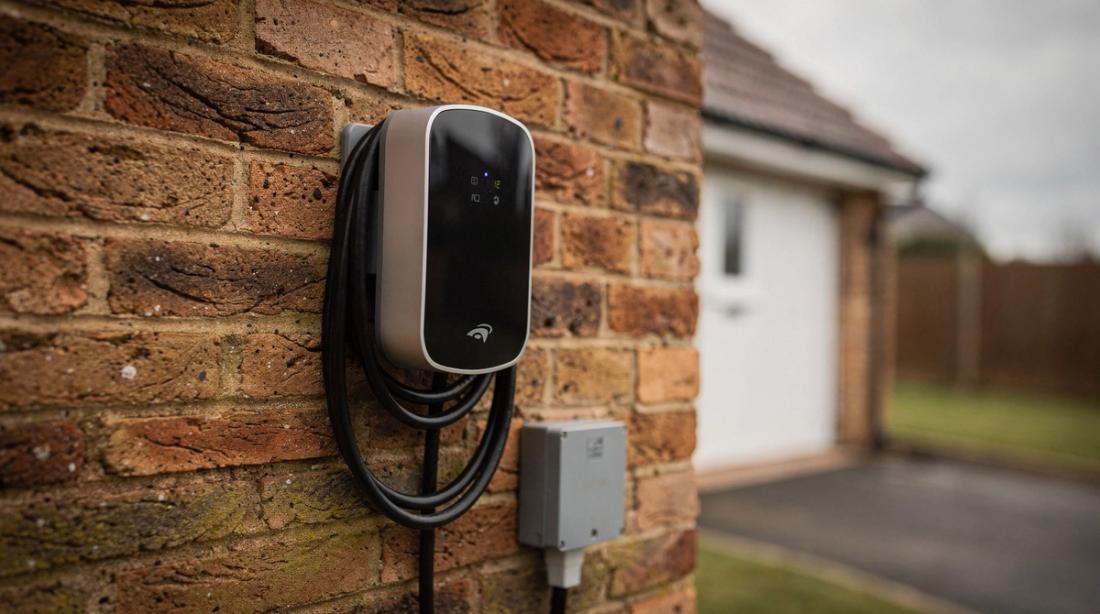
A typical install covers the charger unit, the mounting, the cable run from the consumer unit, the protective devices and the commissioning and app setup. The 7kW smart charger is by far the most common choice for UK homes because it matches a standard single-phase supply (Total Skills, 2026).
Good installers also build in the notification or approval step with the network operator, plus earthing checks. Skipping those to shave the price is how jobs come back to bite you later. The table below shows the parts of a quote so a customer can see where the money goes.
- Charger unit: 400 to 700 pounds depending on brand and features (DS Electrical, 2026).
- Installation labour: 400 to 500 pounds for a standard fit (DS Electrical, 2026).
- Consumer unit upgrade (if needed): 400 to 800 pounds (MyBuilder, 2026).
- Extended cable run: 100 to 300 pounds depending on distance and route (MyBuilder, 2026).
- Typical all-in total: 800 to 1,200 pounds, or 900 to 1,500 in London and the South East (Pricing Penguin, 2026).
Cost factors that push the price up
The base range assumes an easy job. Three things move it: the state of the consumer unit, the distance from the board to the charger, and the earthing arrangement. A consumer unit upgrade alone can add 400 to 800 pounds when the existing board has no spare way or is outdated (MyBuilder, 2026).
A long or awkward cable run adds 100 to 300 pounds, more if it needs trenching or a wall penetration (MyBuilder, 2026). Earthing is the other big one: many installs need open PEN fault protection, which modern chargers often build in, but older setups may need extra work (Warmzilla, 2026). Surveying these before quoting stops nasty surprises on the day.
Two more factors quietly move the price. The mounting position matters: a charger tucked next to the board is cheap, while one on a detached garage or a boundary wall means more cable, more containment and sometimes a second isolator. And the incoming supply matters: if the main fuse or the meter tails cannot take the extra load, the network operator has to get involved before any charger goes live, which adds both time and cost to the job.
The OZEV grant: who still gets 500 pounds?
From 1 April 2026 the OZEV EV Chargepoint Grant covers 75% of the purchase and installation cost, up to 500 pounds per socket, raised from 350 pounds (The Electric Car Scheme, 2026). That change matters for how you present net cost to eligible customers.
The catch is eligibility. Homeowners with a private driveway get nothing; the old Homecharge scheme closed to them in 2022. The grant now targets renters, flat owners, households with only on-street parking using an approved cross-pavement solution, and residential landlords for up to 200 sockets (loveelectric, 2026). Landlord and fleet work is where the grant still drives volume, which pairs well with the funding logic in the solar battery grant guide.
7kW or 22kW: which charger for the job?
For homes, 7kW is almost always the answer. It suits a standard single-phase supply, adds around 25 to 30 miles of range per hour and is the most popular UK choice (Total Skills, 2026). A 22kW unit needs a three-phase supply that most homes do not have.
22kW makes sense for workplaces, fleet depots and destination charging, where three-phase is available and faster turnaround matters. Matching the charger to the supply is the first question on any survey, and it often decides whether the customer also needs a supply upgrade, which is a separate cost and a network notification in its own right.
Commercial and workplace charging costs
Commercial jobs sit in a different bracket. Groundworks, multiple sockets, load management and dynamic balancing across a site push costs well beyond the domestic range, and the per-socket price falls as the count rises. Workplaces can also claim support toward sockets, so the net figure often looks better than the sticker price suggests.
For installers, commercial EV is a natural extension of solar and storage work: the same customers who want a solar carport usually want charging under it. Bundling generation, storage and charging into one proposal is where the margin and the differentiation live, especially against single-service competitors.
Pricing a commercial job well means pricing the whole system, not the sockets alone. Load management hardware, network fees for a bigger connection, cabling across a car park and future-proofing for more bays all belong in the quote. Getting that scope right early is what separates a profitable contract from one that drifts into unpaid variations halfway through the install.
How installers should price and quote EV charging
Quote from a survey, not a phone call. The three variables that decide profit, the consumer unit, the cable run and the earthing, are all things you can only judge on site or from good photos. A fixed price given blind is how installers lose money on the awkward 20% of jobs.
Break the quote into unit, labour and any extras so the customer sees the logic and does not assume you are padding. Where solar or a battery is involved, size the charger and the supply together so the whole system works, a point that ties into hybrid inverter sizing and is easier to keep consistent with proper installer software.
One field habit saves the most grief: photograph the consumer unit, the meter position and the proposed charger location on every survey, and note the main fuse rating. Those three images answer most of the questions that otherwise turn a fixed quote into an argument on installation day, and they give you the evidence to justify a higher price when the site genuinely needs more work.
Frequently asked questions about EV charger installation cost
These are the questions customers ask most about the cost of installing a home charger. The figures are 2026 UK ranges; confirm the current grant terms and your own day rate before you quote.
How much does it cost to install an EV charger at home in the UK?
A standard 7kW home charger costs 800 to 1,200 pounds fitted in 2026, rising to 900 to 1,500 pounds in London and the South East (Pricing Penguin, 2026). That assumes a simple job; a consumer unit upgrade or a long cable run adds to it. The charger unit is usually 400 to 700 pounds of that total.
How much is a 7kW EV charger installation specifically?
The 7kW smart charger is the standard home unit and sits inside the 800 to 1,200 pound fitted range, with the charger at 400 to 700 pounds and labour at 400 to 500 pounds (DS Electrical, 2026). It matches a single-phase supply and is the most popular choice, so it is the baseline most quotes are built around.
Is there still a grant for home EV charger installation?
Yes, but not for private-driveway homeowners. From 1 April 2026 the OZEV grant covers 75% up to 500 pounds per socket, for renters, flat owners, on-street cross-pavement installs and landlords (The Electric Car Scheme, 2026). Homeowners with a driveway lost eligibility when the old scheme closed in 2022 (loveelectric, 2026).
Why do some EV charger installation quotes cost more?
Because the site is not standard. The main cost drivers beyond the base fit are a consumer unit upgrade at 400 to 800 pounds and a long cable run at 100 to 300 pounds (MyBuilder, 2026). Earthing and open PEN protection can add work on older properties too, which is why a survey should come before a firm price.
Does EV charger installation need DNO approval?
A single 7kW home charger is usually notified to the network operator rather than pre-approved, but larger loads or several chargers can trigger a formal application. The rules mirror small-generation connections, so the notification process is the right reference point. Always check the local network operator's threshold before committing to a date.
Conclusion: quote the site, not the sticker
EV charger installation cost in the UK is easy to state as a range and easy to get wrong in practice. The 800 to 1,200 pound headline holds for a clean job, but the consumer unit, the cable run and the earthing decide whether you make money on the rest. Survey first, quote in parts, and set the grant expectation honestly.
For installers adding EV charging to a solar and storage offer, a platform like Reonic helps keep the charger, supply and system sized together in one proposal, which reduces the quoting errors that eat margin on multi-service jobs and keeps every quote consistent from the first site visit to the final invoice.