
Bifacial solar panels generate power from both faces, capturing direct sunlight on the front and reflected light on the rear, which can lift output by 5% to 30% over an equivalent monofacial panel (Sunsave, 2026). The catch is that the extra yield depends almost entirely on what sits behind the panel and how it is mounted.
For UK installers the real question is not whether bifacial works, but where it pays. On a ground mount over bright gravel the gain is real. On a flush mounted dark pitched roof it can drop to 2% to 5%, rarely enough to justify the premium (Anern, 2025). This guide shows how to tell the two situations apart.
Key Takeaways
- Bifacial panels add a typical 5% to 30% yield from rear side light, but only when the surface below reflects well (Sunsave, 2026).
- Albedo drives the gain. Grass returns 8% to 13%, while white stone or membrane can reach above 20% (SolarGridCheck, 2026).
- On a flush mounted dark pitched roof, real world bifacial gain is often just 2% to 5% (Anern, 2025).
- The panel premium is small, roughly 3% to 6% of a typical project once labour and balance of system are counted (SolarTech, 2025).
- Bifacial modules now exceed 70% of global utility-scale shipments, so supply and tier-1 choice are strong (Renogy, 2025).
What are bifacial solar panels and how do they work?
A bifacial panel has solar cells that collect light through both the front and the rear of the module, usually in a glass on glass or clear backsheet construction (Sunsave, 2026). The front works exactly like a normal panel. The rear captures light that bounces off the ground or roof surface beneath the array.
How much the rear can contribute is set by the bifaciality factor, typically around 70% (SolarTech, 2025). A 70% factor means the rear can generate up to 70% of the front's output under the same light. In practice the rear only ever sees a fraction of that, because reflected light is weaker and uneven.
So the panel sets the ceiling, but the installation decides how close you get to it. A high bifaciality module over a dark, shaded surface performs little better than a cheaper monofacial panel. The same module over a reflective, well ventilated ground mount can deliver a serious uplift.
Construction also affects weight and handling. Glass on glass modules are heavier than framed monofacial panels. That matters for roof loading and for safe manual handling on site.
What is bifacial gain, and how much extra energy do you get?
Bifacial gain is the extra annual energy the rear side adds, expressed as a percentage over an identical monofacial panel. A Heriot-Watt review of 12 international studies found gains from 5% up to 45%, with a typical real world band of 5% to 30% (Sunsave, 2026). The spread is wide because gain is site specific, not a fixed module rating.
The single biggest variable is the reflectivity, or albedo, of the surface behind the panel (SolarGridCheck, 2026). Controlled tests show an albedo of 0.13 gives an 8.2% gain, 0.28 to 0.30 gives 12% to 13%, and white stone at 0.5 pushes it to 22.4%. Height and tilt matter too, since a panel needs clear space behind it for reflected light to reach the cells.
UK weather complicates the picture in a useful way. Diffuse light under overcast skies still reaches the rear, and studies in temperate UK conditions confirm measurable gains across varying albedo (PMC, 2024). Our PV sun hours guide covers how regional irradiance feeds into any yield estimate you give a client.
Why albedo and mounting decide the payback
Because gain is site specific, the surface below the array is the number that matters most on a quote. Grass or vegetation, at roughly 20% to 25% albedo, is the baseline. Swapping to white gravel or a light membrane at 50% to 70% albedo can add another 5 to 15 percentage points of gain (SolarGridCheck, 2026).
The table below gives realistic gain bands by surface so you can size the benefit before you price the job. Treat them as planning figures, then refine with a yield model for the specific site.
Typical bifacial gain by surface
- Dark pitched roof, flush mounted: about 2% to 5% gain. The rear is too close to a low-reflectance surface to contribute much.
- Grass or vegetation ground mount: roughly 8% to 13% gain at 20% to 25% albedo. A solid, common baseline.
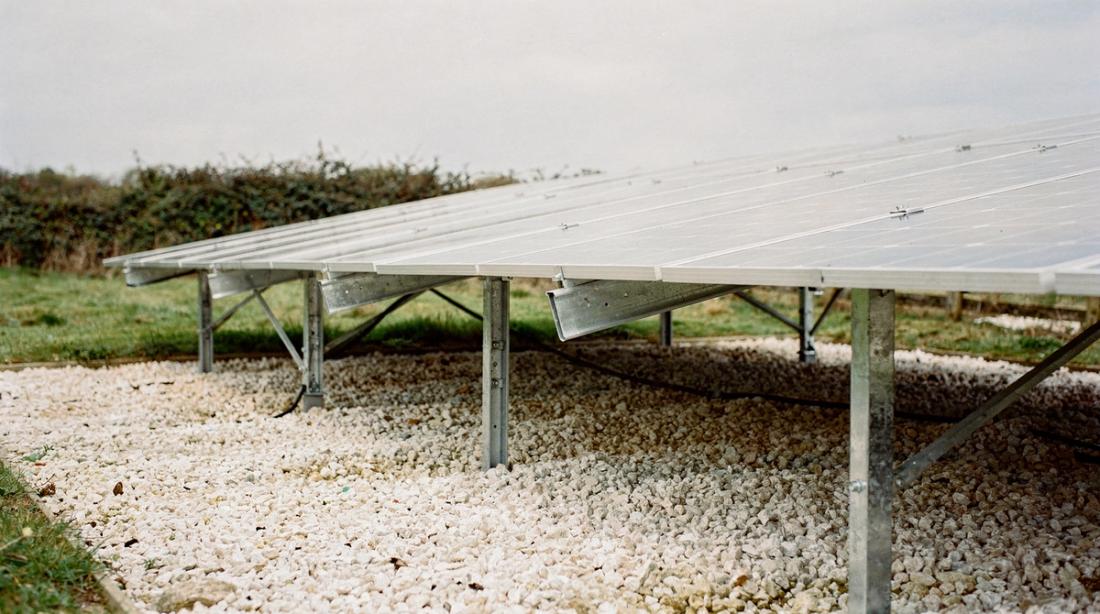
- White gravel, concrete or membrane: 15% or more, reaching above 20% at 0.5 albedo with clear rear space (SolarGridCheck, 2026).
Mounting height and rear shading finish the story. Rails, trays and close-coupled roof hooks that block the back of the module throw away the whole point of bifacial (EE Renewables, 2025). Our solar panel mounting systems guide covers the fixings that keep the rear clear.
A quick rule helps on site. If you cannot see bright, open ground through the gap behind the module, the rear will not earn its keep. Dark tiles, close rails and shaded plant rooms all fail that test. Bright gravel, pale membranes and open ground pass it.
Bifacial vs monofacial: which should you specify?
Specify bifacial where the rear can see a bright surface with clear space behind the module, and monofacial where it cannot. On a ground mount, flat roof or carport the extra yield is usually worth a small premium (Deege Solar, 2025). On a dark, flush pitched roof it rarely is.
The decision is about geometry and surface, not about which panel is better in the abstract. A bifacial module fitted where its rear is starved of light is simply a more expensive monofacial panel. Matching the module to the mounting is the whole skill here.
There is a durability angle too. Most bifacial panels use glass on glass construction, which resists weather and degradation better and often carries a 30 year product and performance warranty, near 87% output at year 30 (Quantum Renewables, 2025). That can tip a marginal case even where rear gain is modest.
Are bifacial panels worth it on a UK pitched roof?
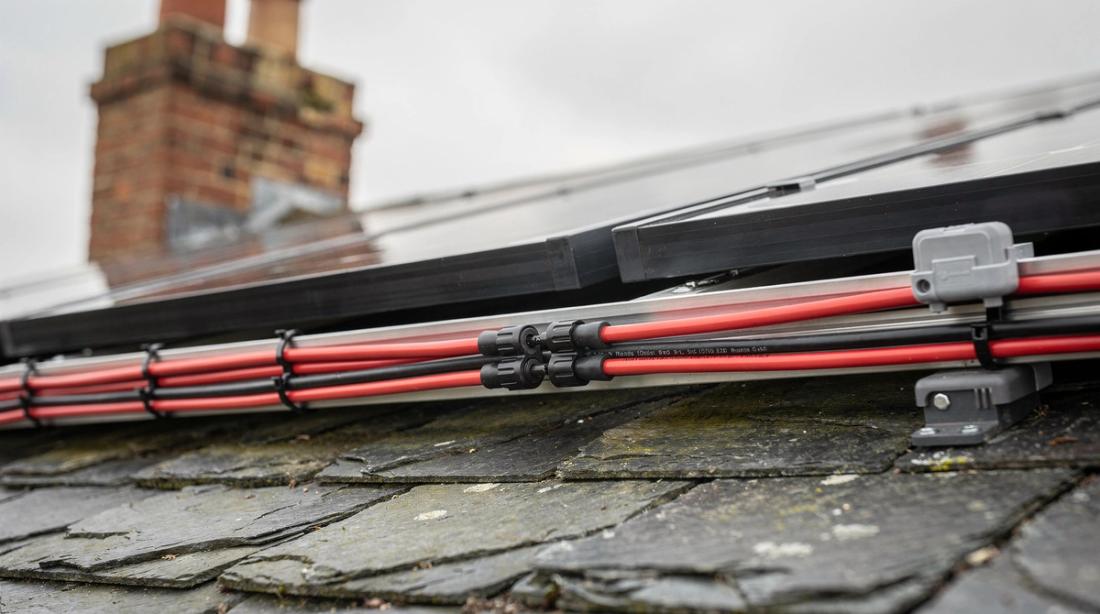
Usually not, if the roof is dark and the panels sit flush. Monitored flush mounted systems on dark tiles show bifacial gains of only 2% to 5%, which seldom covers the premium (Anern, 2025). The rear simply cannot see enough reflected light through a shallow gap over dark slate or clay.
In the field, the pattern we see is installers specifying bifacial on standard house roofs because the datasheet looks better, then wondering why the monitored gain is tiny. The honest advice to a homeowner is often to fit good monofacial panels, or to add one extra panel, rather than pay for a rear side that will barely work.
There are exceptions. A light coloured or white membrane flat roof changes the maths, and a tilted array on a flat roof gives the rear room to breathe. Our solar panels on a flat roof guide and solar panel roof layout guide help you judge when a roof is actually a bifacial candidate.
Where bifacial wins: ground mount, flat roof and carports
Bifacial modules are a mainstream choice for ground mounts, commercial flat roofs, carports and solar farms, where rear side light can genuinely be harvested (EcoFlow, 2025). These are the settings where the reflective surface, clear rear space and tilt all line up to deliver the gain the datasheet promises.
Ground mounted bifacial arrays take direct sun on the front plus reflected light off the land around them, which is why utility scale projects favour them so heavily (Sunsave, 2026). Bifacial now exceeds 70% of global utility-scale module shipments (Renogy, 2025).
Carports are a strong fit because the array sits high, tilted and open underneath. For commercial clients this pairs well with structure and grid planning. Our solar carport installer guide and commercial solar PV design guide cover the wider design that makes a bifacial carport pay.
Cost, warranty and product considerations
The panel premium is smaller than many expect. Bifacial modules run about $0.05 to $0.15 per watt above monofacial, which works out to roughly 3% to 6% of a full project once labour, inverter, racking and overheads are added (SolarTech, 2025). The premium is easy to justify when the mounting delivers real rear gain, and hard to justify when it does not.
Balance of system barely changes. Bifacial panels use the same inverters, cabling and, in most cases, the same racking as monofacial (EE Renewables, 2025). That keeps the extra cost contained to the module itself. It is why the premium stays low as a share of the whole job.
On product, the tier-1 supply is deep. Trina, JA Solar, LONGi and Jinko all offer bifacial families widely available to UK installers and EPCs (Renogy, 2025). Check the bifaciality factor, the rear power rating and whether the frame and clamps are rated to avoid rear shading.
Glass on glass panels are heavier and frameless variants need compatible clamps, so confirm the roof or structure can take the load. This ties back to structural checks that any array needs. Reonic's design tools help installers keep yield, layout and mounting decisions consistent across a bifacial quote.
Frequently asked questions
How much more energy do bifacial panels actually produce?
Typically 5% to 30% more than an identical monofacial panel, and up to 45% in ideal conditions (Sunsave, 2026). The figure depends on the albedo of the surface behind the array, the mounting height and the tilt. On a dark, flush pitched roof the gain falls to around 2% to 5%.
Do bifacial panels work in cloudy UK weather?
Yes. Diffuse light under overcast skies still reaches the rear of the module, and UK studies confirm measurable gains across a range of ground surfaces (PMC, 2024). The gain is smaller than in bright, high-albedo sites, but bifacial does not stop working when the sky is grey.
Are bifacial panels worth it for a home?
On a standard dark, flush mounted pitched roof, often not, because rear gain is only 2% to 5% (Anern, 2025). On a light flat roof, a tilted array or a ground mount, they can be worth the small premium. Match the module to the mounting rather than to the datasheet.
What is a bifaciality factor?
It is the share of the front's output the rear can produce under the same light, typically around 70% (SolarTech, 2025). It sets the ceiling for rear contribution. Reaching anywhere near it needs a highly reflective surface and clear space behind the panel, which most roof installs do not provide.
Are bifacial panels more durable than standard panels?
Often yes. Most use glass on glass construction, which resists weather and degradation better and frequently carries a 30 year product and performance warranty, near 87% output at year 30 (Quantum Renewables, 2025). They are heavier, so confirm the roof or mounting structure can carry the extra load.