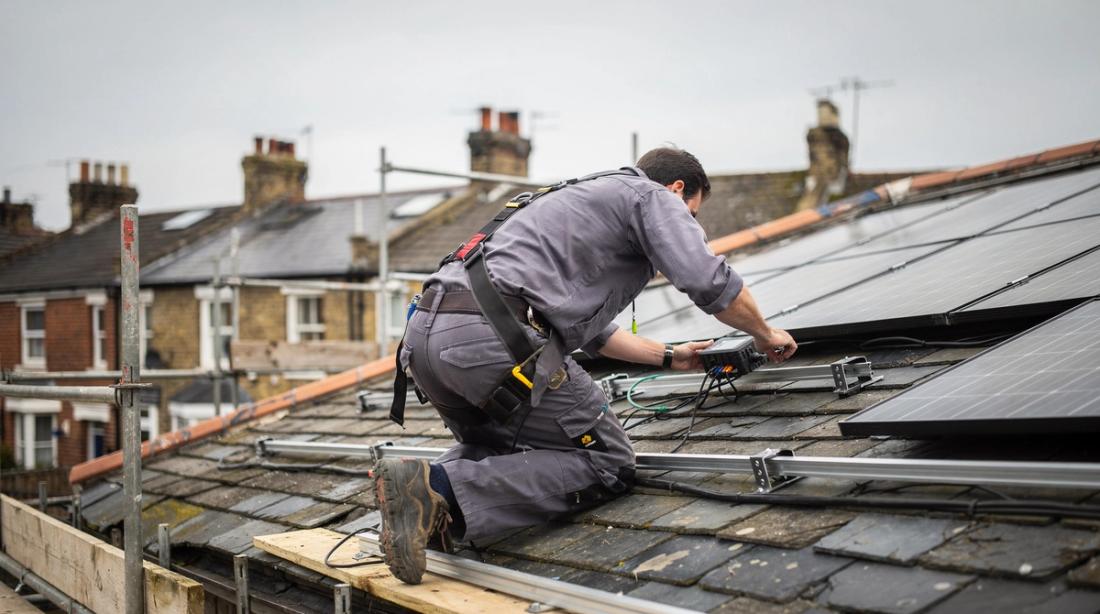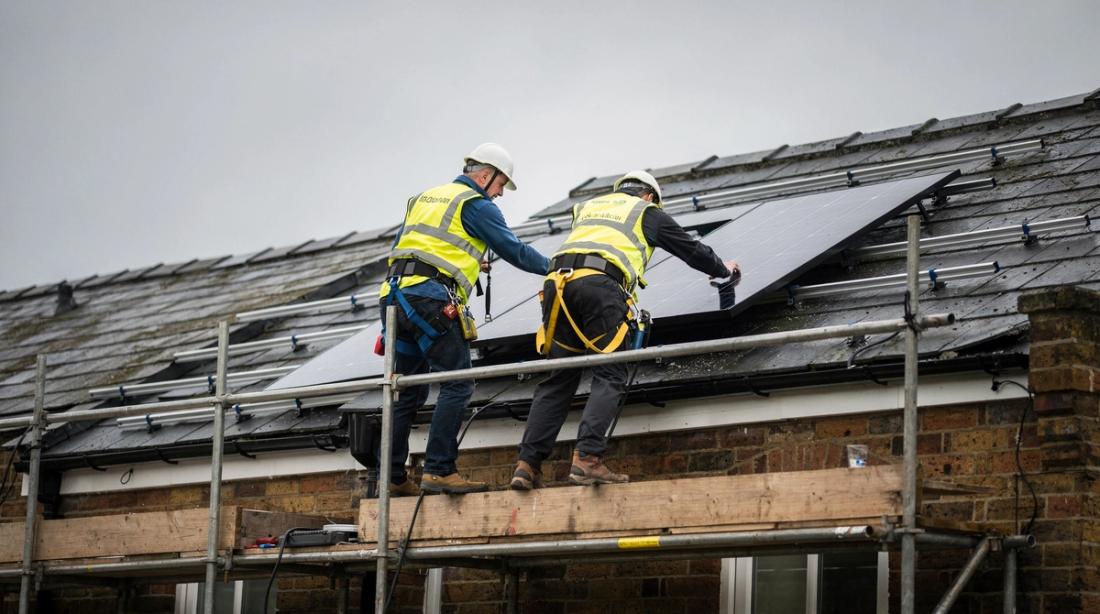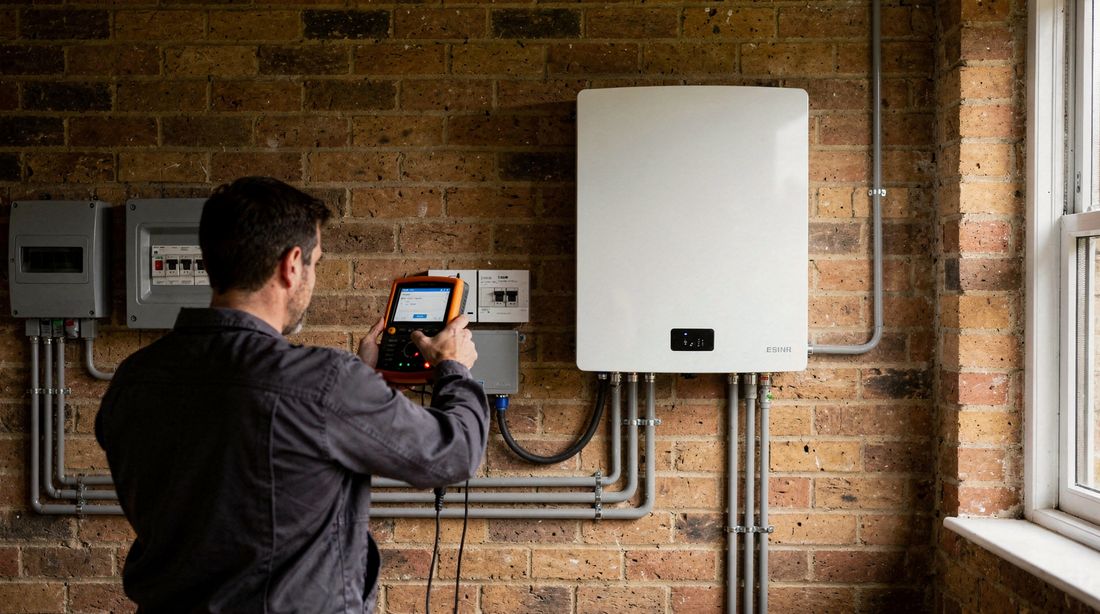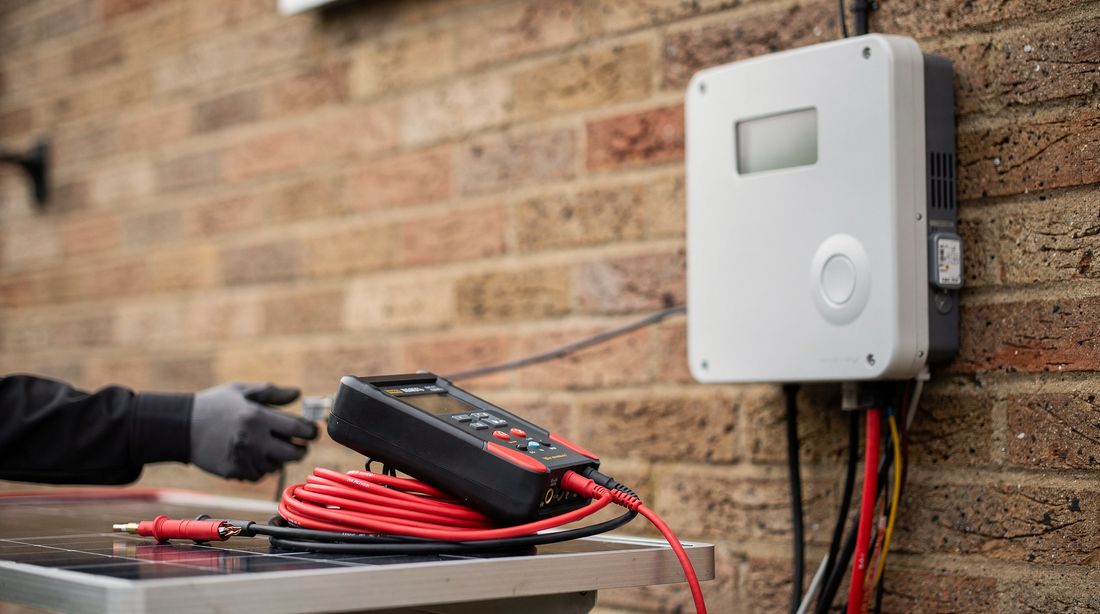

Solar PV commissioning is the structured set of inspections and electrical tests that proves a finished array is safe, correctly wired and ready to connect, and it is now a daily job across a busy market: MCS certified 101,861 small-scale solar installations in the year to 31 May 2025, up 37% on the year before (pv magazine, 2025). Every one of those installs needs a commissioning record before the customer can be paid for export.
The work is governed by BS EN IEC 62446-1, which sets the minimum tests, documentation and inspection a grid connected PV system must pass (Hioki, 2025). Commissioning is where an installer turns a mechanically complete job into a certified, grid ready system. Miss a reading or a signature here and the paperwork stalls, the Smart Export Guarantee application waits, and someone drives back to site.
Key Takeaways
- Commissioning tests follow BS EN IEC 62446-1: Category 1 tests apply to every system and all must pass before any Category 2 test begins.
- The minimum insulation resistance is 1 MΩ, tested at 500 V DC for 120 to 500 V arrays and 1000 V DC for 500 to 1000 V arrays.
- A compliant sign-off needs the IEC 62446-1 test results, a BS 7671 Electrical Installation Certificate, DNO evidence and MCS registration.
- Register the install on the MCS Installation Database within 10 working days of commissioning, or the customer's export payments wait.
- G98 systems notify the DNO after connection; G99 systems need approval before install and confirmation after energisation.
What is solar PV commissioning?
Solar PV commissioning is the process of inspecting, testing and documenting a completed array to confirm it is safe and ready to energise. BS EN IEC 62446-1 sets the minimum requirements for that documentation, the commissioning tests and the inspection (Hioki, 2025). It is the step that makes an install certifiable, not merely finished.
Knowing how to commission a solar PV system means working in a fixed order: visual inspection first, then DC tests, then AC and functional checks, then documentation. The DC isolator, labelling and signage are all part of that visual stage, so it pays to walk the roof and the string route before you reach for a meter. Our DC isolator safety guide covers the switchgear checks in detail.
This guide covers grid connected solar PV. Battery and storage systems follow their own commissioning sequence, which we set out in the battery storage commissioning guide. On a hybrid job you commission the PV array first, then the storage, because the inverter needs a verified DC source before you prove the battery side.
What tests does BS EN IEC 62446-1 require?
BS EN IEC 62446-1 splits testing into two categories. Category 1 tests apply to every grid connected system and all must be completed and passed before any Category 2 test begins (Hioki, 2025). Category 2 adds I-V curve tracing and infrared thermography for larger or more complex arrays.
The Category 1 tests, each confirming one thing, are:
- Earth or equipotential continuity: protective and bonding conductors are continuous, where the DC side is earthed.
- Polarity: every DC conductor is the correct polarity before it reaches a switch or the inverter.
- Combiner box check: all strings are connected correctly.
- String open-circuit voltage (Voc): string wiring and module count match the design.
- String current (short-circuit or operational): each string carries the current you expect.
- Functional test: isolators, protection relays and the inverter operate correctly.
- Insulation resistance: the DC array insulation to earth is sound.
For complex or commercial arrays, Category 2 adds an I-V curve test and infrared thermographic inspection (Hioki, 2025). Additional tests, such as a blocking diode test, a wet insulation test and a shade evaluation, apply where the design calls for them. The IET Code of Practice for Grid-connected Solar Photovoltaic Systems gives the fuller method behind these tests (IET).
Insulation resistance: test voltage and the 1 MΩ threshold
Insulation resistance is the test that most often flags a wiring fault, and the minimum pass value under IEC 62446-1 is 1 MΩ (Fluke). The test voltage rises with system voltage: 500 V DC for arrays between 120 V and 500 V, and 1000 V DC for arrays between 500 V and 1000 V. Most domestic strings fall in the 500 V DC band.
The test voltage and minimum threshold by system voltage:
- 120 V to 500 V: test at 500 V DC, minimum 1 MΩ.
- 500 V to 1000 V: test at 1000 V DC, minimum 1 MΩ.
- Above 1000 V: test at 1500 V DC, minimum 1 MΩ.
Fluke notes that testing a short-circuited PV string to ground is compliant with IEC 62446-1 for circuits up to 20 A (Fluke). In the field, a borderline reading almost always means moisture, not a fault: test early on a dry roof, and a value that climbs as the array warms is a damp connector drying out, not sound insulation you can sign off.
Your solar PV commissioning checklist, step by step
A solar commissioning checklist runs from visual inspection through DC and AC testing to functional checks and documentation. Working in that order matters, because IEC 62446-1 requires every Category 1 test to pass before you move on (Hioki, 2025). A failed polarity check stops the sequence until it is corrected.
- Visual inspection: mounting, clamping, cable management, labelling, the DC isolator and all signage.
- Polarity check on every DC conductor before connecting to the isolator or inverter.
- String open-circuit voltage, compared against the design value.
- String short-circuit or operational current.
- Insulation resistance to earth at the correct test voltage for the system.
- Earth continuity and equipotential bonding, where the DC side is earthed.
- Functional test of the isolators, the inverter and any protection relay.
- Record every reading per string, with photos, on the commissioning sheet before you leave.
Capturing the pv commissioning test readings string by string, on site, is what separates a one-visit job from a return trip. A single missing Voc value or an unphotographed isolator is enough to hold up the certificate.
What goes in the Electrical Installation Certificate and handover pack?
The commissioning record is only part of sign-off. An MIS 3002 install also needs a BS 7671 Electrical Installation Certificate for the fixed wiring, a Building Regulations notification, DNO paperwork and MCS Installation Database registration (Payaca, 2026). Our MIS 3002 standard guide sets out where commissioning sits in that standard.
The customer handover pack should reach them within 48 hours and contain the MCS certificate, the EIC, DNO evidence, a system schematic, component datasheets, warranty terms, a shutdown procedure and SEG guidance (Payaca, 2026). Build it from the same readings and photos you captured at test, and keep a copy on file. The full documentation set is covered in our renewable installation paperwork guide.
How G98 and G99 notification fit the commissioning timeline
The DNO route is set before commissioning, not after. G98 systems connect first and notify the DNO afterward; G99 systems need DNO approval before installation and a confirmation after energisation (Payaca, 2026). Mixing the two up is a common audit finding, and the fix is a design-stage decision, not a commissioning-day one.
For a single-phase domestic array within the G98 limit, you notify after energising. Cross into G99 territory, with larger inverters or export above the threshold, and the approval has to be in hand before you install. Our G99 application guide walks through the approval route and the witness test so the commissioning day is not the moment you discover the paperwork is missing.
When must you register the install on the MID?
MCS Installation Database registration is due within 10 working days of commissioning, and that registration generates the MCS certificate (Payaca, 2026). The customer's Smart Export Guarantee application usually depends on that certificate, so a late registration directly delays their export payments.
Consumer code membership is no longer mandatory on the redeveloped MCS scheme, but it still applies on the legacy scheme until 31 March 2027 (Payaca, 2026). Register promptly, give the customer their handover pack, and point them to their SEG supplier while the certificate is fresh. The register-to-pay chain is only as fast as the installer at the start of it.
Common solar PV commissioning mistakes to avoid
Most commissioning delays trace back to data not captured on site: a missing string reading, no photo of the DC isolator, or an unsigned certificate (Payaca, 2026). Each gap means a return visit or an engineer chased for numbers days later, when the memory of the job has faded.
The recurring field mistakes are familiar: testing insulation resistance in the wet and signing off a reading that was only ever going to climb; skipping a polarity check before the inverter; leaving strings unlabelled so the next engineer cannot trace them; and treating the G98 or G99 route as a commissioning-day question. The occupational standard for this work is set out in the national unit for commissioning solar PV and EESS systems (UK Standards).
Treat commissioning as a data task, not only an electrical one. The installers who register fastest capture every reading, photo and serial number at the point of test, then produce the handover pack the same day. Software that builds the commissioning record and the handover documents as you work, such as Reonic, removes most of the return visits. The standard is clear and the tests are quick; the paperwork discipline is what keeps a growing book of installs compliant.
Frequently asked questions
How long does solar PV commissioning take?
On a straightforward domestic array, the electrical testing takes under an hour once the install is mechanically complete. The documentation, DNO notification and MCS registration take longer and often span several days. Capturing readings and photos on site is what keeps the paperwork half fast.
What is the minimum insulation resistance for a solar PV system?
The minimum insulation resistance under IEC 62446-1 is 1 MΩ (Fluke). You test at 500 V DC for systems between 120 V and 500 V, and at 1000 V DC between 500 V and 1000 V. A borderline value on a damp roof usually means moisture rather than a genuine insulation fault.
Do I need an Electrical Installation Certificate for a solar PV install?
Yes. A BS 7671 Electrical Installation Certificate for the fixed wiring is part of a compliant MIS 3002 sign-off, alongside the IEC 62446-1 commissioning results, Building Regulations notification and DNO paperwork (Payaca, 2026). It belongs in the customer handover pack.
Is BS EN IEC 62446-1 a legal requirement in the UK?
BS EN IEC 62446-1 is the recognised standard for testing, documentation and maintenance of grid connected PV (Hioki, 2025), and MCS certification requires installs to be tested to it. For installers in the scheme, commissioning to this standard is a practical requirement, not an optional extra.
When must I register the install with MCS?
Register the install on the MCS Installation Database within 10 working days of commissioning (Payaca, 2026). That registration produces the MCS certificate the customer needs for their Smart Export Guarantee application, so a delay at your end delays their export payments.