
Solar panel planning permission is not needed for the majority of installations in England, because roof-mounted panels count as permitted development as long as they project no more than 200mm from the roof slope and stay below the highest part of the roof (Planning Portal, 2026). For installers, that keeps most domestic jobs out of the planning system entirely.
The rules sit in Part 14 of the General Permitted Development Order (legislation.gov.uk, 2026). This guide covers where solar panels are permitted development, the roof and ground limits that apply, the conservation area and listed building exceptions, and how the 2023 removal of the 1 megawatt cap reshaped commercial rooftop work.
Key Takeaways
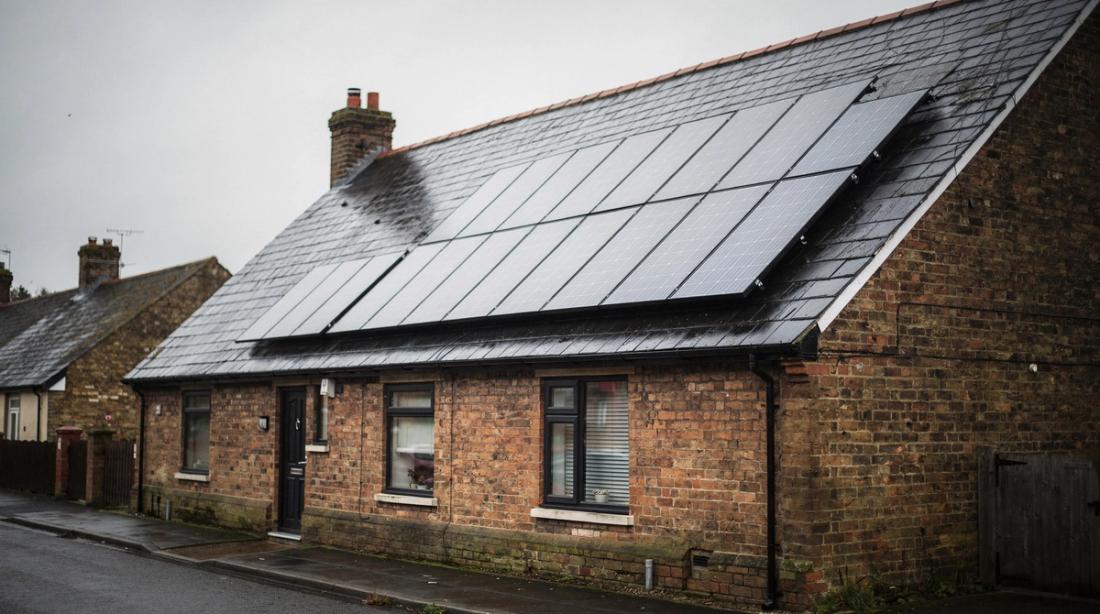
- Most roof-mounted solar in England is permitted development: panels must not project more than 200mm from the slope and must not rise above the highest part of the roof, excluding the chimney.
- Ground-mounted arrays are permitted development up to 9 square metres, no higher than 4 metres and at least 5 metres from the boundary, and only the first stand-alone installation qualifies.
- Listed buildings and scheduled monuments are never permitted development for solar; they need planning permission, and a listed building also needs listed building consent.
- In a conservation area or World Heritage Site, panels must not be fitted to a wall or roof that fronts a highway.
- Since December 2023 the 1 megawatt cap on non-domestic rooftop solar has gone, so large commercial arrays can be permitted development, subject to conditions.
Do solar panels need planning permission?
Usually not. Roof-mounted solar panels on a house are permitted development in England under Part 14 of the General Permitted Development Order, provided they stay within the projection and height limits and the building is not listed (Planning Portal, 2026). Planning permission is the exception, triggered by protected status or a breached limit rather than the norm.
As with any permitted development, the responsibility to prove compliance sits with the installer and the homeowner, not the council. Two conditions always apply regardless of size: the equipment must be sited so far as is practicable to minimise its effect on the building's appearance and the amenity of the area, and it must be removed when it is no longer needed.
In practice the projection limit is the one that quietly catches retrofit jobs. On older roofs with uneven battens we have seen standard mounts push the panels past 200mm at the eaves, so we check the rail height against the worst tile before ordering rather than after. Getting that detail right at survey is what keeps a marginal job comfortably inside permitted development.
Roof-mounted solar: the permitted development limits
These are the roof-mounting limits every domestic job is checked against (Planning Portal, 2026). Stay inside them and no application is needed; breach any one and the panels need full planning permission before work begins on the roof.
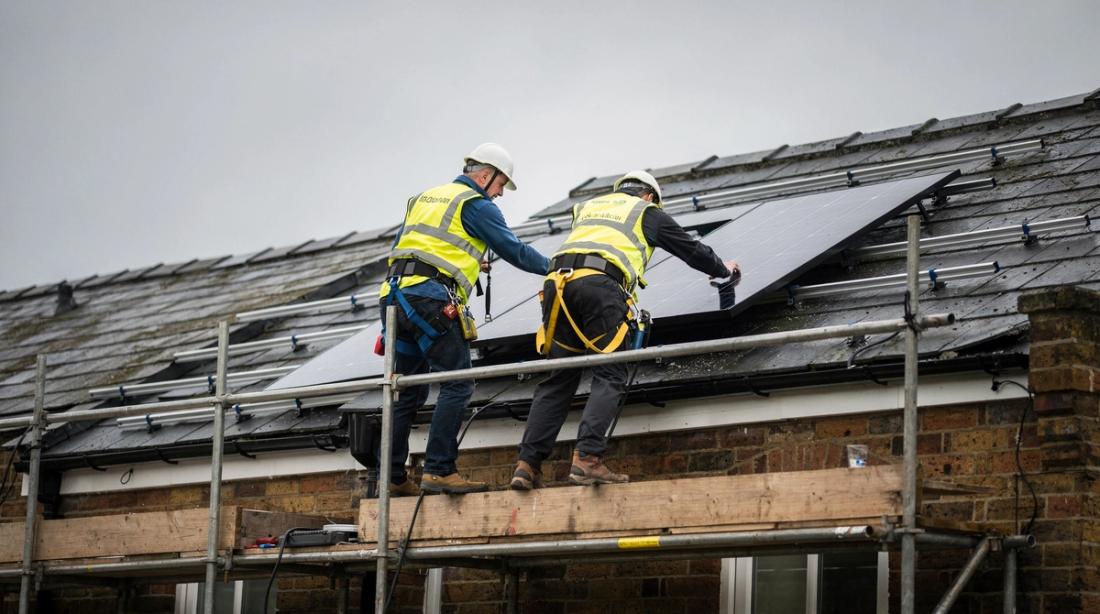
- Projection from the roof: panels must not stick out more than 200mm from the roof slope or the wall surface.
- Height: no part of the panels may sit above the highest part of the roof, excluding the chimney.
- Flat roofs: the highest part of the solar equipment must be no more than 600mm above the highest part of the roof.
- Designated land flat roofs: in national parks, the Broads, Areas of Outstanding Natural Beauty, conservation areas and World Heritage Sites, a flat-roof install needs prior approval from the local authority.
- Amenity and removal: panels must be sited to minimise the visual effect and taken down once they are no longer in use.
When do solar panels need planning permission?
Solar panels need a planning application whenever the building is listed or a scheduled monument, when panels would sit on a wall fronting a highway in a conservation area or World Heritage Site, or when an installation breaches the projection, height or area limits (Planning Portal, 2026). Each of those puts the job into the formal system.
Local authorities can also withdraw permitted development rights through an Article 4 Direction, which is common in sensitive townscapes, so the local map is worth checking before you quote. A leaseholder may additionally need the freeholder's consent, and any second stand-alone ground array needs planning permission because only the first qualifies (Planning Portal, 2026).
What are the rules for ground-mounted solar?
Stand-alone ground-mounted solar is permitted development up to 9 square metres, or 3 metres wide by 3 metres deep, no higher than 4 metres and at least 5 metres from the property boundary (Planning Portal, 2026). Only the first stand-alone installation qualifies, so a second array on the same plot needs a planning application.
Conservation areas tighten this further. Where the equipment would sit closer to the highway than the nearest part of the house, it must be no higher than 2 metres and needs prior approval from the local authority. In a World Heritage Site, no part of the array may be nearer to a bounding highway than the closest part of the house itself.
The 9 square metre ceiling rules out most whole-home ground arrays, so on domestic plots a stand-alone system tends to be a top-up rather than the main supply. Anything larger, such as a field-scale array, sits outside domestic permitted development entirely and follows the separate planning route used for solar farms, which is a different process with its own environmental tests.
Permitted development for commercial and flat-roof solar
The biggest recent change is commercial. In December 2023 the government removed the 1 megawatt cap on non-domestic rooftop solar, so a business can now fit a large rooftop array under permitted development without a planning application (Solar Power Portal, 2023). Before that, anything generating above 1 megawatt was pushed into full planning.
The change came through an amendment to Class J of Part 14, in force on 21 December 2023 (legislation.gov.uk, 2023). Alongside it, flat-roof solar rules were relaxed so more commercial and domestic flat-roof arrays fall inside permitted development (Homebuilding, 2023). The permitted development solar commercial roof route still carries conditions: no panels on walls fronting a highway in conservation areas, nothing on listed buildings, and Article 4 areas remain excluded.
For larger sites the grid connection, not planning, is often the gating step, so pairing the planning check with our G99 DNO approval guide keeps the commercial timeline realistic from the first site visit.
How do conservation areas, listed buildings and World Heritage Sites affect solar?
These designations carry the tightest limits (Planning Portal, 2026). A listed building never qualifies for permitted development solar, so the job needs a planning application and, for work affecting the building, listed building consent. The same exclusion applies to any building within the grounds of a listed building or on a scheduled monument.
In a conservation area or World Heritage Site, roof and wall panels are permitted development only where they do not front a highway. That usually pushes the array onto a rear or side slope, which is workable on most terraced and semi-detached streets but needs confirming at survey rather than assuming. Where the compliant slope faces away from the sun, a planning application may be the better route than a poor yield.
Article 4 Directions are the wildcard. A street can look like ordinary permitted development territory and still have those rights withdrawn by the local authority, often to protect a uniform roofscape. We treat the council's online Article 4 map as the first check on any conservation area job rather than the last, because finding a direction after install is an expensive way to learn the rule.
Solar planning in Scotland and Wales
Planning is devolved, so the England rules above are not a UK-wide answer. Wales runs its own permitted development regime for solar, with separate limits and conservation area provisions (GOV.WALES, 2026), and Scotland and Northern Ireland differ again. If you install across a border, treat each nation's rules as distinct and confirm the local position before quoting the job as permitted development.
The installer's solar planning checklist
A short check at survey settles the planning question before it becomes a problem. Confirm listed status, a conservation area or World Heritage Site boundary and any Article 4 Direction on the local authority map. Measure the intended projection and confirm the panels will sit below the ridge, because a shallow mount system is what keeps most jobs inside the 200mm limit.
On mixed roofs we photograph the proposed slope and note which elevation fronts the highway, since that single fact decides most conservation area cases on site. Fixing detail matters too, and following BS 5534 for solar alongside our slate roof fitting guide keeps the mechanical spec defensible if the array is ever queried.
Keep the measurements, the elevation photos and the permitted development checklist in the job file so the compliance position is documented. Tools like Reonic can store that evidence next to the DNO and MCS paperwork for each installation, which keeps a busy pipeline auditable without extra admin. For the roof-type decision itself, our in-roof versus on-roof comparison covers how the mount choice interacts with the projection limit.
Frequently asked questions
Do I need planning permission for solar panels in the UK? In most of England, no. Roof-mounted solar is permitted development if panels project no more than 200mm and stay below the ridge (Planning Portal, 2026). Listed buildings, some conservation area positions and Article 4 areas are the main exceptions, and Scotland and Wales set their own rules.
How far can solar panels stick out from the roof? No more than 200mm from the roof slope or wall surface for a pitched roof under permitted development (Planning Portal, 2026). On a flat roof the highest part of the equipment must be within 600mm of the highest part of the roof, and panels must never rise above the ridge line.
Can I put solar panels on a listed building? Not under permitted development. Solar on a listed building always needs a planning application, and work affecting the building will also need listed building consent (Planning Portal, 2026). The same exclusion covers buildings within a listed building's grounds and scheduled monuments.
Do commercial rooftop solar panels need planning permission? Usually not since December 2023, when the 1 megawatt cap on non-domestic rooftop solar was removed (Solar Power Portal, 2023). Large arrays can be permitted development, but conservation area, listed building and Article 4 conditions still apply, so the site's designation must be checked first.
Do ground-mounted solar panels need planning permission? Not if they meet the stand-alone limits: up to 9 square metres, under 4 metres high and at least 5 metres from the boundary, first installation only (Planning Portal, 2026). A second array, or one exceeding those figures, needs a planning application.