
Solar installer insurance starts with public liability from around £9 a month for £1m of cover, but MCS certification pushes the real minimum to £2m public liability, and any firm with staff must hold £5m employers' liability by law (Markel Direct, 2026). Getting the cover wrong is not a paperwork problem, it blocks certification and can breach the law.
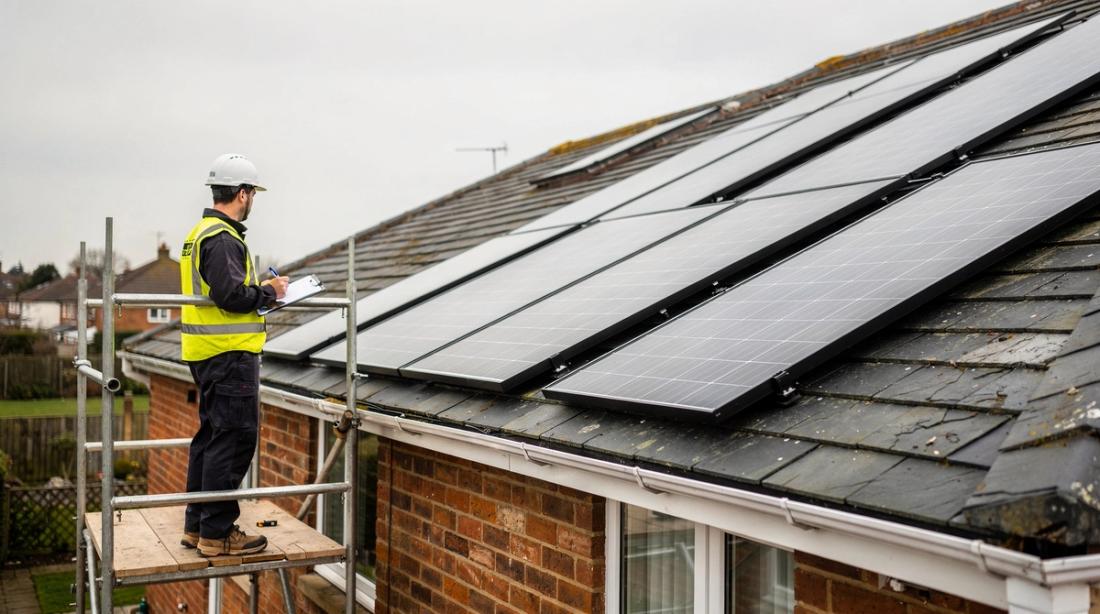
For a UK solar installer, insurance is three things at once: a legal duty, an MCS requirement, and a commercial safeguard on a job that involves working at height and other people's roofs. This guide covers what each policy does, what MCS and the consumer codes demand, and what installers actually pay in 2026, so you can size cover to your business rather than guess.
Key Takeaways
- Public liability for solar installers starts near £9 a month, with MCS requiring at least £2m of cover.
- Professional indemnity protects against design and advice claims and is required by most MCS bodies.
- Employers' liability is a legal requirement at £5m minimum for any firm with staff.
- HSE can fine an uninsured employer up to £2,500 per day, plus £1,000 for not displaying the certificate.
- Typical 2026 premiums run £950 to £2,400 a year for a sole installer and much more for multi-trade firms.
What insurance does a solar installer need?
A solar installer typically needs four covers: public liability, professional indemnity, employers' liability, and cover for tools and contract works. Public liability protects against injury or damage to third parties, professional indemnity against claims of faulty design or advice, and employers' liability is a legal requirement for anyone with staff (Simply Business, 2026).
The exact mix depends on how you work. A sole trader fitting domestic PV needs public liability and, for MCS, professional indemnity. A firm with employees adds employers' liability by law. Once you handle customer materials or large commercial jobs, contract works and higher limits come into play. The point is to match the policy to your real exposure, not to buy the cheapest headline premium.
Public liability insurance for solar installers
Public liability is the foundation cover, and for solar work MCS sets the bar higher than the market minimum. MCS certification requires at least £2m of public liability, and some certification bodies ask for £5m (Miller & Partner, 2026). Cover is available up to £5m for public and products liability, which larger commercial contracts often demand in their tender conditions.
The reason the limit matters is the nature of the work. A dropped tool through a conservatory roof, a slipped tile that lets water in, or damage to a customer's existing electrics are everyday risks on a solar job. Public liability covers the third-party repair and any legal costs, which on a domestic property can still run into five figures.
Headline pricing looks cheap. General public liability starts at around £9 a month for £1m, while specialist cover built for solar contractors starts nearer £16 a month (Markel Direct, 2026). The specialist product is usually worth the difference because it is written to understand roof work and PV rather than treating it as generic trade risk.
Professional indemnity for PV installers
Professional indemnity covers the advice and design side of the job, and most MCS bodies require it. Solar technology is complex, and an incorrect system design or a wrong recommendation can cause a real financial loss for the client, from underperformance to a system that never meets the quoted output (NICEIC Insurance, 2026). If a client claims your design or advice caused that loss, professional indemnity covers the legal fees and any compensation.
Limits are scaled to the size of the business. Professional indemnity limits typically run £250k to £500k for sole installers and £500k to £1m for MCS firms (Miller & Partner, 2026). This is the cover most installers underestimate, because the risk is invisible until a performance dispute lands months after the job is signed off.
Design claims are where the installer-first detail matters. A shading miscalculation, an undersized inverter, or a string layout that trips in summer are all design decisions, not workmanship faults, so they fall under professional indemnity rather than public liability. Keeping the two straight decides which policy responds when a claim arrives.
Is employers' liability insurance a legal requirement?
Yes. Employers' liability is a legal requirement under the Employers' Liability (Compulsory Insurance) Act 1969 for any business with staff, and the minimum cover is £5m (legislation.gov.uk, 2026). It pays out if an employee is injured or made ill through work, which on solar sites means falls from height, electric shock, and manual handling injuries above all.
The enforcement is real and expensive. The HSE can fine an uninsured employer up to £2,500 for every day without cover, and a further £1,000 for failing to display the certificate or show it to an inspector (Hiscox, 2026). Cover is available up to £10m for employers' liability, and the £5m figure is a floor, not a target.
One point catches installers out: apprentices, labour-only subcontractors, and casual help usually count as employees for this Act. If someone works under your control on site, you almost certainly need employers' liability, even without a formal payroll.
What else should the policy cover?
Beyond the three core covers, a solar policy should protect the kit and the work in progress. Useful add-ons include contract works cover, tools and business equipment cover, and plant and machinery insurance (Tradesman Saver, 2026). Contract works matters because a half-finished installation damaged by storm or theft is your liability until handover.
Tools and equipment cover is the quiet one that pays for itself. Solar work uses expensive specialist tools and the panels themselves are valuable and portable, so theft from a van or a site is a common, costly claim. Cover for equipment in transit and on site turns a five-figure loss into an excess payment.
In practice, the gap that catches installers out is stored stock. Panels and inverters sitting in a lock-up or on a customer's driveway ahead of the install are rarely covered by a basic public liability policy, yet a single pallet of modules can be worth thousands. Check whether the policy covers goods in storage and in transit, not just tools in use, before you take delivery of a big order. Battery storage adds another layer, because lithium stock carries its own handling and fire conditions that some insurers exclude unless declared.
How much does solar installer insurance cost?
Cost scales with turnover, staff, and the type of work. Indicative 2026 annual premiums run from roughly £950 to £2,400 for sole installers and start-ups on £100k to £300k turnover, rising to £7,500 to £18,000 for multi-trade renewables firms (Miller & Partner, 2026). The spread reflects headcount, commercial work, and the limits demanded by contracts.
- Public liability: Typical minimum for MCS: £2m (some bodies £5m); Indicative starting cost: from ~£9 to £16 per month
- Professional indemnity: Typical minimum for MCS: £250k to £1m; Indicative starting cost: bundled or added premium
- Employers' liability: Typical minimum for MCS: £5m (legal minimum, if staff); Indicative starting cost: part of combined policy
- Sole installer combined policy: Typical minimum for MCS: meets MCS minimums; Indicative starting cost: ~£950 to £2,400 per year
The cheapest quote rarely wins on a claim. A combined trade policy written for renewables usually costs a little more than a generic tradesperson policy but responds properly to roof work, PV design, and battery storage, which is where solar claims actually happen. It is worth reviewing limits at each renewal too, because turnover and job size tend to climb faster than installers expect, and a limit set two years ago can leave a gap on today's commercial work.
How insurance links to MCS, TrustMark and consumer codes
Insurance is not a standalone purchase, it is a gate into the schemes that let you trade. MCS certification is built around these cover minimums, so your certification body will check public liability and professional indemnity before and during certification. If you are still working towards it, see the route in how to become MCS certified and the wider MCS accreditation overview.
The consumer codes stack on top. TrustMark registration and a consumer code such as RECC or HIES expect appropriate cover and financial protection, and they sit alongside the insurance-backed guarantee for renewables and deposit protection insurance that protect the customer's money. Choosing between codes is covered in HIES vs RECC, and being a TrustMark registered business ties the whole package together.
Keeping certificates, renewal dates, and scheme memberships in one place stops a lapsed policy from quietly breaking your MCS status. A system like Reonic's portal helps installers keep this compliance paperwork alongside the jobs it covers.
Frequently Asked Questions
How much public liability cover does an MCS solar installer need?
MCS requires at least £2m of public liability, and some certification bodies ask for £5m. Larger commercial contracts often specify £5m in their tender conditions. Because the extra limit adds little to the premium, most installers carry £5m as standard rather than sitting at the £2m floor.
Is professional indemnity insurance mandatory for solar installers?
It is not a general legal requirement, but most MCS certification bodies require it, so in practice a certified solar installer needs it. Professional indemnity covers claims of faulty design or advice, such as an undersized system or a shading error, which public liability does not touch. Typical limits run £250k to £1m.
Do I need employers' liability insurance if I only use subcontractors?
Usually yes. The Employers' Liability (Compulsory Insurance) Act 1969 treats labour-only subcontractors, apprentices, and casual workers under your control as employees. If they work to your instruction on site, you almost certainly need £5m employers' liability, even without formal payroll. Bona fide independent contractors with their own cover can be an exception.
What does solar installer insurance actually cost per year?
For a sole installer or start-up on £100k to £300k turnover, indicative 2026 premiums run £950 to £2,400 a year for a combined policy that meets MCS minimums. Multi-trade renewables firms with staff and commercial work pay £7,500 to £18,000. Cost depends on turnover, headcount, limits, and claims history.
What happens if a solar installer works without insurance?
Trading without employers' liability breaches the 1969 Act, and the HSE can fine you up to £2,500 for each day uninsured, plus £1,000 for not displaying the certificate. You also lose MCS eligibility, cannot register work through the schemes, and carry every third-party and design claim personally, which can end a business after a single incident.
Solar installer insurance is best treated as part of your certification and compliance stack, not a grudge purchase. Sizing public liability, professional indemnity, and employers' liability to the way you actually work, then keeping the certificates current, protects both the business and the MCS status it depends on.