
The VAT domestic reverse charge has applied to construction services within the Construction Industry Scheme (CIS) since 1 March 2021, and it catches more solar installers than most expect (gov.uk). Under it, a VAT-registered subcontractor stops charging VAT on qualifying work, and the customer accounts for that VAT to HMRC instead.
For a straightforward domestic solar or battery job the reverse charge usually does not bite, because that supply is zero-rated until 31 March 2027 (gov.uk) and zero-rated work sits outside the charge. The trap is subcontracting. Fit panels for another VAT-registered contractor on a commercial or new-build project, and the standard or reduced-rated element can flip to reverse charge accounting.
Key Takeaways
- The reverse charge applies to CIS construction work between VAT-registered businesses where the customer is not the end user.
- Most domestic solar installs are 0% zero-rated until 31 March 2027, so the reverse charge does not apply to them.
- It bites when you subcontract standard or reduced-rated work to another VAT and CIS registered business.
- An end user must confirm their status in writing, or the reverse charge is presumed to apply.
- Get the invoice wording and the CIS position right first; the VAT treatment follows from them.
What is the VAT domestic reverse charge?
It is an anti-fraud measure that moves the VAT payment from supplier to customer on CIS construction services. HMRC introduced it on 1 March 2021 to stop missing-trader fraud, where a supplier charged 20% VAT and disappeared before paying HMRC (gov.uk). The subcontractor invoices without VAT, and the contractor reports both the output and input VAT on its own return.
The charge only touches supplies that are already within CIS and are standard-rated or reduced-rated. Zero-rated work is excluded entirely (BDO). That single rule explains most of what follows for solar installers, because so much domestic PV work is zero-rated. Knowing which category your job sits in is the whole game. A quick test before every job is worth the minute it takes. Confirm the CIS position, the VAT rate, and whether your customer is the end user. The correct treatment falls out of those three answers.
Does the reverse charge apply to solar panel installations?
Usually not for domestic work, because the supply and installation of solar panels in residential property is 0% rated in Great Britain until 31 March 2027, reverting to 5% from 1 April 2027 (gov.uk). Zero-rated supplies are outside the reverse charge, so a typical homeowner install is billed at 0% VAT with no reverse charge entry at all.
Standalone and retrofitted battery storage also moved to 0% from 1 February 2024 (Solar Energy UK). Where the reverse charge does appear is on standard or reduced-rated solar work supplied to a VAT-registered contractor rather than the end customer. Our guide to VAT on solar panels in the UK covers the zero-rate conditions in detail.
When does a solar installer have to use the reverse charge?
Three conditions must all be true: the work falls within CIS, both parties are VAT-registered, and the customer is not the end user but is making an onward supply (gov.uk). Miss any one and normal VAT rules apply. For solar, the usual trigger is a subcontract to a principal contractor on a larger build.
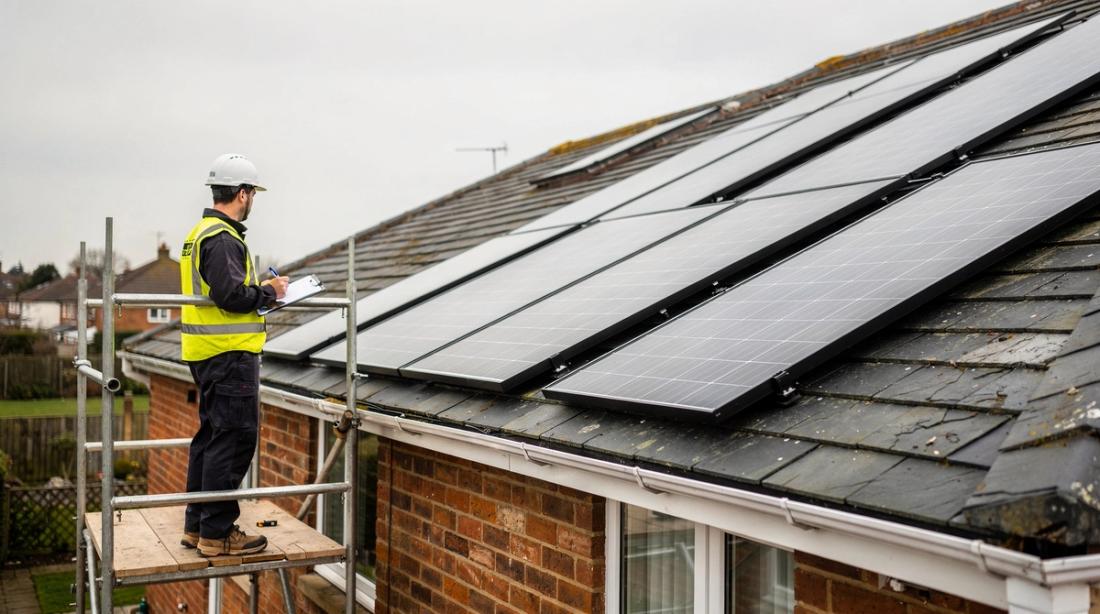
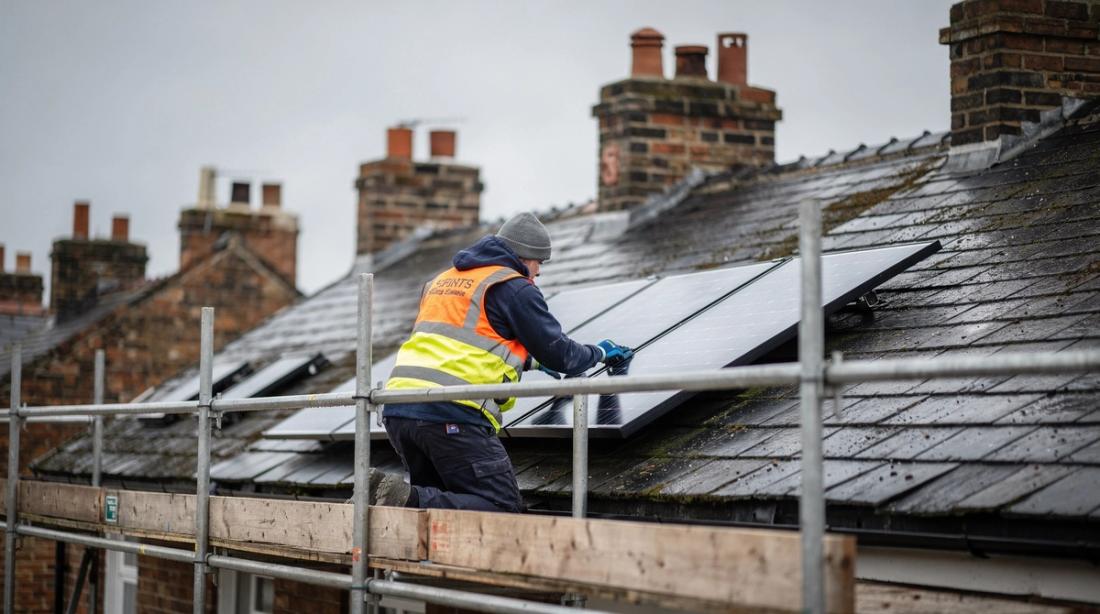
A worked example helps. You fit a rooftop PV array as a subcontractor to a main contractor building a block of flats. The work is standard-rated construction within CIS, both firms are VAT-registered, and the main contractor bills the developer onward. That is a reverse charge supply, so you invoice without VAT and note that the customer accounts for it. Change one fact, say the developer contracts you directly as the end user, and the same physical work reverts to normal VAT rules. The paperwork, not the panels, decides the treatment.
Who is an end user and why does it matter?
An end user is a VAT and CIS registered business that receives construction services but does not make an onward supply of them (gov.uk). Supplies to end users are outside the reverse charge and follow normal VAT rules. The status has to be confirmed in writing, usually under section 55A of the VAT Act 1994, or the reverse charge is presumed to apply.
There is a 5% tolerance. Where a customer is predominantly an end user but re-supplies a very small share, less than 5% by value, HMRC lets both sides treat the supply as end-user work (gov.uk). Build a standard end-user statement into your contracts so a customer can confirm status without a separate exchange, a point Build UK makes for the whole sector.
Invoicing under the reverse charge
The invoice must show all the normal detail. It must state clearly that the domestic reverse charge applies, and that the customer must account for the VAT (Sage). You show the VAT rate or amount that would have applied for reference, but you do not add it to the total the customer pays you.
Wording like "Reverse charge: customer to account to HMRC for the VAT" satisfies the rule. In your bookkeeping, record the sale as a reverse charge supply so it maps to the right VAT return boxes. Getting the paperwork trail clean matters as much as the numbers; our overview of renewable installation paperwork sets out what to keep on file.
Accounting software set up for the domestic reverse charge applies the wording and the return mapping once you flag the supply. That removes a frequent source of manual error. Whatever tool you use, reconcile reverse charge sales each quarter so a miskeyed invoice does not quietly understate your position and trigger a correction later.
Reverse charge, CIS and the 0% rate: how they interact
These three rules stack, and the order matters. First ask whether the work is within CIS. Then ask what VAT rate applies. Only standard and reduced-rated CIS work between the right parties can be reverse charged; zero-rated work never is. The table below maps the common solar scenarios to the treatment that applies.
- Domestic install for a homeowner (end user): 0% VAT, reverse charge does not apply because the work is zero-rated.
- Subcontract to a VAT and CIS registered contractor, standard-rated work: reverse charge applies, the customer accounts for VAT.
- Repairs or maintenance for a homeowner: 5% or 20% depending on the job, no reverse charge because they are the end user.
- Supply only of panels with no installation: reverse charge does not apply because it is goods, not a construction service.
- Domestic install in Northern Ireland: 20% VAT, or 5% where a reduced rate applies, under different rules from Great Britain.
Reverse charge and installer cash flow
It changes when VAT sits in your account. Before 1 March 2021, a subcontractor collected the 20% VAT from the contractor and held it until the next return. Under the reverse charge that cash never reaches you, so a firm used to relying on VAT balances for working capital can feel the gap. Plan for it rather than be surprised by it. A short cash-flow forecast helps. Strip out the VAT you used to hold, and it shows whether to adjust payment terms or a facility before the change bites.
Many reverse charge subcontractors also move into a repayment position. They still reclaim input VAT on materials but charge little or no output VAT. If that is you, consider monthly VAT returns to get refunds faster and protect cash flow (gov.uk). Pricing and payment terms matter more once the VAT float is gone; our guide to selling solar panels in the UK covers quoting cleanly under these rules.
What mistakes do solar installers make with reverse charge VAT?
The most common error is charging 20% VAT on a subcontract that should be reverse charged. That leaves the contractor to unpick it and delays your payment. The opposite error is applying the reverse charge to a zero-rated domestic job, which confuses the customer and misstates your return. Both come from skipping the CIS and rate checks before invoicing.
A second trap is assuming end-user status without written confirmation. In the field, installers who ask every business customer to confirm status in writing at quotation stage avoid almost all disputes later. If you run a growing installation firm, fold these checks into your quote template. Our guide to starting a solar panel business in the UK covers the wider compliance setup. Software such as Reonic can hold the VAT and CIS status against each project so the right wording flows onto every quote.
Frequently asked questions
Do I charge VAT on solar panels to a homeowner?
No, not in Great Britain until 31 March 2027. The supply and installation of solar panels and batteries in residential property is zero-rated, so you charge 0% VAT and the reverse charge does not apply (gov.uk). From 1 April 2027 the rate is due to move to 5% unless the relief is extended. Northern Ireland follows different rules.
Does the reverse charge apply to a domestic solar install?
Almost never, because domestic installs are zero-rated and zero-rated work sits outside the reverse charge (BDO). The reverse charge is designed for standard or reduced-rated CIS work supplied between VAT-registered businesses in a chain. A one-off install direct for a homeowner is an end-user supply, so normal VAT rules and the 0% rate apply.
What if I subcontract solar work to another contractor?
If the work is within CIS, both firms are VAT-registered, the job is standard or reduced-rated, and the contractor makes an onward supply, the reverse charge applies (gov.uk). You invoice without VAT and state that the customer accounts for it. Confirm the contractor is not an end user before you decide, because that single fact changes the treatment.
How do I show the reverse charge on an invoice?
State that the domestic reverse charge applies and that the customer must account for the VAT to HMRC (Sage). Show the VAT rate or amount for reference but exclude it from the total payable. Keep the wording consistent across every reverse charge invoice, and record the supply correctly so it lands in the right boxes on your VAT return.
Does the reverse charge apply in Northern Ireland?
The reverse charge itself operates across the UK for qualifying CIS construction services. What differs in Northern Ireland is the VAT rate on solar. The 0% Great Britain relief does not apply there. Domestic solar is generally 20%, or 5% where a reduced rate qualifies. Check the rate first, then apply the reverse charge test as normal. The rate position differs across the UK. Keep a note of where each job sits, so your invoicing stays consistent for customers on both sides of the Irish Sea.