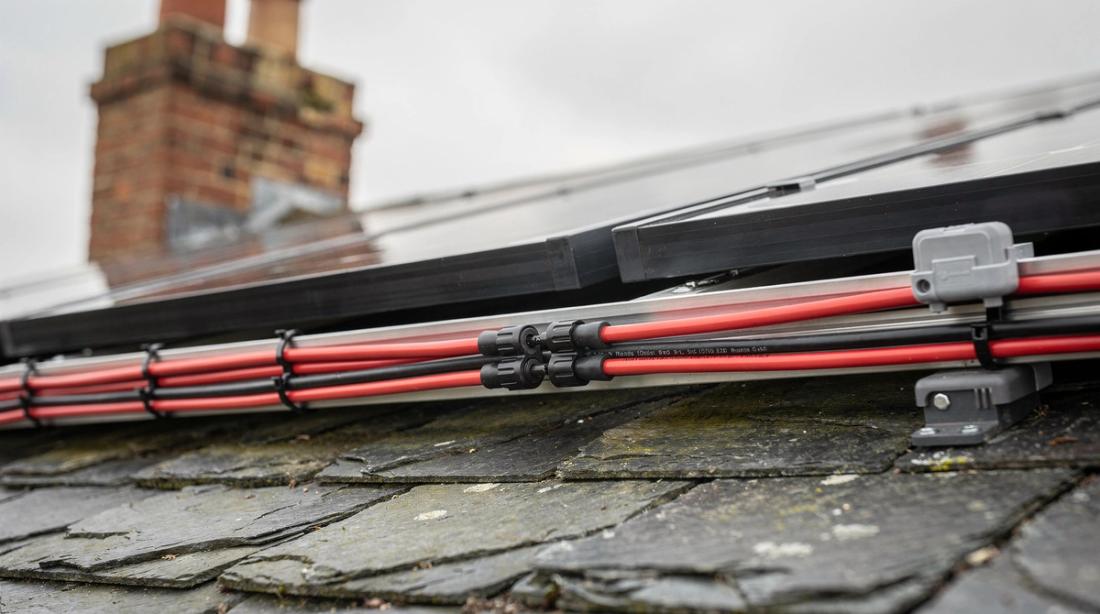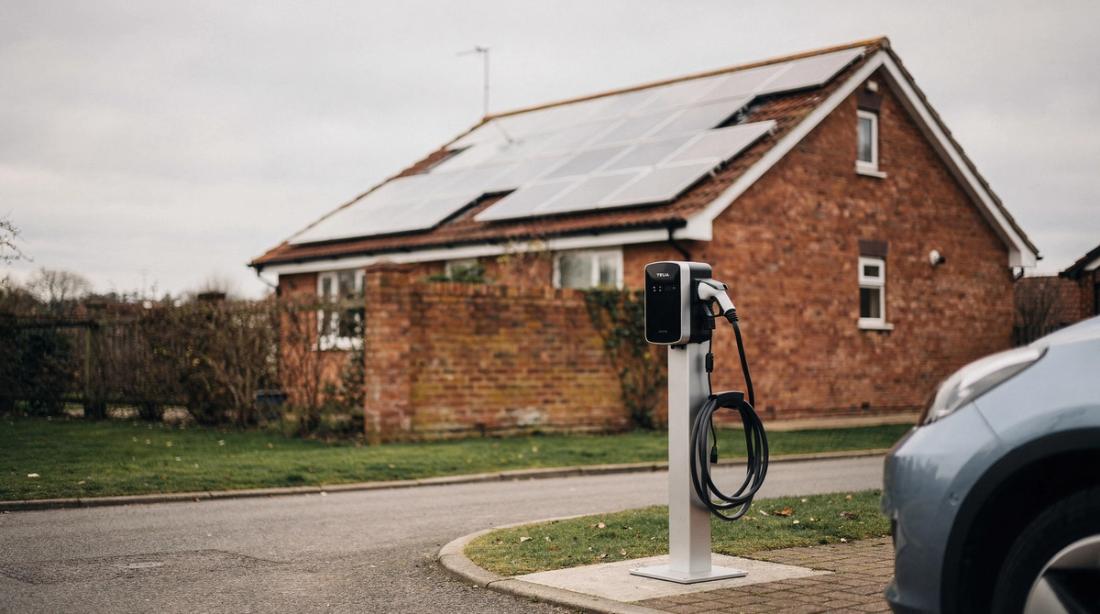

A solar EV charger pairs a home charge point with rooftop solar so surplus generation charges the car instead of being exported for pennies, and demand for it is climbing fast: the UK passed 2,012,000 electric vehicles on the road by the end of 2025, up 31.2% year on year (SMMT, 2026). For installers, solar plus EV is now one of the most common upgrade conversations on a domestic site.
This guide covers how solar diversion works, what it saves against exporting, which chargers support it, and the DNO and regulatory steps that sit around the install. The economics matter because self-consumed solar offsets grid electricity capped at 26.11p per kWh from July 2026, while exported units earn a fraction of that (Ofgem, 2026).
Key Takeaways
- A solar diverter or solar-aware charger sends surplus PV to the car, so you self-consume generation instead of exporting it at a lower Smart Export Guarantee rate.
- Self-consumed solar offsets grid import capped at 26.11p per kWh from July 2026, while SEG export pays roughly 3p to 15p per kWh (Ofgem, 2026; The Eco Experts, 2026).
- Chargers such as the myenergi Zappi use CT clamps to read export and divert it in Eco, Eco+ or Fast modes, charging the car on green energy first.
- A 7kW single-phase charger is usually a G98 fit-and-notify job where total demand stays under 60A, notified to the DNO within 28 days (Best Chargers, 2026).
- All private charge points sold since 30 June 2022 must be smart by default under the Smart Charge Points Regulations (Pod, 2025).
What is a solar EV charger and how does solar diversion work?
A solar EV charger is a charge point that reads how much solar you are about to export and diverts that surplus to the car instead. A current transformer clamp on the incoming supply measures the flow at the meter tails. When generation exceeds house load, the charger ramps the car up to soak the excess, and it backs off as a cloud passes or the kettle switches on.
This matters because of the price gap between buying and selling electricity. Every kilowatt-hour of solar sent to the car avoids buying a unit from the grid, capped at 26.11p from July 2026, whereas the same unit exported earns a Smart Export Guarantee rate that typically sits between 3p and 15p (The Eco Experts, 2026). Charging the car with your own sunshine is worth several times more than selling it.
How much does charging an EV with solar actually save?
The saving is the difference between the grid unit you avoid and the export payment you give up. On a sunny day, diverting a surplus unit to the car is worth 26.11p of avoided import against roughly 3p to 15p of lost SEG, a net gain of 11p to 23p per kWh. The comparison below sets out where each unit of solar is best sent.
- Self-consume in the house: offsets grid import at up to 26.11p per kWh, the highest-value use of a solar unit.
- Divert to the EV: same 26.11p of avoided import, storing energy in the car rather than exporting it cheaply.
- Charge a home battery: offsets evening import at up to 26.11p per kWh later, useful when the car is away during the day.
- Export under SEG: earns roughly 3p to 15p per kWh, the fallback when nothing on site can use the surplus (The Eco Experts, 2026).
A typical 4kWp array can send several kilowatt-hours to a car across a bright day, which on many EVs adds double-digit miles for free. The real-world figure depends on how much of the day the car is plugged in and at home, so households that work from home or charge at weekends capture far more solar than weekday commuters. Pairing with storage closes that gap, covered in our solar battery sizing guide.
Which solar EV chargers support solar diversion?
The best-known solar-aware charger in the UK is the myenergi Zappi, made in Lincolnshire, which uses CT clamps to detect surplus export and divert it to the car in Eco, Eco+ or Fast modes. Eco+ charges only on genuine surplus and pauses when clouds cut generation, while Fast ignores solar and charges at full rate. Other brands now offer similar solar tracking, so the feature is no longer unique to one product.
The practical requirement is a CT clamp on the incoming supply, or a compatible energy meter, plus firmware that supports solar modes. On sites with an existing solar diverter feeding the immersion heater, the priority order between hot water and the car needs setting up so the two do not fight over the same surplus. Our solar diverter guide covers that interaction in more detail.
How do you specify and install a solar EV charger?
Specifying a solar EV charger runs in a set order, from the supply check to commissioning. Getting the CT clamp placement right is what makes solar diversion work, and it is the step most often rushed on site. The sequence below keeps the install compliant and the solar feature functional from day one.
- Check the main fuse rating and existing load, since most homes are on a 60A to 100A supply and a 7kW charger draws around 32A.
- Confirm the DNO route: G98 fit-and-notify if total demand stays under the threshold, or a G99 application if it does not.
- Position the CT clamp on the incoming tail so it reads the whole property, not just one circuit, or the diversion logic will misread surplus.
- Mount the charger on a dedicated circuit with its own RCD protection to the current wiring regulations.
- Set the solar mode priority between the immersion diverter, home battery and car so surplus is shared, not double-claimed.
- Commission, run the firmware update, test each charging mode, and complete the DNO notification and any building control notice.
A straightforward single-charger job takes roughly three to six hours including commissioning and the DNO notification. Costs and variables sit in our EV charger installation cost guide, which breaks down where the price goes on a domestic job.
What DNO and regulatory approvals does a solar EV charger need?
Most 7kW single-phase chargers are a G98 fit-and-notify job, meaning you install, commission and then notify the DNO within 28 days, provided total property demand stays under 60A (Best Chargers, 2026). Where demand is higher or the supply is already loaded, a G99 application is needed and approval can take around 45 working days before energising (Capture Energy, 2025).
The charger itself must meet the Electric Vehicles (Smart Charge Points) Regulations 2021, and every private charge point sold or installed since 30 June 2022 has had to be smart by default, with features such as off-peak scheduling and a randomised start delay of up to 10 minutes (Pod, 2025). New-build homes in England must also include a charge point under the Part S building regulations, which keeps installer demand steady on new plots.
On sites with an existing solar array, the DNO may already hold a G98 or G99 record for the panels, and adding a charger with dynamic load management often keeps the whole property inside the original limit. In the field, the recurring snag is not the paperwork but the CT clamp: fit it on a sub-circuit rather than the incoming tail and the charger reads a fraction of the real surplus, so the car barely diverts. A five-minute check that the clamp sees the whole supply saves a return visit.
Does a solar diverter cut your SEG payments?
Yes, but that is the point, and the maths favours it. A solar diverter reduces the units you export, so a metered SEG payment falls, yet each diverted unit offsets import at up to 26.11p rather than earning 3p to 15p on export (Ofgem, 2026). You lose a small export payment to gain a larger avoided cost, so total household savings rise.
Two caveats matter for installers. SEG payments require an MCS-certified solar installation, so the diverter does not remove that requirement for the panels themselves (The Eco Experts, 2026). And a small number of legacy Feed-in Tariff customers on deemed export should check their terms before adding diversion, since their export is estimated rather than metered. Adding storage alongside is covered in our retrofit solar battery guide.
Making the solar and EV charger case to customers
The pitch to a homeowner is simple: a solar EV charger turns midday surplus into free miles instead of a token export payment, and it does so automatically once the CT clamp and modes are set. With more than 2 million EVs now on UK roads and public charging costing far more than home solar, the payback conversation increasingly writes itself on any home that already has, or is adding, panels.
Installers who quote the charger, solar and any battery as one coordinated system, rather than three separate jobs, tend to win the work and avoid the surplus-priority clashes that generate callbacks. Design tools such as Reonic help specify the combined system and document the CT placement and DNO route in one proposal, which keeps the install clean and the customer clear on what each unit of solar is doing.
Frequently asked questions
Can I charge my EV directly from solar panels?
Yes, with a solar-aware charger or a solar diverter that reads surplus generation and sends it to the car. A CT clamp on the incoming supply measures export, and the charger ramps the car to match, charging on solar first. Without solar functionality, a standard charger simply draws from the grid at the full rate.
Is a solar EV charger worth it compared with exporting?
Usually yes, because a self-consumed unit offsets import at up to 26.11p per kWh while export earns only 3p to 15p (Ofgem, 2026). The saving depends on how often the car is plugged in during daylight, so home and weekend charging capture the most solar.
Do I need DNO approval for a solar EV charger?
A 7kW single-phase charger is usually a G98 fit-and-notify job where total demand stays under 60A, notified within 28 days (Best Chargers, 2026). Higher demand needs a G99 application with approval before energising, which can take around 45 working days.
Does the Zappi need solar panels to work?
No. Solar-aware chargers like the Zappi work as standard chargers without generation and use their solar modes only when a CT clamp detects surplus export. The solar modes, Eco and Eco+, charge on surplus, while Fast mode ignores solar and charges at the full rate from the grid.
Will a solar diverter stop my Smart Export Guarantee payments?
It reduces them, because you export fewer units, but the diverted energy offsets import at a higher value, so total savings rise. SEG still requires an MCS-certified solar installation (The Eco Experts, 2026). Legacy Feed-in Tariff customers on deemed export should check their terms first.