
Smart Export Guarantee rates in 2026 run from roughly 12p to more than 30p per kWh, and the scheme paid registered generators £56.97 million across its fifth year alone (Ofgem, 2025). For an installer, the export tariff is no longer a footnote on the quote. It is one of the few numbers a customer grasps instantly, and knowing which supplier pays what turns a technical pitch into a straightforward payback conversation.
This guide compares the leading SEG tariffs as they stand in mid-2026, sets out the eligibility rules every installation has to meet, and explains why the headline rate is rarely the full story. The angle is installer-first: what to say at the survey, and why the MCS certificate you issue is the document that quietly unlocks every rate listed below.
Key Takeaways
- SEG is mandatory for large suppliers. Any licensed supplier with at least 150,000 domestic customers must offer a minimum of one export tariff, and every rate must sit above zero (Ofgem, 2025).
- Uptake is rising quickly. By the end of SEG Year 5 some 270,395 installations were registered to a tariff, up from 166,022 twelve months earlier, and 99.98% of them were solar PV (Ofgem, 2025).
- MCS is the gateway. Most tariffs require an MCS certificate and an MCS-certified installer, so the paperwork you hand over decides whether the customer can claim at all (MCS, 2026).
- The top rates carry conditions. Premium tariffs above 24p generally require the customer to import from the same supplier, and two of the highest are now closed to new applicants.
- A smart meter is essential. Export payments depend on a meter that records half-hourly export, even when the customer is on a flat rate (Energy Saving Trust, 2026).
What is the Smart Export Guarantee?
The Smart Export Guarantee is an Ofgem scheme that requires larger electricity suppliers to pay small-scale generators for the power they send to the grid. It covers solar PV, wind, hydro and anaerobic digestion up to 5MW, and micro-CHP up to 50kW (Ofgem, 2026).
The scheme replaced the closed Feed-in Tariff export element and puts pricing in suppliers' hands rather than fixing it centrally. Any licensed supplier with at least 150,000 domestic customers on 31 December must register as a mandatory SEG licensee and offer at least one tariff, though smaller suppliers can join voluntarily (Ofgem, 2025).
Because suppliers set their own rates and conditions, the market moves. In Year 5 there were 50 tariffs from 11 licensees, up from 37 the year before, so the comparison a customer saw last spring may already be out of date (Ofgem, 2025).
How much are Smart Export Guarantee rates in 2026?
In mid-2026 headline SEG rates span from around 12p per kWh on supplier-agnostic fixed tariffs to more than 30p on battery-linked variable tariffs. The best flat rate open to most homes sits near 24p to 25p, but almost every rate above 15p carries an import condition (EnergyPlus, 2026).
The list below sets out the leading tariffs as advertised in July 2026. Treat every figure as a snapshot, because suppliers can change SEG rates with 30 days' notice, so the rule on the quote should always be to confirm the current rate on the supplier's own page before promising a payback (Which?, 2026).
- Octopus Intelligent Flux: up to 32.17p per kWh, but it needs a home battery and an Octopus import tariff, and it has been closed to new sign-ups since March 2026.
- Good Energy Solar Savings Exclusive: 25p per kWh, the best flat rate with no battery requirement, conditional on importing electricity from Good Energy.
- EDF Export Exclusive: 24p per kWh fixed for twelve months, conditional on an EDF import tariff.
- British Gas Export & Earn Plus: 15.1p per kWh for import customers, being cut to 8p for systems above 15kW from July 2026.
- Good Energy Solar Savings Export: 15p per kWh, supplier-agnostic, so the customer can keep their existing import supplier.
- Octopus Outgoing Fixed: 12p per kWh, supplier-agnostic, following the cut on 1 March 2026.
The best-paying SEG tariffs in 2026
The highest advertised SEG rate in mid-2026 is Octopus Intelligent Flux at up to 32.17p per kWh, but it is battery-only and shut to new customers, so for most homes the realistic top rates are Good Energy at 25p and EDF at 24p (EnergyPlus, 2026).
The pattern is consistent. The biggest numbers belong to tariffs that bundle export with import. Good Energy's Exclusive and EDF's Export Exclusive both pay near the top of the market, but only if the customer also buys their electricity from that supplier, which can erode the gain if their import rate is uncompetitive.
For a customer who wants to keep a cheap import deal, the honest best options are supplier-agnostic tariffs such as Good Energy Solar Savings Export at 15p or Octopus Outgoing Fixed at 12p. Those rates are lower, but they do not force a switch that could cost more on the import side than it earns on export.
Why is the headline rate not the whole story?
A high export rate can be worth less than a lower one once import costs, standing charges and tariff conditions are counted. British Gas, for example, is cutting its 15.1p rate to 8p for systems above 15kW from July 2026, so system size alone can change the answer (EnergyPlus, 2026).
Three variables decide the real value. The first is import bundling, where a premium export rate tied to an expensive import tariff can leave the customer worse off overall. The second is whether the tariff is fixed or variable, since time-of-use export rates reward homes that can shift export into peak windows, usually with a battery.
The third is availability. Two of the highest-paying tariffs, both Octopus Flux products, have been closed to new sign-ups since spring 2026, so quoting them to a new customer is misleading. On a survey we always separate the rate a customer could get today from the rate a neighbour signed up to last year.
Who is eligible for the Smart Export Guarantee?
To claim SEG the installation must be 5MW or less, fitted by an MCS-certified installer and covered by an MCS certificate, and served by a meter that records half-hourly export. Solar PV, wind, hydro, AD and micro-CHP all qualify within the capacity limits (MCS, 2026).
The MCS requirement is the one installers control directly. Most SEG tariffs will not accept an application without an MCS certificate number, and the certificate has to name an MCS-certified installer, so an uncertified job leaves the customer locked out of the scheme regardless of how well the system performs.
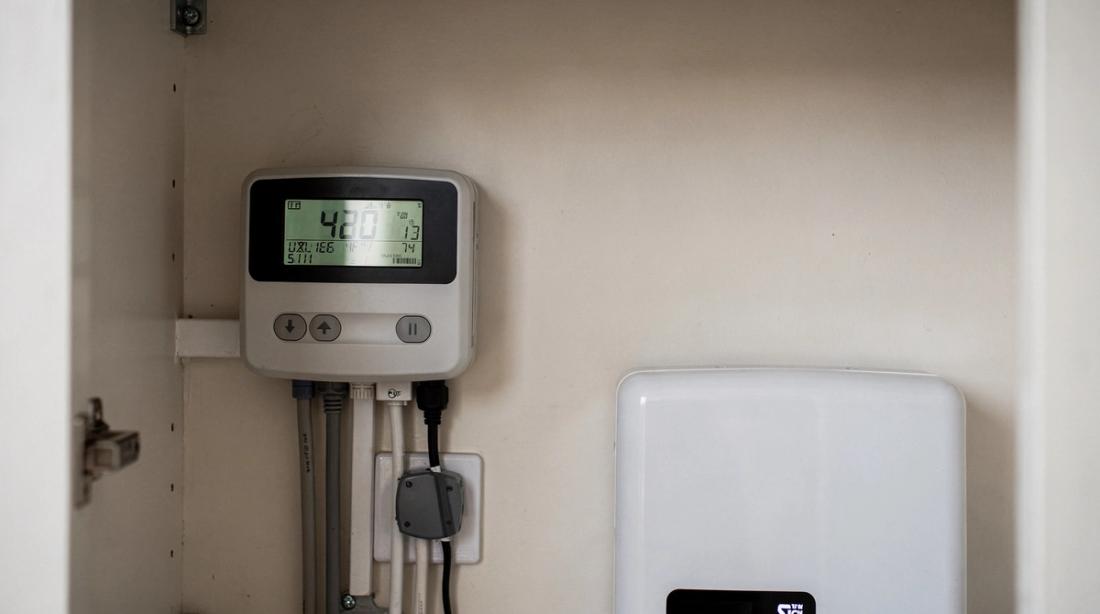
The metering requirement is where applications usually stall. The customer needs a smart meter capable of reporting export, and if the meter cannot record half-hourly export the supplier cannot pay. Flagging this at the survey, rather than after commissioning, saves a frustrating gap between switch-on and first payment.
Registering a customer for SEG
Registration is a direct application to a chosen SEG supplier, not to Ofgem. The customer needs their MCS certificate number, installation address, system capacity in kWp, and the smart meter's MPAN and serial number before they start (MCS, 2026).
The customer can choose any SEG licensee, and they do not have to use their existing electricity supplier for export unless the tariff requires it. Once the supplier verifies the MCS certificate and confirms the meter can report export, payments run on the reported export volume, typically on a quarterly cycle.
The handover pack you give the customer should therefore put the MCS certificate and its number in plain sight. The most common support call is a customer who cannot find the certificate they need to register, so building it into the completion documents removes a step for everyone, and it is one reason becoming MCS certified matters well beyond the initial sign-off.
How installers can use SEG rates as a sales tool
SEG turns an abstract system into a monthly figure a customer can picture, which is why the export rate belongs on the proposal, not just in the technical annex. With £56.97 million paid across Year 5, the scheme is now a mainstream part of the solar payback case (Ofgem, 2025).
Pairing SEG with storage is the clearest upsell. A battery lets the customer hold export back for a time-of-use tariff and lift the effective rate, which is why retrofit storage conversations often start with the export number. The point is not to promise the top rate but to show a realistic blend of self-consumption and export.
Being straight about conditions builds more trust than quoting the biggest number. Customers increasingly arrive having read a comparison table, so acknowledging that the 32p tariff is battery-only and closed, then showing what they can actually get, lands better than a headline that collapses under a follow-up question. It also pays to check the smart meter and any export limitation settings before you model the numbers.
Modelling that blend by hand is slow, and this is where proposal software earns its place. Reonic's platform lets installers build the self-consumption and export split into a quote so the customer sees a grounded payback rather than a single rate, which keeps the SEG conversation honest and quick.
Frequently asked questions
Do you need an MCS certificate for the Smart Export Guarantee?
In almost all cases, yes. Mandatory SEG licensees require an MCS certificate and an MCS-certified installer for solar PV up to 5MW, and the certificate number is part of the application (MCS, 2026). A handful of voluntary tariffs set their own rules, but treating MCS as compulsory is the safe assumption on every domestic job.
Can you get SEG payments without a smart meter?
No. Payments depend on a meter that can report the electricity exported to the grid, normally a smart meter recording half-hourly data (Energy Saving Trust, 2026). Without export-capable metering the supplier has no verified volume to pay against, so confirming the meter type before commissioning is essential.
Can a customer keep their electricity supplier and switch export only?
Yes. Import and export contracts are decoupled, so a customer can take a supplier-agnostic SEG tariff while buying electricity elsewhere. The catch is that the highest export rates, such as the Good Energy and EDF Exclusive deals, require import from the same supplier, so keeping a separate import deal usually means a lower export rate (EnergyPlus, 2026).
How much can a typical solar home earn from SEG?
It varies with system size, export volume and rate. For scale, the scheme paid £56.97 million across 270,395 installations in Year 5 (Ofgem, 2025). A typical domestic system exporting a few hundred kWh a quarter might earn tens of pounds per quarter on a mid-range rate, and more with a battery on a time-of-use tariff.
Do SEG rates apply to electricity a battery charged from the grid?
No. SEG pays for low-carbon electricity the customer generates and exports, not for grid electricity stored and re-exported (Ofgem, 2026). Some time-of-use tariffs have specific anti-gaming rules, so a battery should be set to export self-generated surplus, and export limitation under G100 can also cap what leaves the property in the first place.