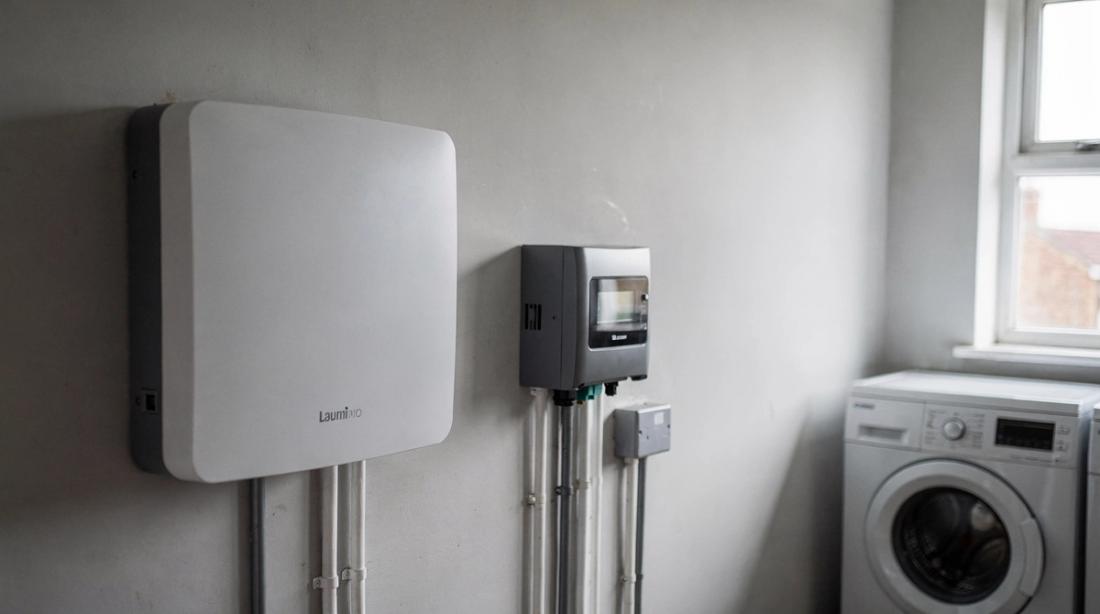

A home battery without solar earns its money by arbitrage: you charge it on cheap overnight electricity and run the house on that stored power through the expensive daytime peak. With the Ofgem price cap at an average 26.11p per kWh from July 2026 and the cheapest overnight tariffs near 7 to 8p, the gap the battery exploits is real (Ofgem, 2026; Energy Stats, 2026).
For installers this is a fast-growing enquiry, because a battery-only system needs no roof, no scaffolding and no DNO wait for generation. The honest pitch is narrower than solar plus storage: there is no free generation and no export income, so the numbers rest entirely on the tariff spread and on sizing the battery to the household's real peak use.
Key Takeaways
- How it pays: buy power overnight at 7 to 8p, use it during the day when the cap averages 26.11p per kWh.
- Typical cost: roughly £3,000 to £7,000 installed for a battery-only system, at 0% VAT until 31 March 2027.
- Realistic saving: about £300 to £800 a year, with payback around 6 to 13 years on a 10-15 year battery life.
- Tariff is everything: the system only works on a time-of-use tariff with a wide overnight-to-peak spread.
- No export income: without solar there is nothing to sell back, so savings come purely from cheaper units.
How does a home battery without solar save money?
It shifts when you buy electricity, not how much you use. You charge the battery overnight at a low off-peak rate, then discharge it during peak hours instead of drawing from the grid at the capped 26.11p per kWh (Ofgem, 2026). The saving is the spread between the two rates, multiplied by how many kilowatt-hours you can shift each day.
On the best time-of-use tariffs that spread currently sits around 15 to 17p per kWh (Solar4Good, 2026). A 10kWh battery cycled once a day therefore avoids roughly £1.50 to £1.70 of peak-rate electricity daily, before losses. Over a year that is the core of the return, and it is entirely dependent on staying on a tariff with a deep overnight discount.
There is a second, smaller income layer. Some grid-services platforms will pay to use spare battery capacity for balancing, charging and discharging it to help the grid, and this works with a battery-only system. The payments are modest and stack on top of the tariff saving rather than replacing it, so treat them as a bonus, not the business case.
What does a battery-only system cost?
A battery-only install typically runs from about £3,000 to £7,000, with larger or hybrid-inverter systems reaching £10,500, and the battery hardware alone starting around £2,500 (Heatable, 2026). Eligible residential battery storage carries 0% VAT until 31 March 2027, which trims the real cost meaningfully (Sunsave, 2026).
The cost picture, by component:
- Battery hardware: from around £2,500, scaling with usable capacity in kWh.
- Typical installed system: roughly £3,000 to £7,000 for a standard home battery-only setup.
- Larger or hybrid-inverter systems: up to about £10,500 installed.
- VAT: 0% on eligible residential battery storage until 31 March 2027.
- No solar-side costs: no panels, roof work or scaffolding, which keeps the install simpler than solar plus storage.
Because there are no panels, the install is largely electrical: mounting the battery and inverter, wiring into the consumer unit, and the notification work. That keeps labour lower than a full solar job, but the whole return still leans on choosing a well-sized unit rather than the biggest one the customer can afford (Premier Electrical, 2026).
How much can you save, and what is the payback?
A well-sized battery on a good time-of-use tariff saves roughly £300 to £800 a year, with payback typically landing between 6 and 13 years against a 10 to 15 year working life (Off Peak Energy, 2026). The range is wide because it hinges on the tariff spread, the battery size and how consistently the household actually uses stored power at peak.
Indicative numbers for a battery-only system:
- Annual saving: about £300 to £800, driven almost entirely by the overnight-to-peak spread.
- Payback: roughly 6 to 13 years, longer than solar plus storage because there is no generation.
- Battery working life: typically 10 to 15 years before meaningful capacity loss.
- Best case: a high peak-hour user on a wide-spread tariff, cycling the battery fully every day.
- Weak case: a low user, or one who cannot commit to a time-of-use tariff, where payback stretches past the battery's life.
Honesty on payback protects your reputation. A battery-only system rarely beats solar plus storage on return, and for a low-consumption household it may never pay back within the battery's life (Solar Energy Concepts, 2026). I always model the customer's real peak-hour consumption before quoting, because a battery that only half-cycles gives you half the saving the brochure implies.
Which tariffs make grid-charged batteries work?
The whole model depends on a time-of-use tariff with a deep overnight rate. Intelligent Octopus Go offers roughly six hours of very cheap overnight power, with the off-peak rate having fallen to as low as 5.49p per kWh in 2026, against a capped daytime average of 26.11p (Energy Stats, 2026; Ofgem, 2026). That is the kind of spread a battery needs to earn out.
What to look for in a tariff:
- A wide spread: the bigger the gap between off-peak and peak, the more each stored kWh saves.
- Enough cheap hours: around six overnight hours lets a typical battery fully charge each night.
- A tariff the household will keep: the saving disappears the moment they move to a flat rate.
- Smart-charge compatibility: batteries that schedule charging to the cheap window without manual input.
Flux-style tariffs that reward exporting at peak add another angle for solar owners, but with no panels there is nothing to export, so a battery-only customer should focus purely on the import spread (Solar4Good, 2026). Pair the battery with a smart meter so the tariff can bill the cheap window correctly, and check the lithium-ion storage regulations that apply to the install.
Who is a battery without solar right for?
It suits households with high peak-hour consumption who can commit to a time-of-use tariff and want lower bills without a roof project. The payback is longer than solar plus storage, so the fit is strongest where roof space, planning or leasehold rules out panels, or where the customer wants storage now and solar later (Off Peak Energy, 2026).
It is a weak fit for low-consumption homes or anyone unwilling to stay on a time-of-use tariff, because the saving depends entirely on shifting a meaningful number of units each day (Solar Energy Concepts, 2026). For those customers, tariff advice or efficiency measures often beat a battery on payback, and saying so builds more trust than a stretched quote.
A common route is storage first, solar later. Fitting an AC-coupled battery now means panels can be added afterwards without replacing the battery, and when solar does arrive the same unit can retrofit into a solar system. Framing it as a staged upgrade gives the customer a clear path rather than a one-off compromise.
Sizing and installing a grid-charged battery
Size the battery to the household's peak-hour demand, not to its total daily use. A unit big enough to carry the home through the expensive window, and no bigger, gives the best payback, because unused capacity is money that never cycles. Oversizing is the most common way a battery-only quote quietly destroys its own return.
- Measure peak use first: base the size on how many kWh the home actually draws during peak hours, from smart-meter data where possible.
- Match cheap-window charging: confirm the battery can fully recharge within the tariff's off-peak hours.
- Plan the electrical work: site the battery and inverter, and design the wiring into the consumer unit to current standards.
- Handle notification and compliance: complete the DNO notification and follow the applicable storage regulations.
- Commission and document: test the charge and discharge schedule and hand over clear records for the customer and any warranty.
Correct sizing is where installer judgement earns its keep. A properly matched battery on the right tariff is the difference between a 6-year and a 13-year payback (Premier Electrical, 2026). Get the battery sizing right and the customer sees the saving they were promised, which is what turns one job into a referral.
Frequently asked questions
Is a home battery worth it without solar panels?
For the right household, yes. With the price cap averaging 26.11p per kWh and overnight tariffs near 7 to 8p, a battery charged overnight and used at peak saves roughly £300 to £800 a year (Ofgem, 2026; Off Peak Energy, 2026). It works best for high peak-hour users on a time-of-use tariff, and pays back more slowly than solar plus storage.
How does a battery charge without solar?
It charges directly from the grid during the cheap overnight window on a time-of-use tariff, then discharges during peak hours (Energy Stats, 2026). No panels are involved. The battery simply stores low-cost electricity bought at night and releases it when grid electricity would otherwise cost far more, which is where the saving comes from.
What is the payback on a battery without solar?
Typically 6 to 13 years, against a battery working life of 10 to 15 years (Off Peak Energy, 2026). Payback depends on the tariff spread, battery size and how fully it cycles each day. A high peak-hour user on a wide-spread tariff sits at the fast end; a low user who cannot commit to time-of-use sits at the slow end or beyond.
Do you pay VAT on a home battery in 2026?
No. Eligible residential battery storage carries 0% VAT in the UK until 31 March 2027, whether or not it is installed with solar (Sunsave, 2026). That relief applies to standalone retrofit batteries too, which meaningfully lowers the upfront cost and shortens the payback compared with earlier years when VAT applied.
How big a battery do I need without solar?
Size it to the home's peak-hour demand, not total daily use, so it carries the household through the expensive window and fully recharges overnight (Premier Electrical, 2026). A common domestic choice is around 10kWh, but the right figure comes from smart-meter data. Oversizing wastes capacity that never cycles and lengthens payback.
Getting the battery-only pitch right
A home battery without solar is a real bill-saver for the right household, built entirely on the gap between overnight and peak electricity prices (Ofgem, 2026). The installer's value is honesty about who it suits: high peak-hour users on a time-of-use tariff, sized to their real demand, with payback framed against a 10 to 15 year life.
Model the customer's peak consumption, quote a battery matched to it, and be clear that the return rests on staying on a wide-spread tariff. Reonic's design and proposal tools let you size a battery against real consumption data and show the payback behind the pitch, so the customer buys a system that delivers the saving rather than one that half-cycles and disappoints.