
Most domestic battery storage in the UK does not need planning permission, because a battery is treated as ancillary equipment under permitted development, and grid-scale battery storage was removed from the national infrastructure consent route in 2020 so projects now run through local planning (Commons Library, 2025). The exceptions matter more than the rule, and they are where installers lose time.
This guide covers when a home battery is permitted development, when it needs consent, how conservation areas and listed buildings change the answer, and where the line sits for commercial and grid-scale systems. It also covers the 2026 wiring and fire rules that decide where a battery can physically go, since siting and planning now overlap.
Key Takeaways
- Indoor domestic batteries are usually permitted development, so no application is needed.
- Outdoor units on a side or rear wall are normally fine if not facing a highway.
- Conservation areas and listed buildings often need consent for external kit.
- Grid-scale BESS above 50MW now goes through local planning, not the NSIP route (Commons Library, 2025).
- BS 7671 Amendment 4 makes some siting choices non-compliant from 15 October 2026 (Virtual College, 2026).
Do you need planning permission for battery storage?
For a typical home battery, no. A domestic battery installed inside a building, or mounted on a wall away from the principal elevation, is generally treated as ancillary domestic equipment and falls under permitted development (Omni3, 2026). That means no formal application, provided the unit does not cause visual or environmental harm and the property is not protected.
The picture flips for large systems. Installing a grid-scale battery energy storage system requires planning consent, and the record volume of approvals shows how active that pipeline is. More than 45GW of battery, wind and solar capacity was approved across Great Britain in 2025, with battery storage approvals climbing to 28.6GW from 14.9GW a year earlier (ess-news, 2026).
Because official planning guidance dominates the search results for this topic, treat the government and Planning Portal pages as the primary reference and use this guide for the installer-practical detail they skip. Our related lithium-ion battery storage regulations guide covers the compliance side in full.
When is battery storage permitted development?
A home battery is permitted development when it sits inside the building or on an unobtrusive external wall, does not face a highway, and the property is not listed or in a protected area (Omni3, 2026). A unit inside a garage, utility room, or plant room almost always qualifies, because there is no change to the external appearance of the dwelling.
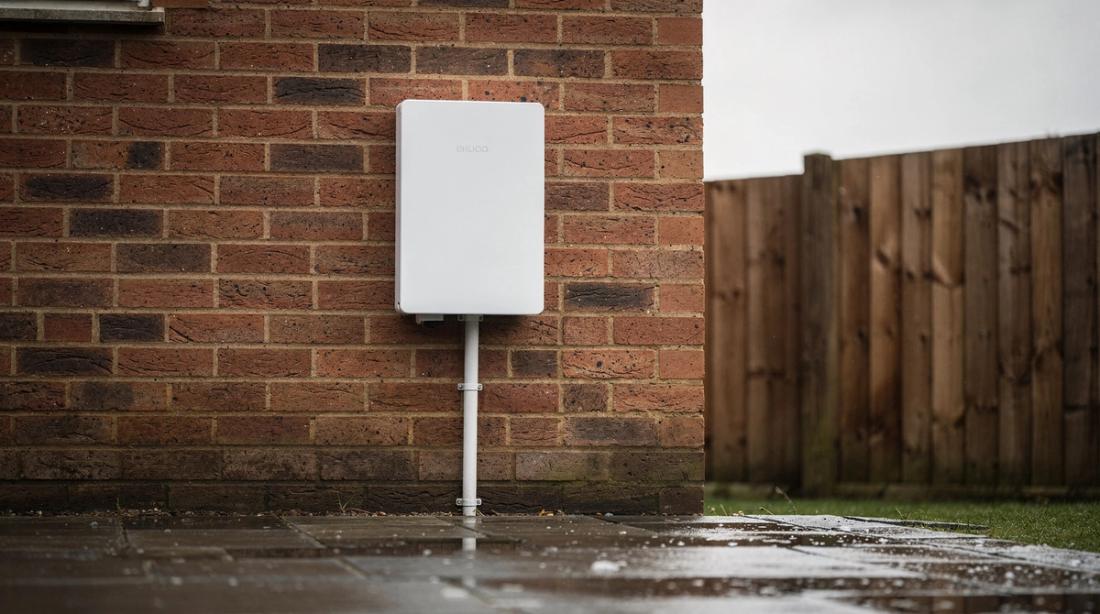
External wall mounts need a little more judgement. A modest housing on a side or rear elevation, kept away from the principal elevation and not prominently visible from the road, is normally treated as ancillary and needs no application. The test planners apply is visual and environmental impact, not the presence of the battery itself.
Permitted development is not the only approval that matters, and this is where installers trip up. Even when planning is not needed, the installation still has to meet building regulations for fire safety and electrical work, and the battery inverter needs the usual grid connection notification to the network operator. Skipping planning does not skip those steps, so treat permitted development as one box of several rather than a clean pass.
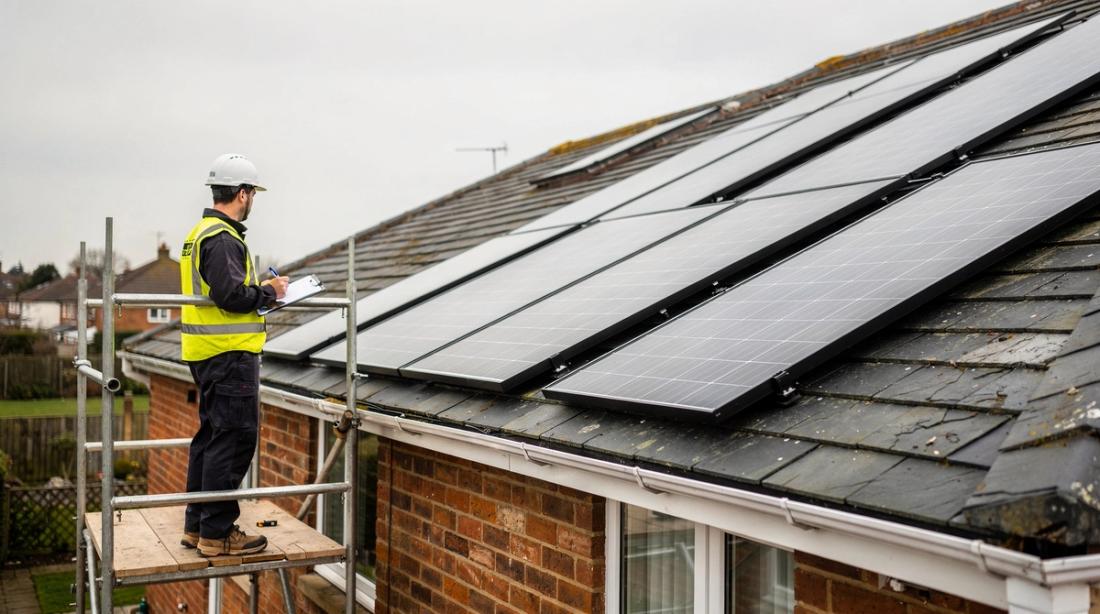
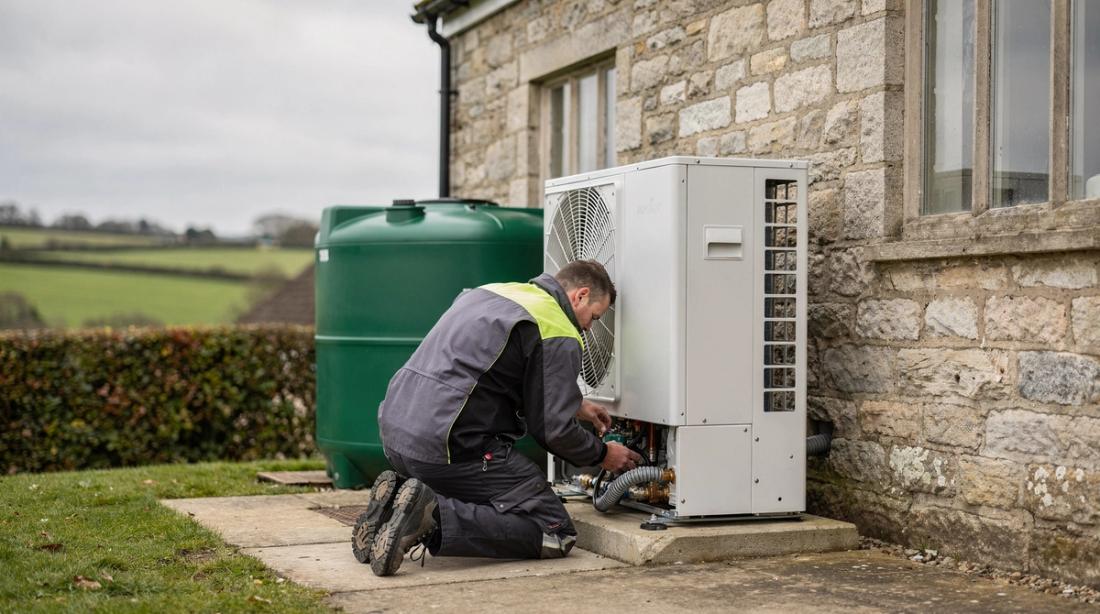
These are the same permitted development principles that apply to related kit, which is why the solar panel planning permission guide and the heat pump planning permission guide reach similar conclusions for their technologies.
Battery siting rules that affect planning and safety
Siting is now a safety decision as much as a planning one, and the two overlap for external units. PAS 63100:2024 is the fire-safety specification that decides where in a home a battery can go, and it rules out lofts, bedrooms, and escape routes while requiring a one-metre outdoor clearance from doors and windows (Virtual College, 2026). That clearance can push an outdoor unit into a position that also needs a planning check.
The compliant locations are consistent. Garages, outbuildings, utility rooms with proper fire separation, and external wall mounts remain the standard choices, with ventilation and smoke detection wherever the battery lives. Loft installations are out, which removes a location many homeowners assume is available.
Getting siting right at the survey stage avoids a redesign later. When an external position is the only option on a protected property, the planning question has to be answered before the fire-safety position is fixed, not after.
Do conservation areas and listed buildings need consent?
Often, yes, for anything visible on the outside. In a conservation area, planners can review installations that alter the external appearance of a home, and an external battery housing that would be permitted development on a typical house may need consent when it affects the character of the area (Commons Library, 2025). The principle is that external equipment should stay unobtrusive.
Listed buildings are stricter. Consent is required for any photovoltaic installation on a listed building, and while an internal battery often needs no separate consent, an external unit needs review for its visual impact (Historic England, 2026). Siting inside a basement, garage, or outbuilding is usually the route that keeps a listed property compliant.
For these properties, the safe default is to confirm the position with the local planning authority before committing to a design. A battery hidden internally rarely raises an issue, while a visible external box on a principal elevation almost always does.
When does battery storage need full planning permission?
A domestic battery needs full planning permission when permitted development does not apply, which mainly means protected properties, prominent external siting, or a change that harms the appearance of the building. If the unit is external, faces a highway, or sits on the principal elevation of a house in a conservation area, an application is the safe path. The threshold is impact on the surroundings, not the technology.
Commercial and larger systems are a separate category. A standalone commercial battery on a business site usually needs planning permission because it is not ancillary to a dwelling, and the assessment weighs noise, fire safety, and visual impact. Costs and grid factors for these are covered in the commercial battery storage cost guide.
Here is how the common scenarios line up:
- Battery indoors (garage, utility room): Permitted development, no application
- External wall mount, side or rear, unprotected home: Usually permitted development
- External unit in a conservation area: Consent often required
- Any external unit on a listed building: Consent required
- Standalone commercial battery: Planning permission required
- Grid-scale BESS: Planning permission required
Grid-scale and commercial BESS planning
Grid-scale battery storage now runs through the local planning system rather than the national infrastructure route. Standalone battery storage was removed from the Nationally Significant Infrastructure Project regime in 2020, so projects above 50MW are handled by local planning authorities rather than central government (Commons Library, 2025). That change lowered a barrier and helped drive the approvals surge.
The scale of the pipeline is significant. Grid-scale battery storage capacity reached 7.5GW in 2025, and the first half of that year saw a 49% jump in projects being approved (Energy Storage News, 2025). Government statistics track this growth across the operational and pipeline fleet (gov.uk, 2025).
For installers moving from domestic into commercial work, the practical difference is the assessment. Noise modelling, fire safety strategy, and landscaping all carry weight at this scale, and early engagement with the planning authority shortens the timeline. A pre-application enquiry with the council is usually worth the modest fee, because it flags objections before you have spent money on a full submission and a detailed site design.
How BS 7671 Amendment 4 changes domestic installs in 2026
BS 7671 Amendment 4 adds the first dedicated wiring rules for battery storage, and it changes what counts as a compliant installation. It was published on 15 April 2026, and from 15 October 2026 every new domestic battery installation in the UK must comply with it (Virtual College, 2026). The amendment sits alongside PAS 63100 on siting, so wiring and location now share one rulebook.
This matters for planning because siting choices that are ruled out on safety grounds cannot be used to avoid a planning question. If a battery cannot go in the loft and an external wall is the only remaining option on a protected property, the planning check is unavoidable. Compliance guidance is set out in the IET Code of Practice guide.
In practice we find the fastest jobs are the ones where the installer confirms both the siting and the planning position during the initial survey. Fixing that early avoids a return visit and a frustrated customer.
FAQ
Do I need planning permission for a home battery?
Usually not. A domestic battery inside the property, or on an unobtrusive external wall away from the road, is permitted development and needs no application. The exceptions are listed buildings, conservation areas, and prominent external siting, where a planning or consent check is needed. Always confirm the position for protected properties before installing.
Is battery storage permitted development?
For most homes, yes. Battery storage is treated as ancillary domestic equipment, so an internal unit or a discreet external mount is permitted development. The limits are visual and environmental impact: a unit that changes the appearance of a protected building, or is prominent from a highway, can fall outside permitted development and require consent.
Can I put a battery in my loft?
No. Under current fire-safety guidance, lofts are ruled out for battery storage, along with bedrooms, hallways, stairwells, and small internal cupboards. Compliant locations include garages, outbuildings, utility rooms with proper fire separation, and external wall mounts. This siting restriction applies regardless of the planning position of the property.
Does a battery in a conservation area need permission?
Often, if it is external and visible. In a conservation area, planners can review anything that alters the external appearance of a home, so an outdoor battery housing may need consent even when it would be permitted development elsewhere. An internal unit usually avoids the issue. Confirm with the local planning authority before finalising the design.
Do commercial and grid-scale batteries need planning permission?
Yes. A standalone commercial battery is not ancillary to a dwelling, so it needs planning permission, and the assessment weighs noise, fire safety, and visual impact. Grid-scale systems above 50MW now go through local planning after being removed from the national infrastructure route in 2020, which is why approvals have risen sharply.
If you handle a mix of domestic and commercial jobs, Reonic helps installers keep planning, design, and proposals in one place.