
Great British Insulation Scheme: What Installers Need to Know in 2026
The Great British Insulation Scheme (GBIS) delivered 139,100 insulation measures across 100,900 households before it closed to new applications on 31 March 2026 (GOV.UK, 2026). If you are an installer still fielding enquiries about GBIS, the honest answer to most of them is that the referral route has ended, and the funding that remains sits under the Energy Company Obligation and the incoming Warm Homes Plan.
This guide sets out what GBIS actually funded, why the delivery numbers matter for your pipeline, and where the retrofit work moves next. The scheme was a £1 billion obligation on medium and large energy suppliers, announced at the end of March 2023 (GOV.UK, 2026), so understanding how it wound down helps you steer homeowners toward routes that are still open rather than a closed door.
Key Takeaways
- GBIS closed to new applications on 31 March 2026 after upgrading 100,900 households with 139,100 measures (GOV.UK, 2026).
- Cavity wall insulation was the most common measure at 37% of all installs, followed by loft insulation at 28% and heating controls at 25%.
- Every measure had to be delivered by a TrustMark-registered business working to PAS 2035:2023 (TrustMark, 2026).
- ECO4 remains open until 31 December 2026, and the Warm Homes Plan is the main successor funding stream for installers (Ofgem, 2026).
- Around 80% of upgraded homes were owner-occupied houses, which tells you where retrofit demand still concentrates.
What was the Great British Insulation Scheme?
GBIS was a supplier-funded insulation programme running from the end of March 2023 to 31 March 2026, with a headline budget of £1 billion aimed at the least energy efficient homes in Great Britain (GOV.UK, 2026). It placed a legal obligation on medium and large energy suppliers to fund insulation measures, and installers delivered that work through the supplier and delivery-partner supply chain rather than direct to government.
The scheme sat alongside ECO4 and shared much of its delivery infrastructure (Ofgem, 2026). Where ECO4 targeted deep, multi-measure retrofits for low-income households, GBIS was designed to reach a wider group with a single insulation measure per home (Ofgem, 2026). That single-measure design is why its per-home cost and delivery model looked different from the ECO4 work many of the same installers were already doing. It also explains why GBIS could scale quickly at first, then taper as the easy cavity and loft jobs were used up. The scheme was never meant to fund a whole-house retrofit, so installers used it to build volume rather than depth.
GBIS delivery in numbers
By its 31 March 2026 close, GBIS had installed 139,100 measures in 100,900 households, which works out at around 355 upgrades per 100,000 households in Great Britain (GOV.UK, 2026). Delivery slowed sharply at the end. The January to March 2026 quarter averaged 4,400 measures a month, a 27% drop on the previous quarter as the scheme wound toward closure.
Regional delivery was uneven. The North West and West Midlands each took 15% of measures, the North East 13%, and Yorkshire and the Humber 11%. The North East had the highest upgrade rate at 919 homes per 100,000, while Scotland trailed at around 235 per 100,000. Wales ran ahead of the national average at 423 per 100,000. For an installer, that spread shows where the retrofit appetite and referral networks were strongest, and where the successor schemes have the most ground to make up. It is also a rough map of where fuel poverty pressure remains highest heading into the Warm Homes Plan.
Which measures did the scheme fund?
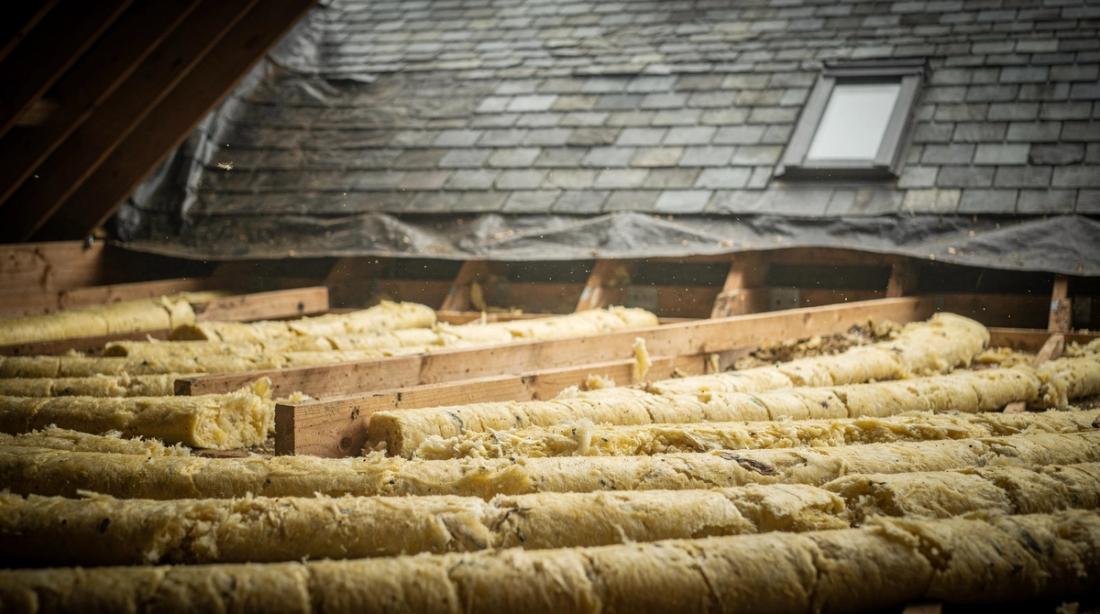
Most GBIS homes received one primary insulation measure, and the mix was dominated by three types. Cavity wall insulation led, loft insulation followed, and heating controls made up a large secondary share offered alongside primary measures in low-income homes. The breakdown by measure type up to 31 March 2026 was as follows:
- Cavity wall insulation: 51,400 measures, 37% of the total 139,100 (GOV.UK, 2026).
- Loft insulation: 39,500 measures, 28% of the total.
- Heating controls: 34,900 measures, 25%, mostly secondary measures for low-income homes.
- Solid wall and other measures: the remaining share, typically needing a household contribution because of higher cost.
Around 3,300 households received two primary measures after mid-scheme rule changes took effect from mid-November 2024, roughly 6% of homes upgraded since that point. Houses made up about 80% of upgraded properties and owner-occupiers a similar share, so the typical GBIS job was a single fabric measure on a standard owner-occupied house. For installers, the lesson carried into current schemes is that fabric-first sequencing and accurate measure selection still drive both compliance and customer outcomes. Getting the survey right the first time avoided callbacks that quietly erased the margin on a low-value measure.
Who was eligible, and why does it still matter?
GBIS ran two eligibility routes. A low-income group mirrored the ECO4 Help to Heat group, and a general group opened the scheme to homes with an EPC rating of D to G in council tax bands A to D in England, or A to E in Scotland and Wales (Ofgem, 2026). The low-income group took 53% of all measures, showing where the deepest need sat.
Those eligibility bands still matter because they map closely onto the homes that current schemes target. A household that missed GBIS may still qualify under ECO4 or, from its rollout, the Warm Homes Plan. Knowing the old band logic helps you pre-qualify enquiries quickly and point homeowners at the right open scheme, a skill covered in more depth in our ECO4 grant guide and the wider UK solar and retrofit grants overview.
Installer requirements under GBIS
Delivery under GBIS was gated on quality assurance. Every installer had to be a TrustMark-registered business, and all measures had to be installed to PAS 2030:2023 and in accordance with PAS 2035:2023, the retrofit standard that replaced earlier versions (TrustMark, 2026). Each project also needed a Pre-Installation Building Inspection verified independently.
That framework has not gone away. PAS 2035:2023 remains the governing retrofit standard for ECO4 and the Warm Homes Plan, and TrustMark registration is still the entry ticket for supplier-funded work (TrustMark, 2026). TrustMark also introduced a dedicated licence for insulation measures during the scheme, and assessor and coordinator competence sat at the centre of it (Elmhurst Energy, 2024). If your accreditation lapsed when GBIS closed, restoring it is the single fastest way to stay eligible for the funding that continues. Our PAS 2035 guide walks through the coordinator and assessor roles in detail.
The cost of delivering GBIS
The total cost of GBIS to 31 March 2026 was £424.8 million, made up of £400.4 million in delivery costs and £24.4 million in administration (GOV.UK, 2026). On an efficiency basis, the scheme cost £25.30 per £1 of annual bill savings, close to the £25.44 recorded three months earlier. That stability suggests the scheme found a steady delivery cost late in its life rather than drifting, which is a useful signal for anyone pricing obligation-funded work now.
Delivery costs cover property searches, installation and delivery-partner marketing, and they exclude VAT. For installers pricing similar retrofit work today, those figures are a useful benchmark for what a lean, obligation-funded single-measure job carries in overhead. Consumer-protection requirements added to that cost base as well, with independent bodies such as the HIES consumer code, 2026 setting the guarantee and redress standards that scheme work had to meet. Building those protections into a quote from the outset is what keeps margins predictable across ECO4 and Warm Homes Plan jobs.
Where does the work go now that GBIS has closed?
With GBIS shut to new applications, two routes carry the insulation and retrofit pipeline forward. ECO4 has been extended to 31 December 2026, keeping supplier-funded measures live for low-income and vulnerable households (Ofgem, 2026). The Warm Homes Plan is the larger successor, channelling government funding into home upgrades over the coming years. Between them they cover most of the households GBIS used to reach, though the referral mechanics differ and the low-income route now carries more of the volume.
For installers, the practical move is to redirect GBIS enquiries into these open schemes rather than turning them away. A home that fit the GBIS general group often maps onto ECO4 Flex or a local grant, and landlords facing tighter EPC rules are a growing source of privately funded retrofit demand. Our Warm Homes Plan guide and the MEES landlord EPC guide set out where those leads come from. Keeping your TrustMark status, PAS 2035 records and measure evidence in order is what lets you move between schemes without losing weeks to paperwork. Retrofit platforms such as Reonic help hold that project data in one place, so a lead that arrived asking about GBIS can be quoted and delivered under whichever open scheme it now fits.
Frequently Asked Questions
Is the Great British Insulation Scheme still open in 2026?
No. GBIS closed to new applications on 31 March 2026 after upgrading 100,900 households (GOV.UK, 2026). Homeowners who missed it should check ECO4, which runs to 31 December 2026, or the Warm Homes Plan. Installers can still fulfil and claim for measures booked before closure under the scheme's normal rules, so any job already in your pipeline is not affected by the application deadline.
What replaced GBIS for installers?
ECO4 and the Warm Homes Plan carry the retrofit pipeline forward. ECO4 was extended to 31 December 2026 (Ofgem, 2026), and the Warm Homes Plan is the main long-term successor. Both use PAS 2035:2023 and TrustMark, so installers accredited for GBIS can move across with the same certifications.
What insulation did GBIS pay for?
Cavity wall insulation was the most funded measure at 37% of installs, followed by loft insulation at 28% and heating controls at 25% (GOV.UK, 2026). Most homes received a single primary measure. Higher-cost options such as solid wall insulation usually needed a household contribution.
Did installers need TrustMark for GBIS?
Yes. Every GBIS installer had to be a TrustMark-registered business delivering to PAS 2030:2023 and PAS 2035:2023, with an independently verified Pre-Installation Building Inspection on each project (TrustMark, 2026). The same requirements apply to ECO4 and the Warm Homes Plan work that continues, so keeping registration and PAS 2035 competence current is the practical way to stay eligible.
Can homeowners who missed GBIS still get free insulation?
Often, yes. ECO4 remains open until 31 December 2026 for eligible low-income and vulnerable households (Ofgem, 2026), and local authority flexible eligibility can widen access. Landlords also face EPC upgrade duties that fund retrofit privately, so an installer can usually route a missed GBIS enquiry into an open scheme.